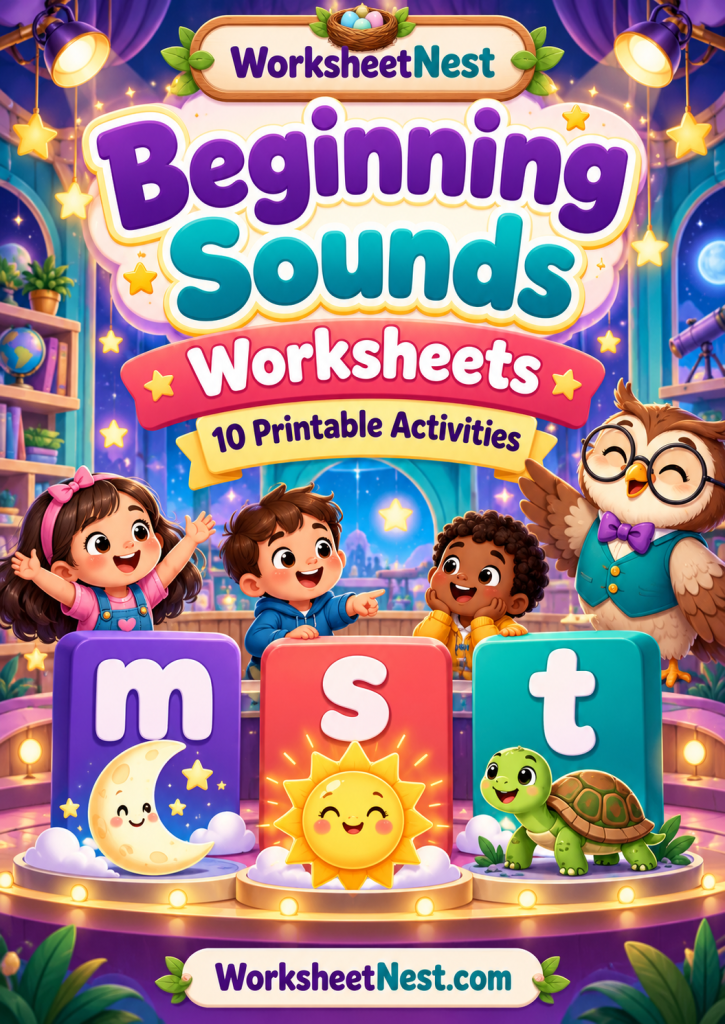
Explore the first sounds in familiar picture names with these beginning sounds worksheets. This collection contains ten black-and-white activities focused on /m/, /s/, and /t/, plus a separate colorful cover. Children listen, circle, compare, match, sort, and write selected first letters.
The pages are designed for preschool and kindergarten practice with adult vocabulary support. Some activities ask only for listening and picture choices; later pages connect the sound to a lowercase letter. Children do not need to read the picture names independently. Introduce the intended names aloud, especially mug and top, before asking for a response. Choose a task that matches the learner’s current listening and letter knowledge.
01. Hear and Find /m/
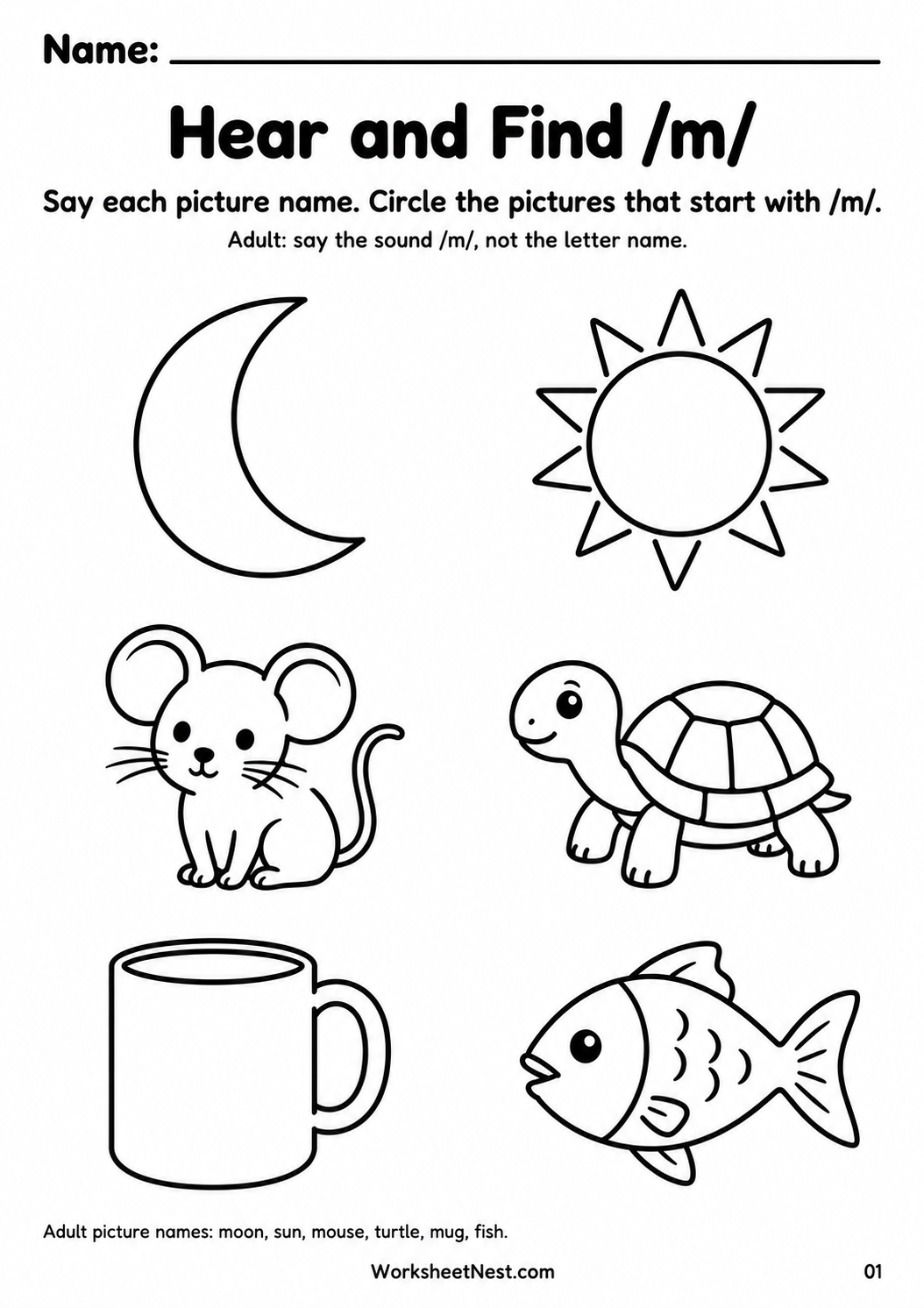
Children name six pictures and circle those beginning with /m/. Moon, mouse, and mug are the target pictures, alongside sun, turtle, and fish. An adult should name the pictures aloud before the child chooses. Use the sound /m/ rather than the letter name, and keep the intended name mug so the activity stays consistent.
02. Listen for /s/
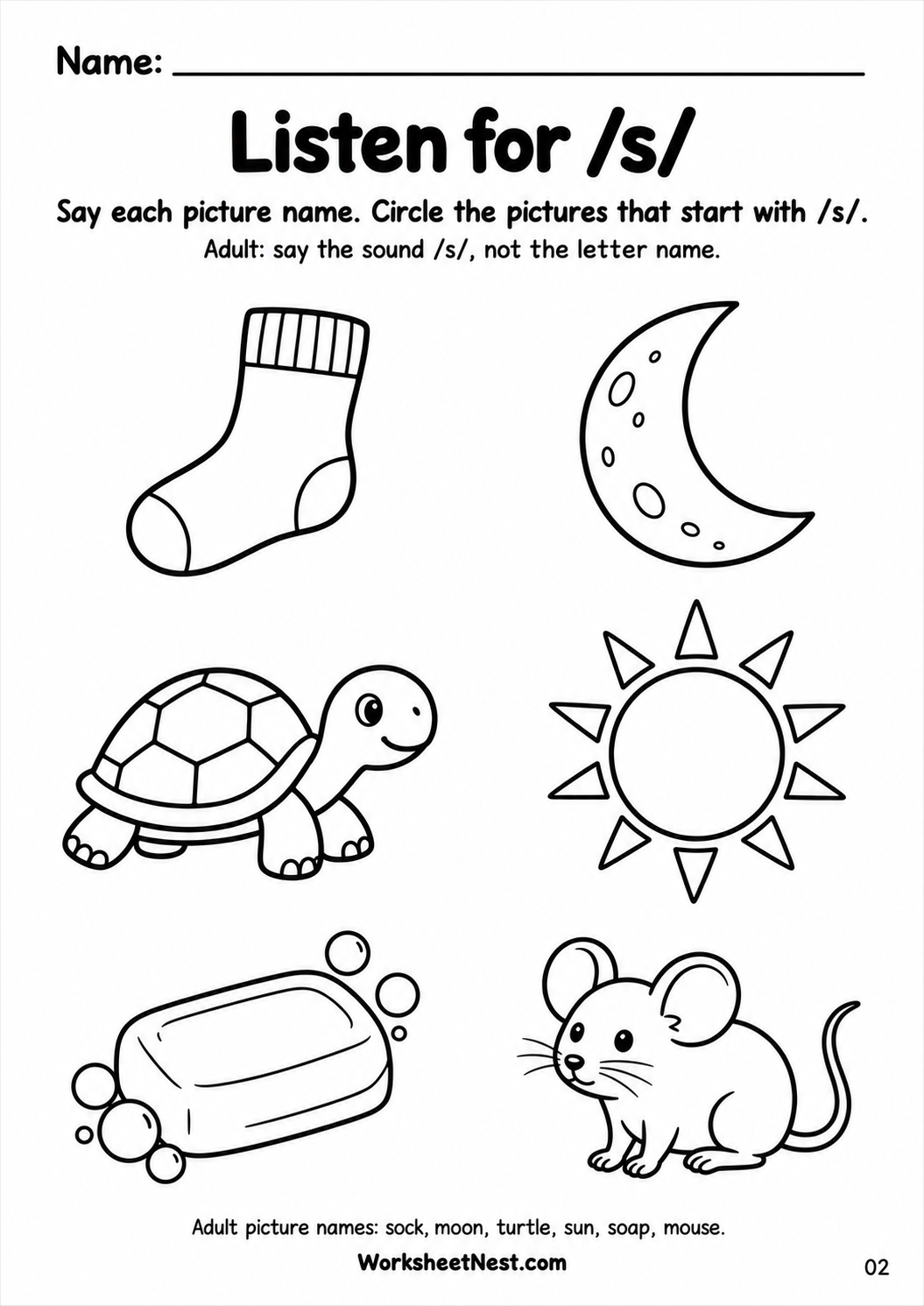
The second page focuses on /s/. Learners hear sock, moon, turtle, sun, soap, and mouse, then circle the pictures whose names begin with the target sound. Encourage them to listen to the first sound instead of another sound inside the word. Repeat a picture name naturally when a child wants to check a choice.
03. Listen for /t/
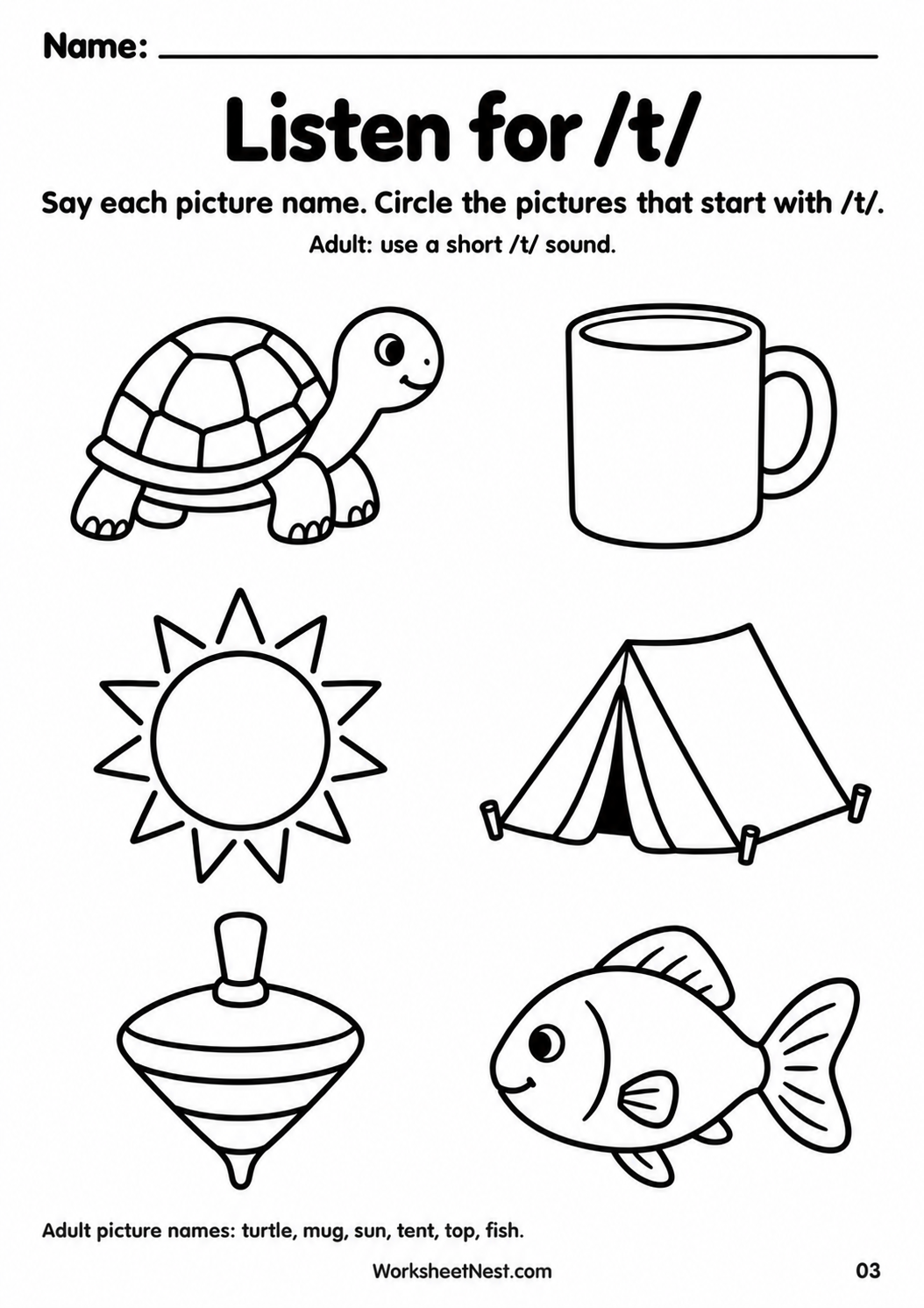
Turtle, tent, and top provide the target examples on this page, with mug, sun, and fish as distractors. Explain that top means the spinning toy shown in the picture. Use a short /t/ sound without adding a vowel after it. Children can point to a picture before circling it if they need an oral rehearsal.
04. Same Beginning Sound
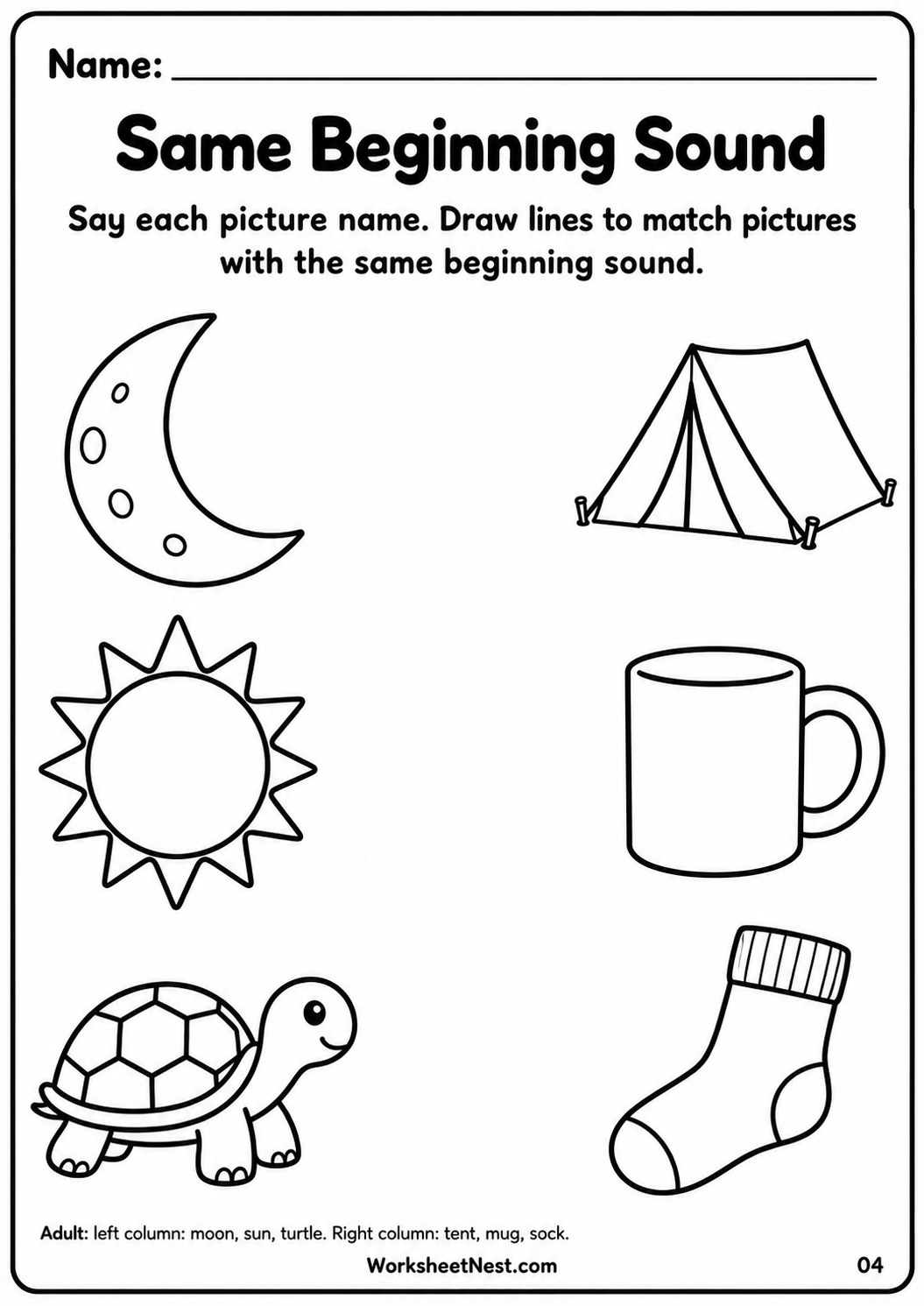
Learners connect pictures that share their first sound. The page pairs moon with mug, sun with sock, and turtle with tent. No letter choices are needed for this task, so children can concentrate on hearing and comparing picture names. Name both pictures at the ends of a proposed line to check the match together.
05. Match to the Letter
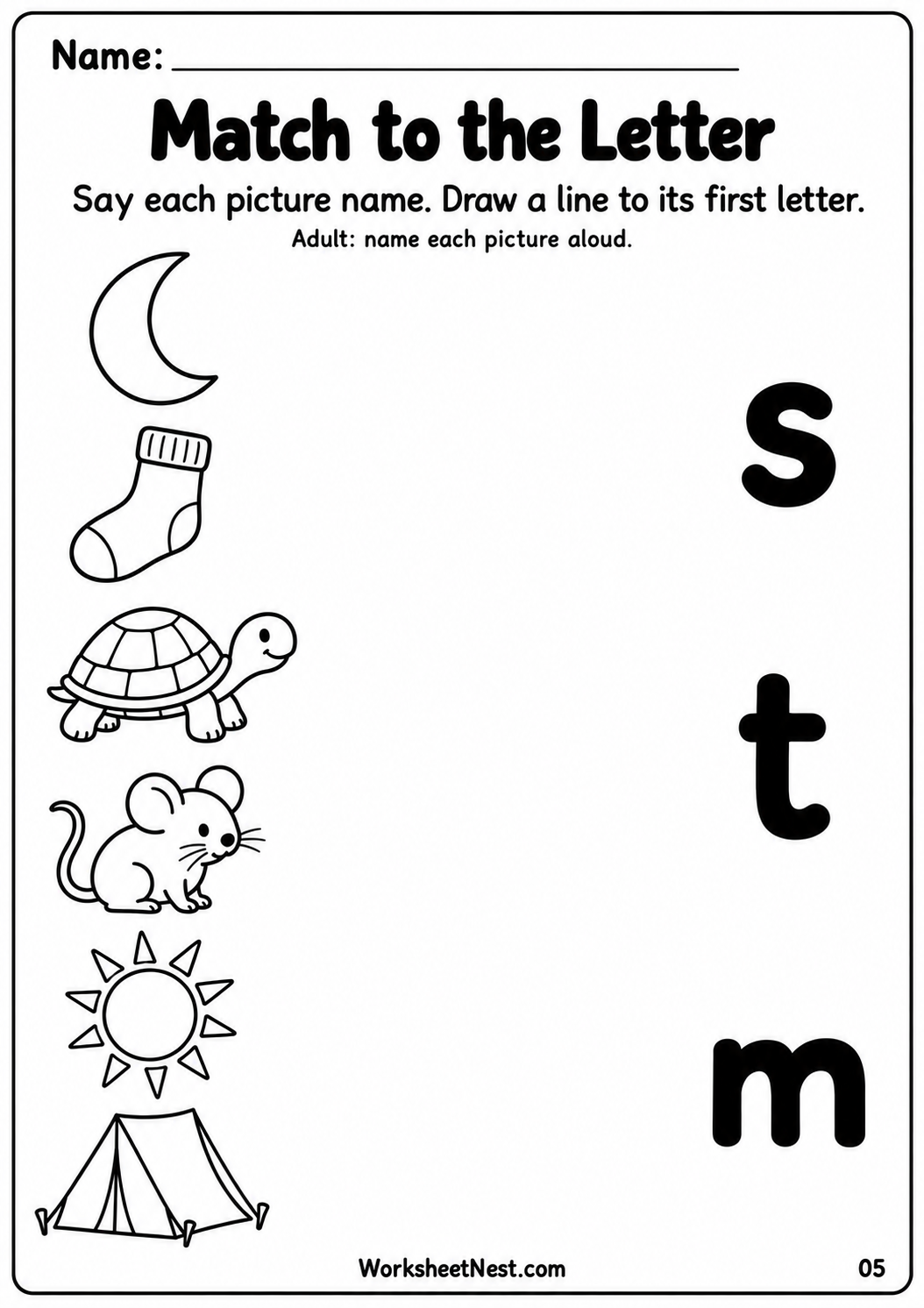
Six pictures are matched to the lowercase letters s, t, and m. Each letter is used for two pictures, allowing children to connect a spoken beginning sound with its written representation. An adult names moon, sock, turtle, mouse, sun, and tent aloud. Ask the learner to say the first sound before drawing each line.
06. Sort Two Sounds
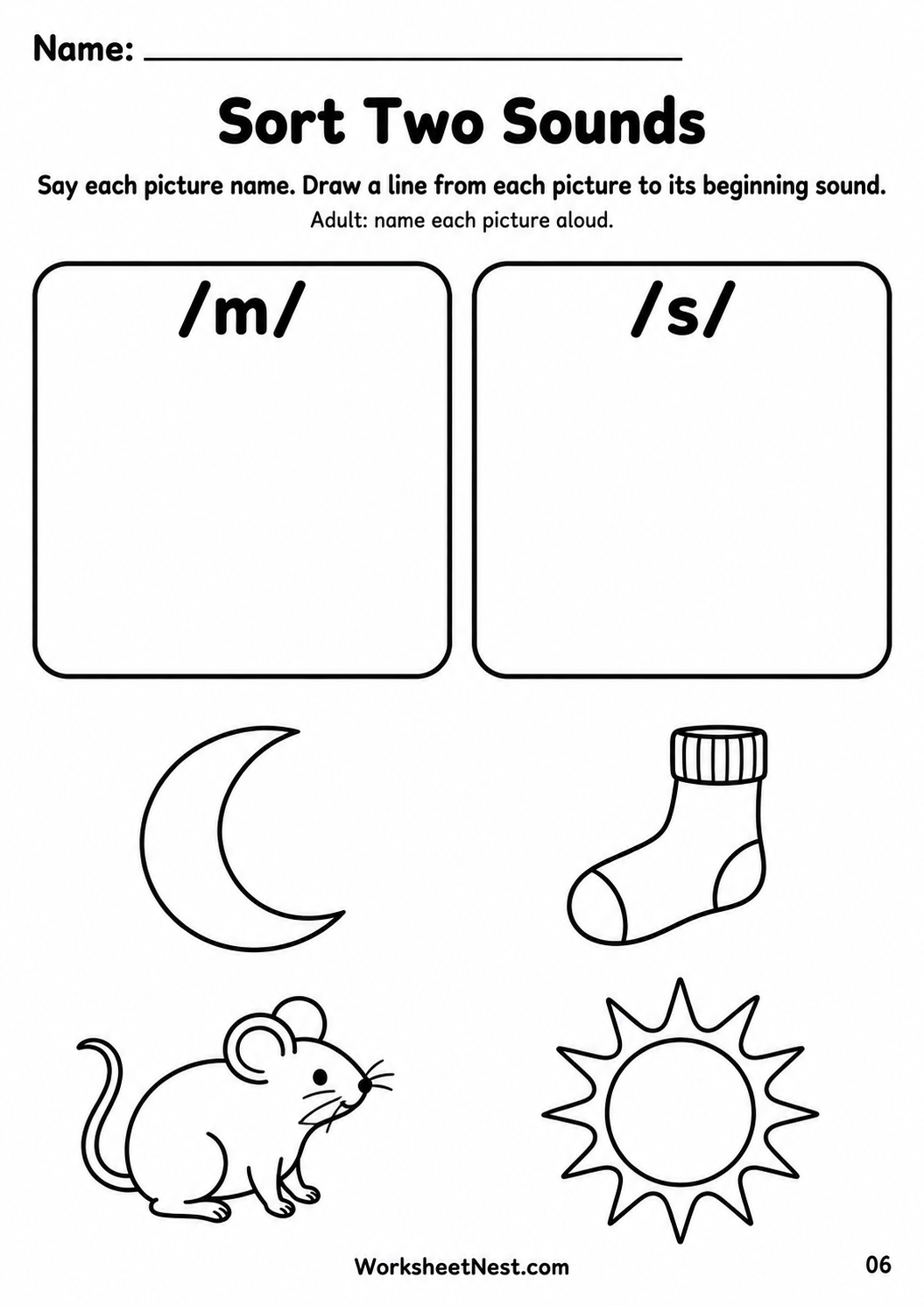
Two empty boxes are labeled /m/ and /s/. Children draw lines from moon, mouse, sock, and sun to the corresponding sound box. This is a line-matching sort; cutting and pasting are not required. Compare two picture names aloud when the learner is unsure, then listen for the beginning of each word.
07. Choose the First Letter
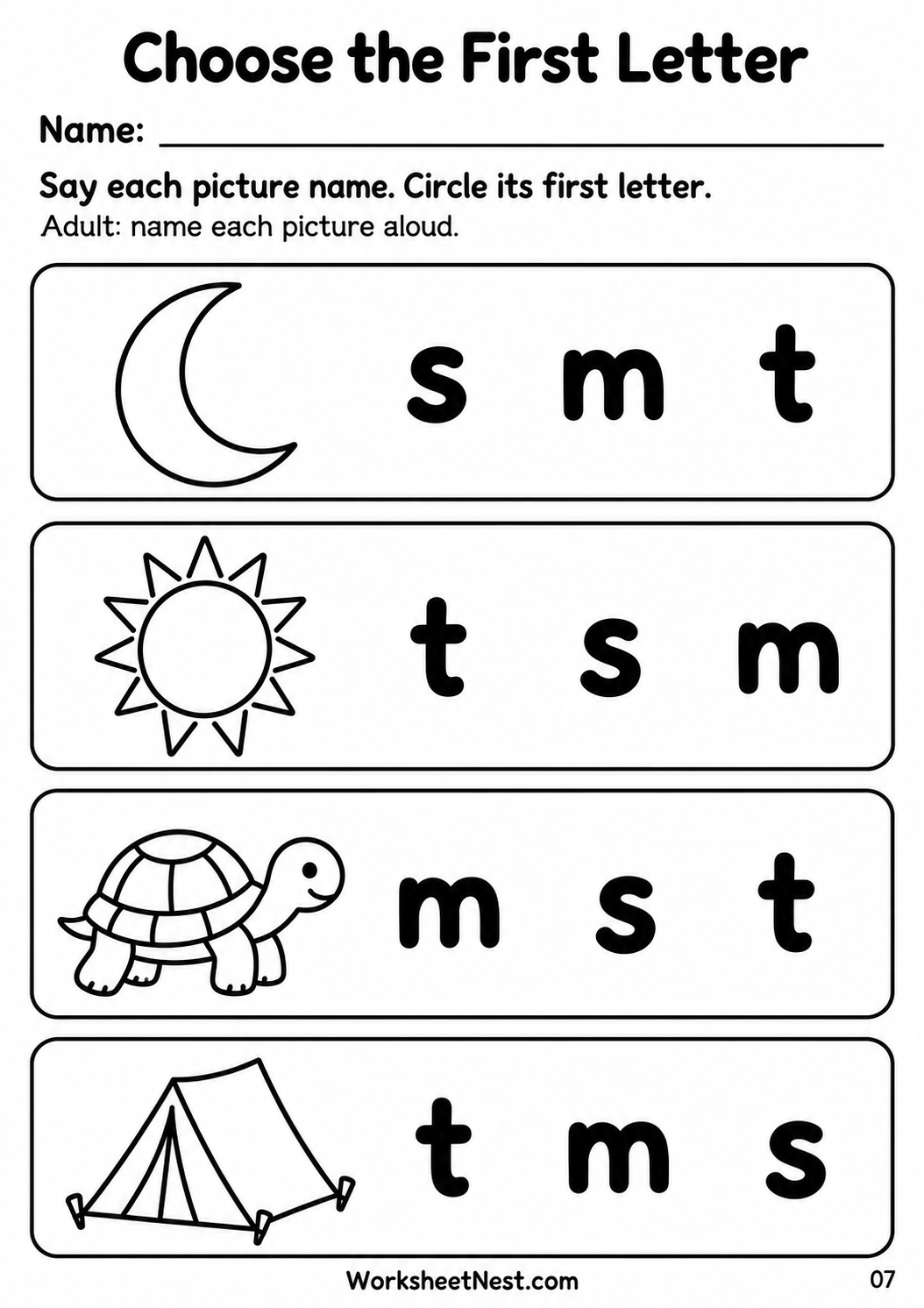
Children look at moon, sun, turtle, and tent and circle the correct first letter from three choices. The choices change position from row to row. Naming the pictures aloud keeps the listening demand clear, while the letter options provide support for the written response. Invite the learner to check the sound associated with the chosen letter.
08. Find the Odd One Out
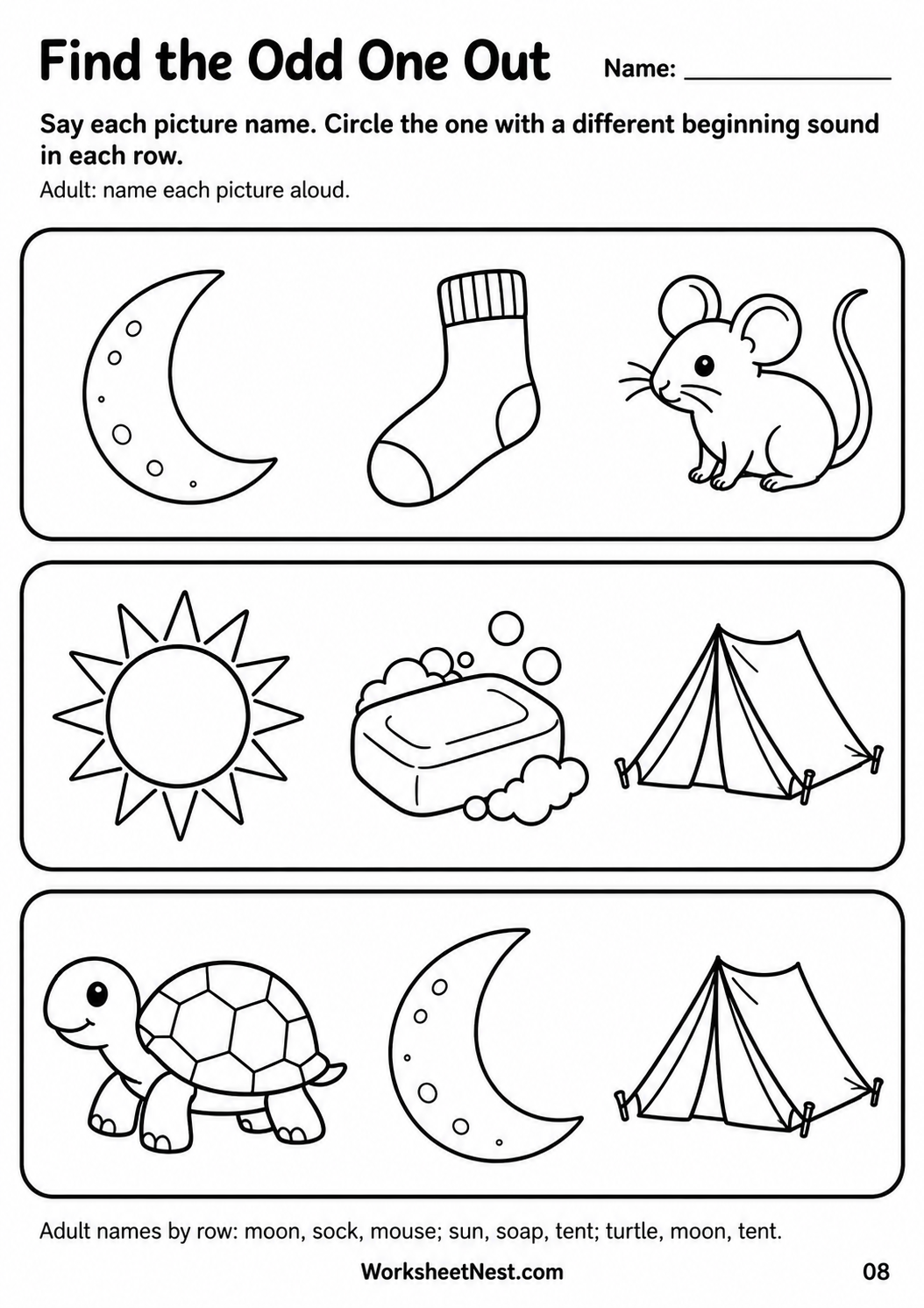
Each row contains three pictures, with two sharing an initial sound and one beginning differently. Learners circle the different picture after hearing the intended names. The rows use moon, sock, and mouse; sun, soap, and tent; then turtle, moon, and tent. Encourage children to explain which two begin alike before identifying the one that differs.
09. Say and Write the First Letter
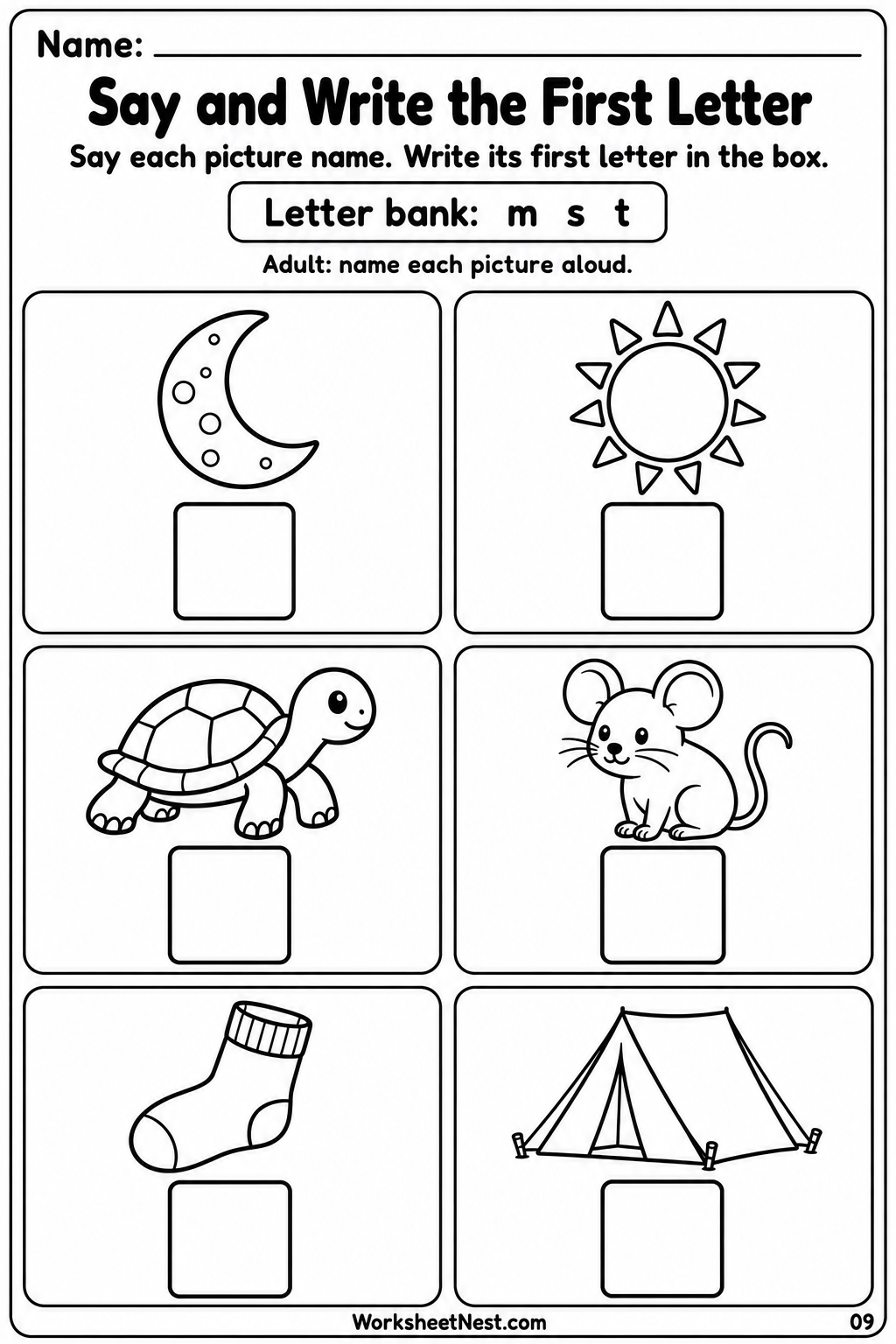
Six picture panels have empty writing boxes, with a letter bank containing m, s, and t. Children hear moon, sun, turtle, mouse, sock, and tent, then write each first letter. They can use the bank to recall the letter shape. This task adds writing to listening; a correct spoken sound can be acknowledged separately from letter formation.
10. Beginning Sound Review
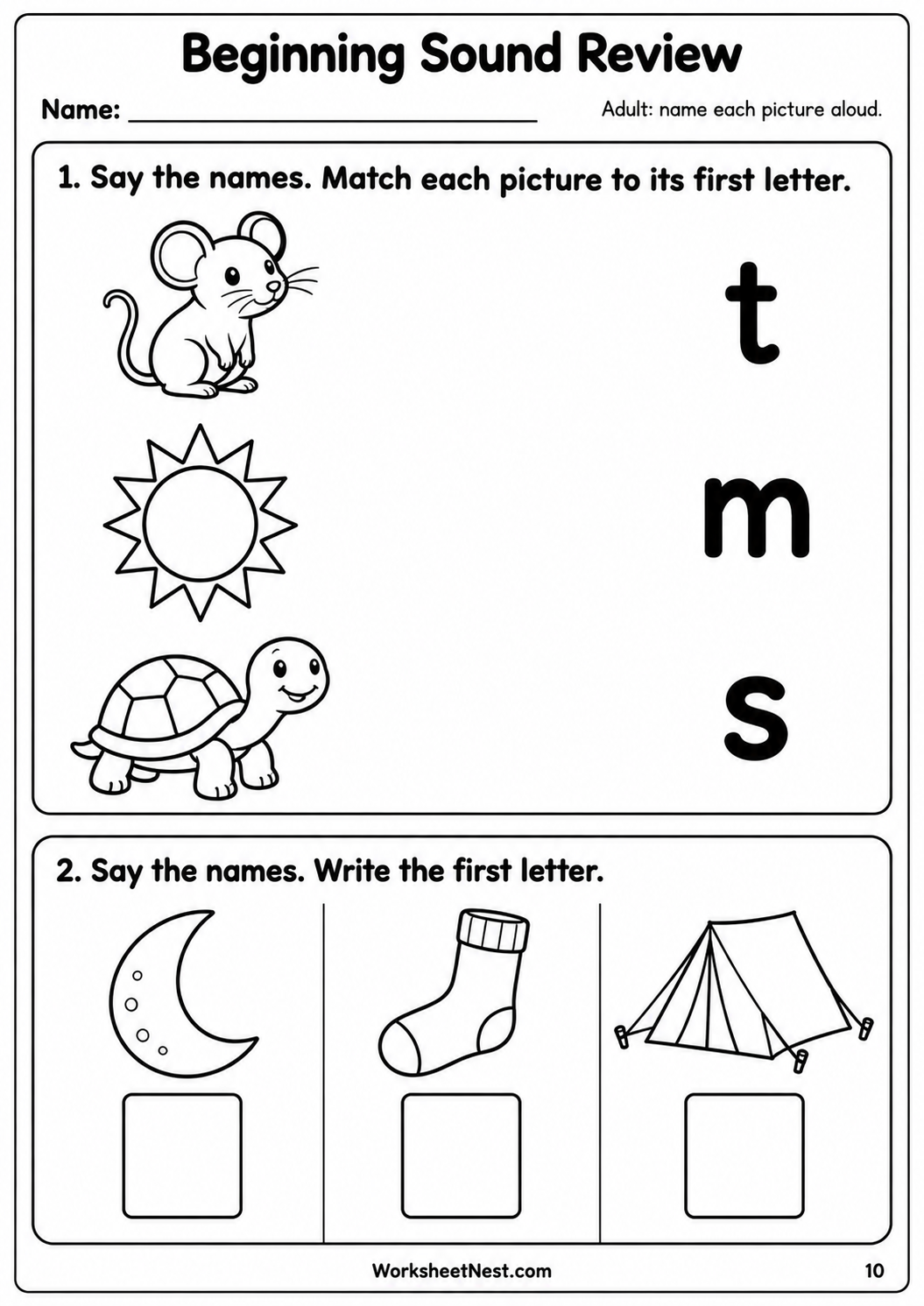
The review brings together picture-to-letter matching and first-letter writing. Learners match mouse, sun, and turtle to letters, then write the first letters for moon, sock, and tent. Adult picture naming is still part of the activity. Use the responses to decide whether the child would benefit from another listening page, matching task, or supported writing attempt.
Download and Teaching Guidance
The actual source workbook contains eleven A4 pages: a colorful cover followed by ten worksheets. Select individual activities for a short sound-focused session, or use the full sequence to move from listening toward first-letter recording.
Teaching Ideas
Begin with a few spoken picture names before offering a pencil. Say each name clearly, then draw attention to its first sound. Use /m/ and /s/ without attaching an extra vowel. Keep /t/ brief. After children hear the sound, connect it to the written letter where the activity asks for that step.
Agree on picture vocabulary first. The cup-shaped object is named mug, and the small spinning toy is named top. A different name can change the beginning sound, so supplying the intended word helps keep the question fair. Follow the adult naming guides printed on the early pages instead of expecting children to guess unfamiliar pictures.
Offer a small selection of tasks in one sitting. Listening and circling can come before letter writing. When a learner gives the correct sound but has trouble forming the letter, provide a separate model and recognize the listening success. For picture matching, say both names at either end of the line and compare their beginnings. For the odd-one-out page, find the two alike sounds before choosing the different one.
For background on identifying and matching first sounds, see the National Center on Improving Literacy’s phonemic awareness overview.
Learning Skills
These activities provide practice hearing and comparing selected initial consonant sounds, relating them to m, s, and t, and recording those letters. The set gives focused practice with three sounds. It does not cover the full alphabet, all sound positions, or a complete decoding program.
Printing and Preparation
The verified source PDF uses A4 portrait pages, approximately 210 × 297 mm. Choose A4 in the print settings and check the preview. For US Letter paper, use a suitable fit setting and verify that the edges and footer remain visible; the printed scale will change. Print the cover in color if desired and the activity pages in black and white. Have a pencil ready. The activities do not require scissors or glue.