These letter B tracing worksheets give children ten ways to recognize, trace, and write capital B and lowercase b. The black-and-white practice pages include letter hunts, formation models, dotted tracing, matching, familiar words, and independent writing. A separate colorful cover can be used when assembling the pages into a booklet.
Choose one activity for the skill your child needs today. Begin with coloring or finding letters when the shapes are unfamiliar. Move to the formation pages when the child is ready for guided pencil work, then use the blank writing lines to see what they can form without dots.
Choose a Letter to Practice
Worksheet 1: Color B and b
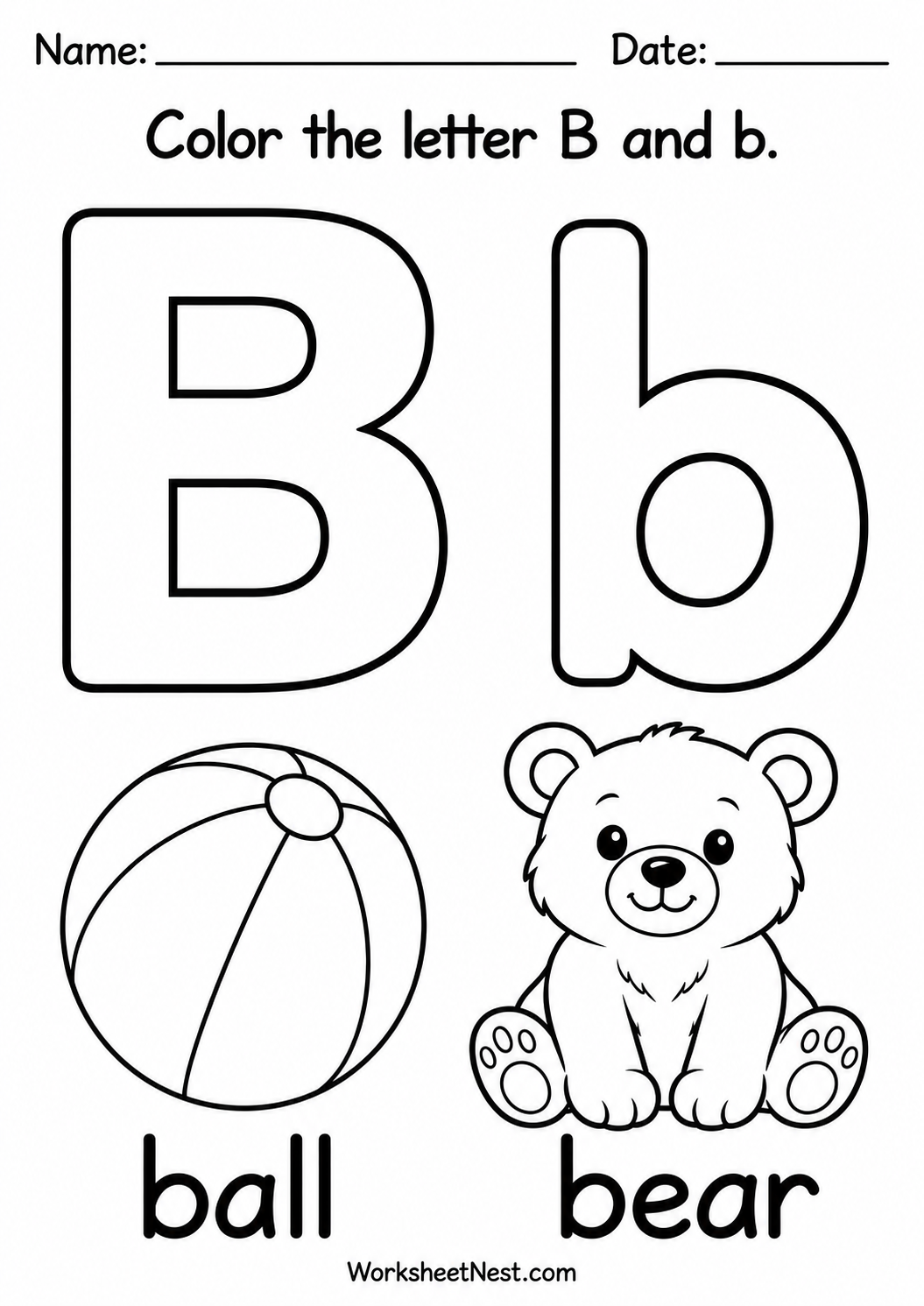
Color the large outlined B and b, then color the ball and bear. Name the pictures and point to each letter form before beginning pencil practice.
Worksheet 2: Find Uppercase B
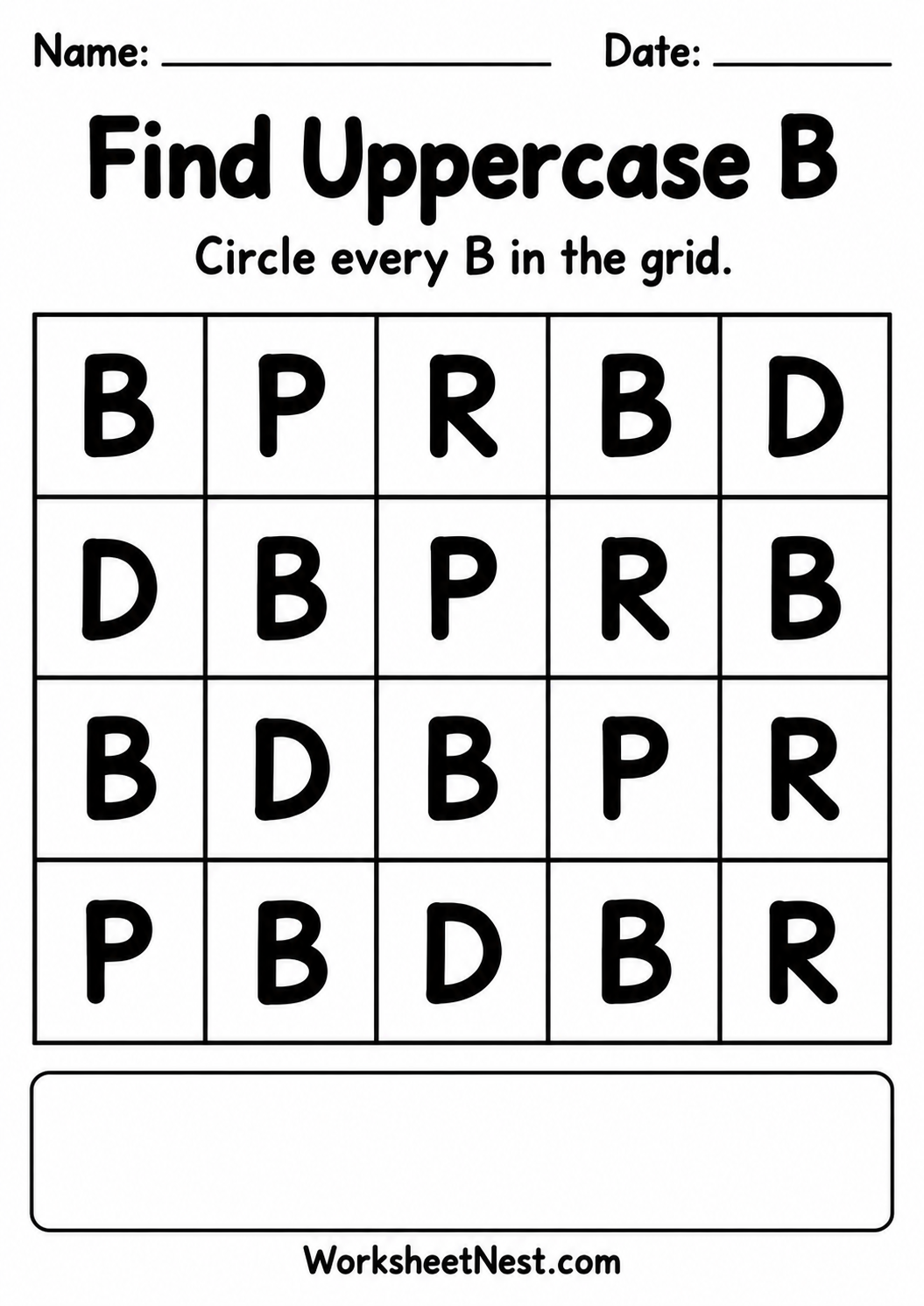
Circle capital B in the mixed-letter grid. Compare its two rounded sections with the nearby P, R, and D shapes, scanning one row at a time.
Worksheet 3: Find Lowercase b
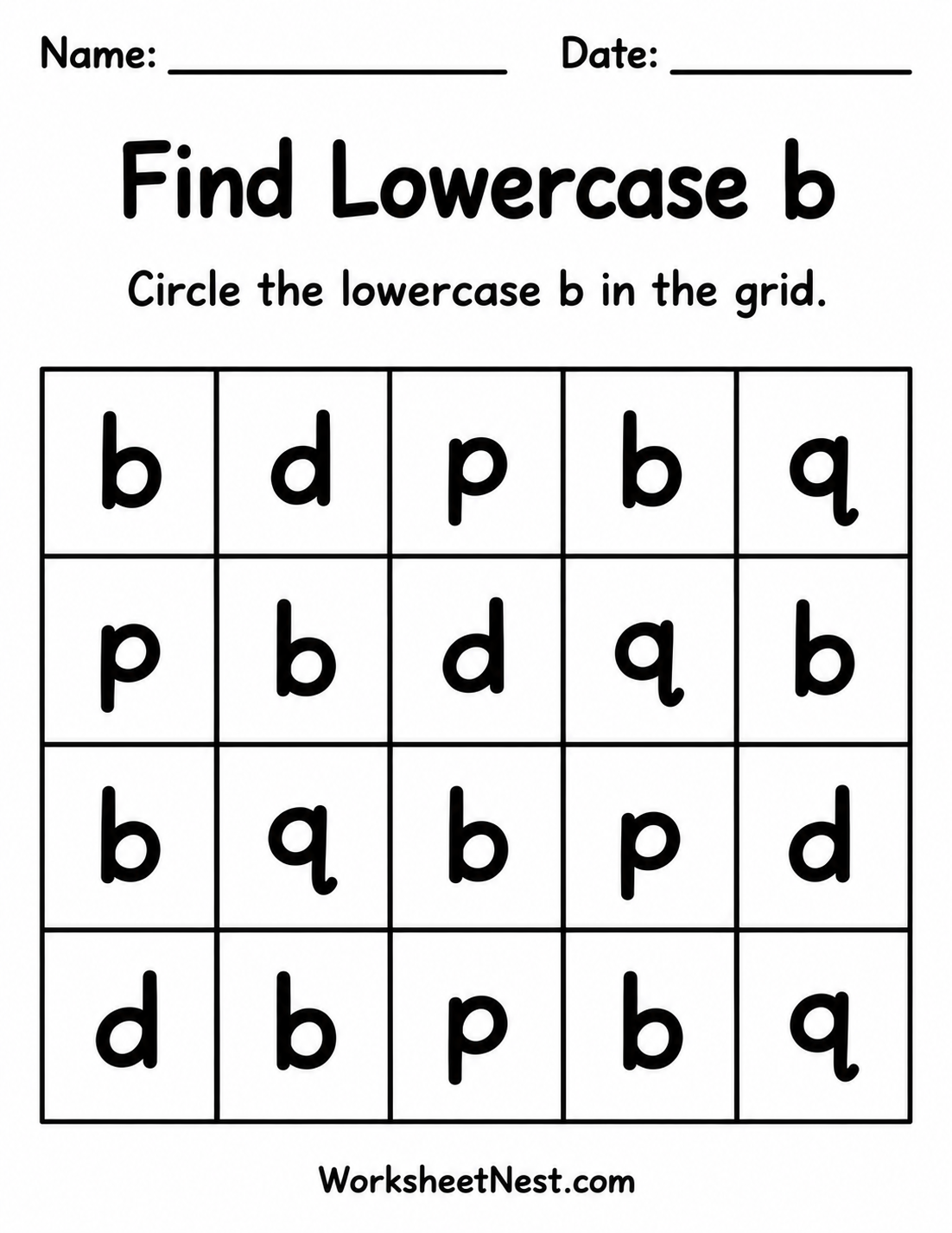
Find and circle lowercase b among d, p, and q. Keep a b model visible so the child can compare the tall stem and the bowl on the right.
Worksheet 4: Learn to Write B
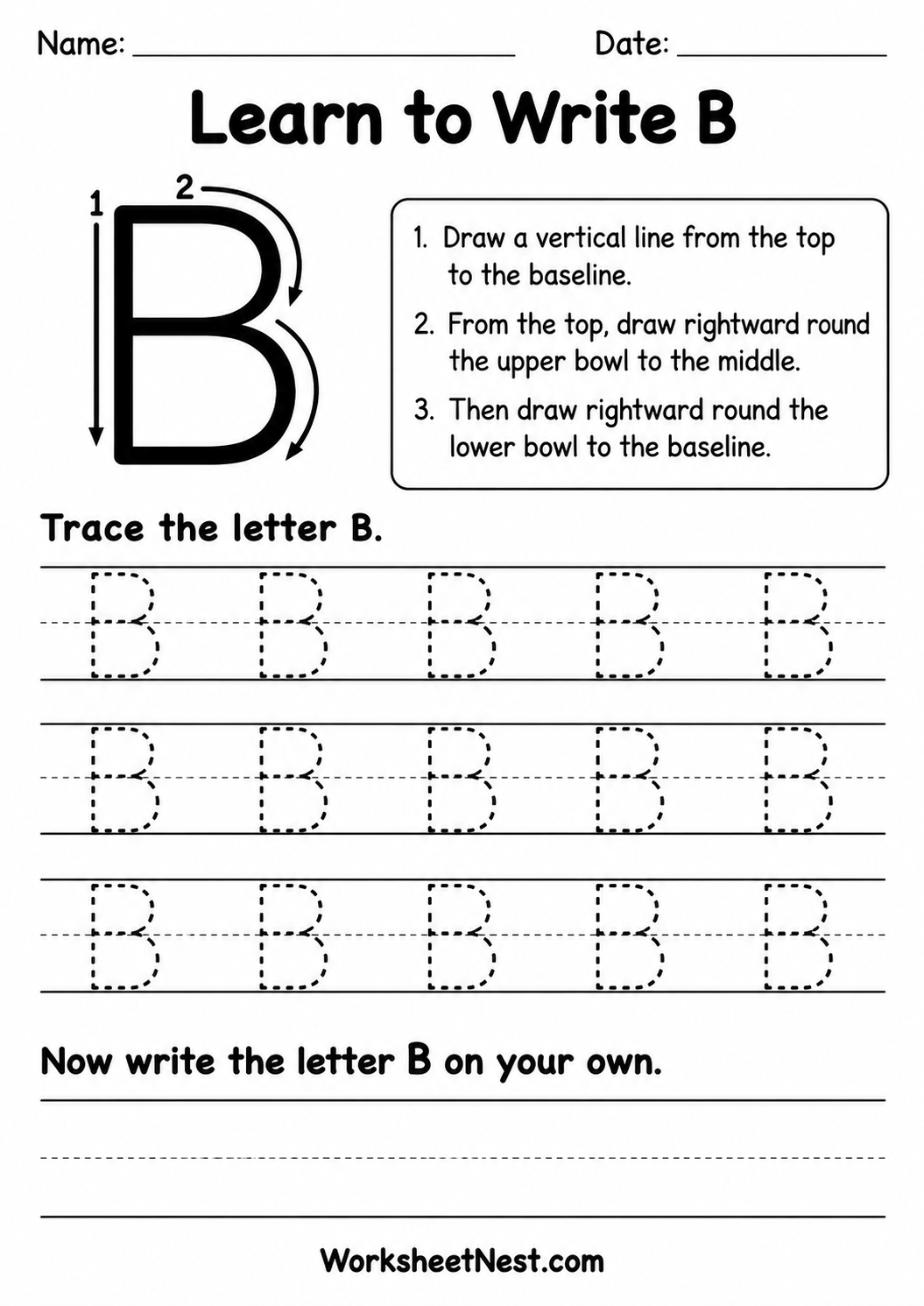
Follow the large numbered capital B model, trace the dotted rows, and try the blank practice area. The arrows show the stem followed by the two rounded sections.
Worksheet 5: Learn to Write b
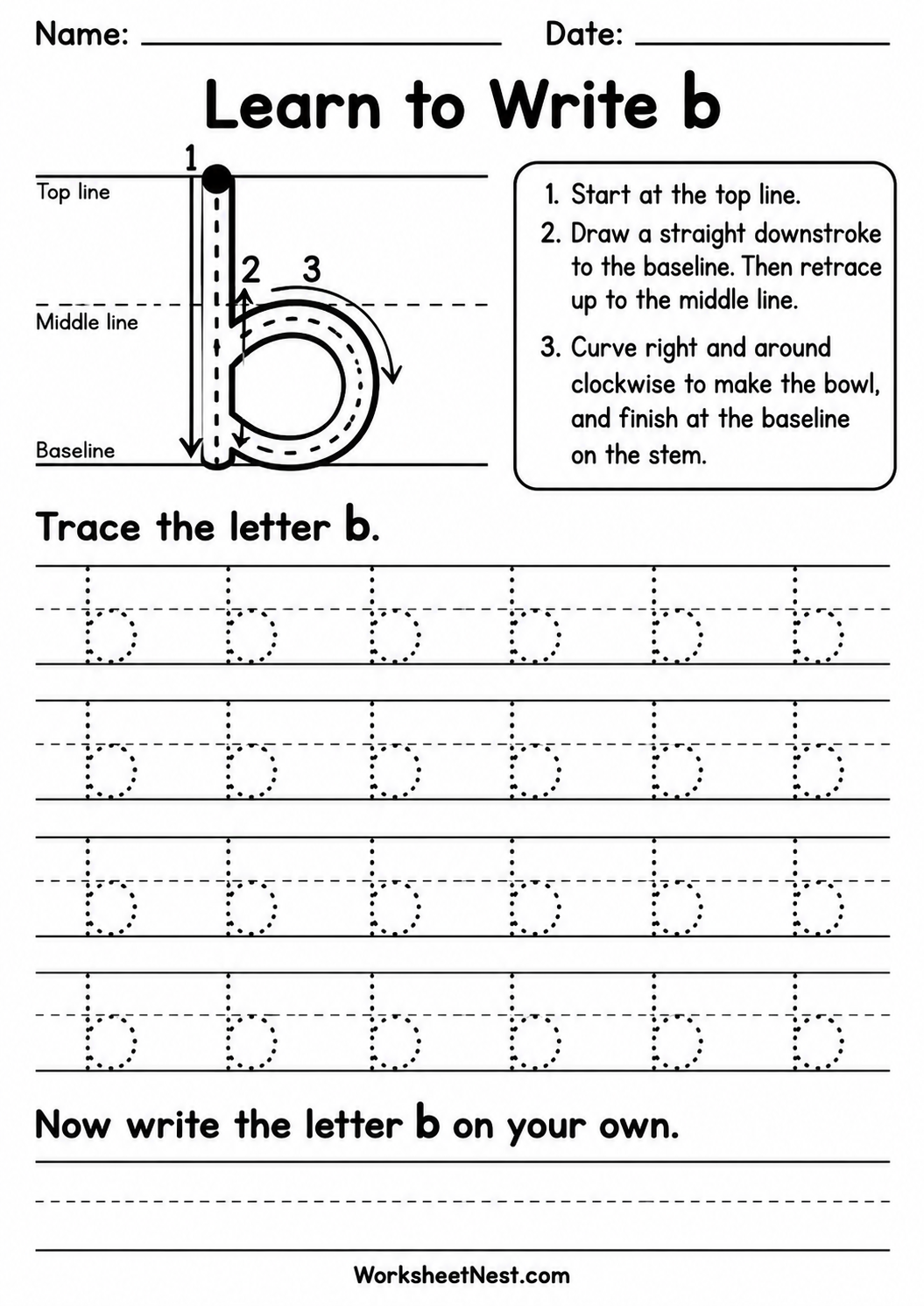
Study the lowercase b model and its handwriting guides. Trace the dotted letters before using the open lines to try the same form independently.
Worksheet 6: Trace B and b
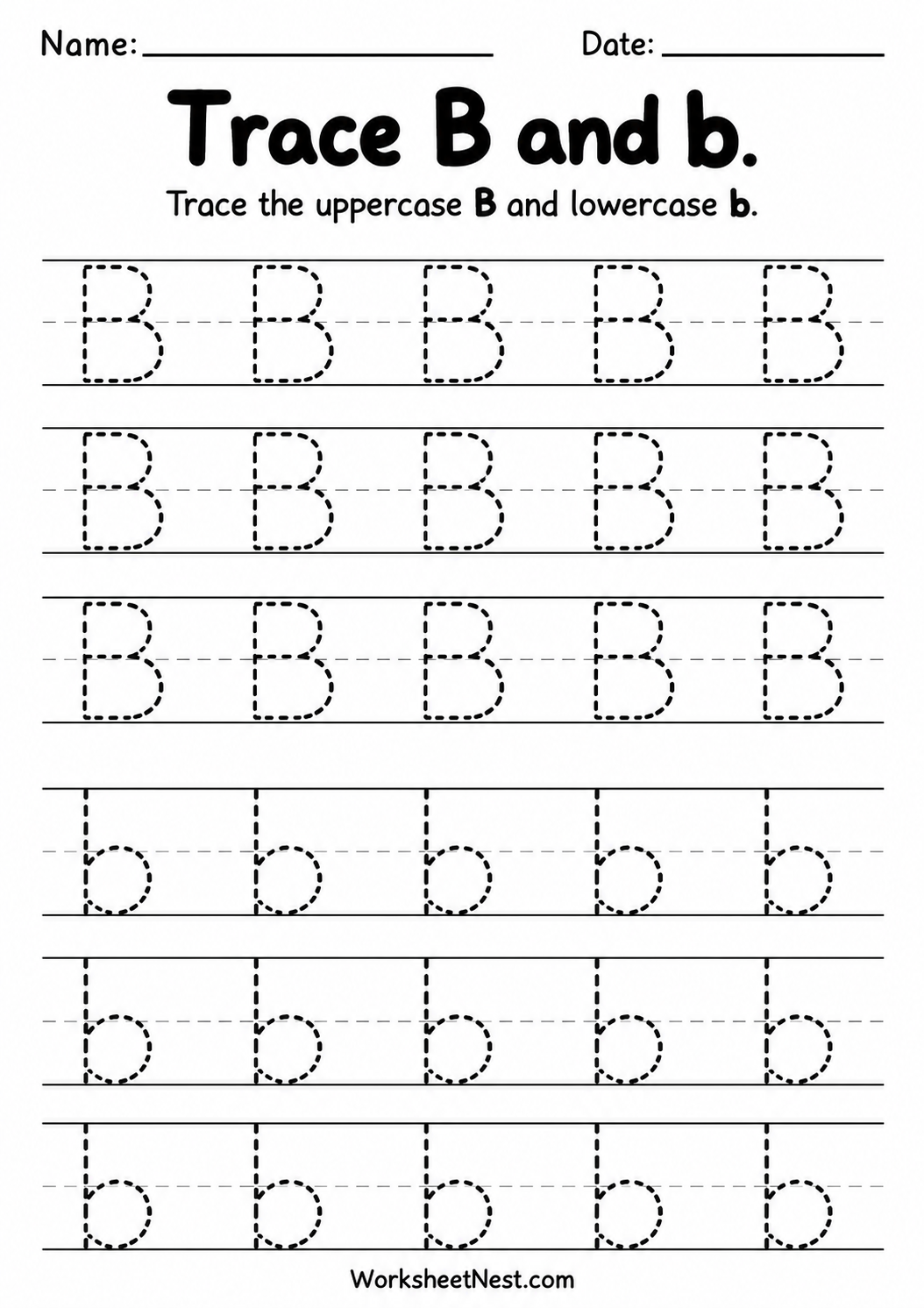
Practice uppercase B and lowercase b in separate dotted rows. Use a few examples at a time, keeping the stem height and rounded sections clear.
Worksheet 7: Match Letter Pairs
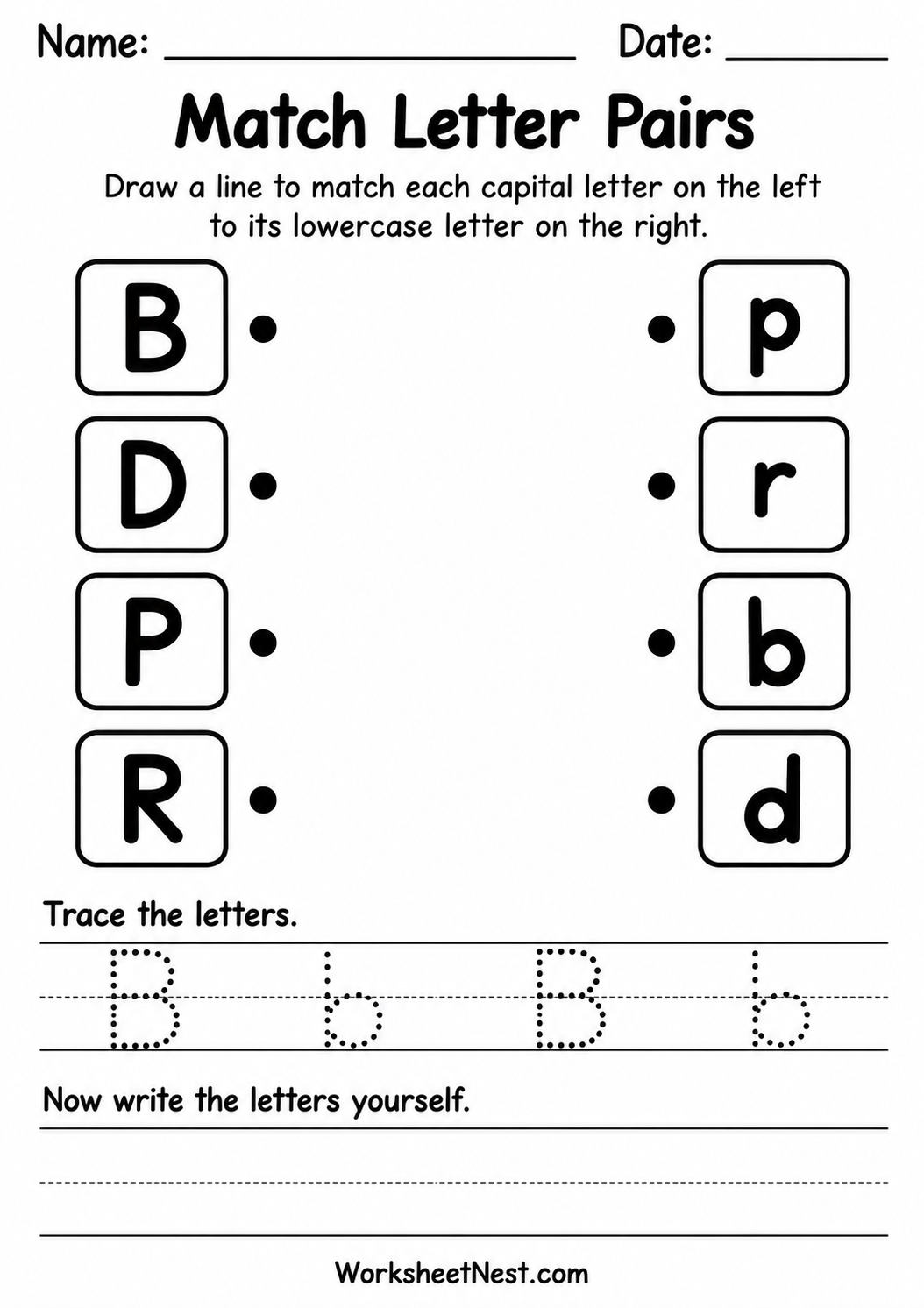
Join B, D, P, and R to their lowercase partners. Then trace B and b and use the blank area for writing. Introduce unfamiliar pairs before asking for independent matching.
Worksheet 8: B in Familiar Words
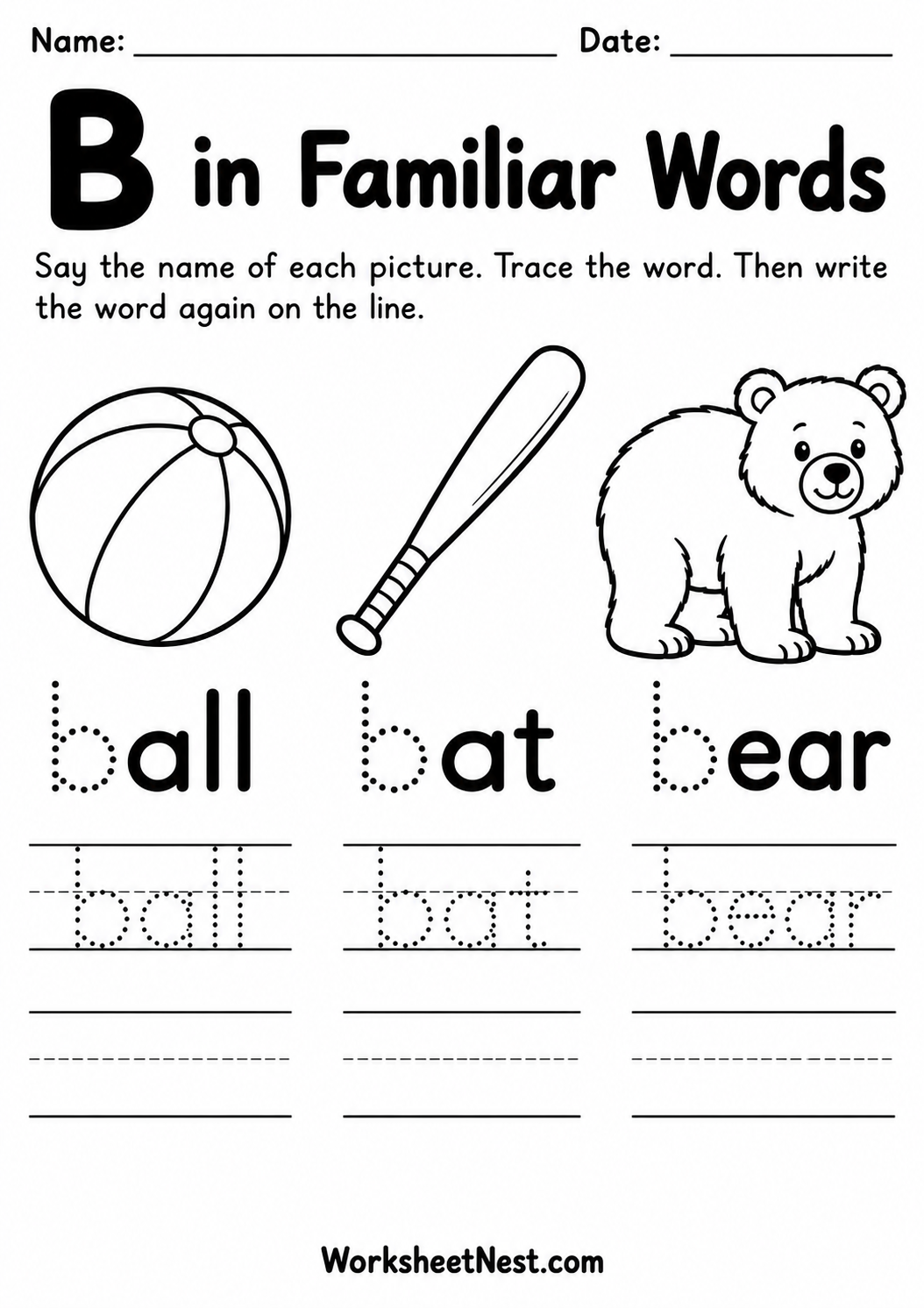
Name ball, bat, and bear beside their pictures. Trace the starting b and the dotted words, then copy the words on the lines with adult support as needed.
Worksheet 9: Write B and b Yourself
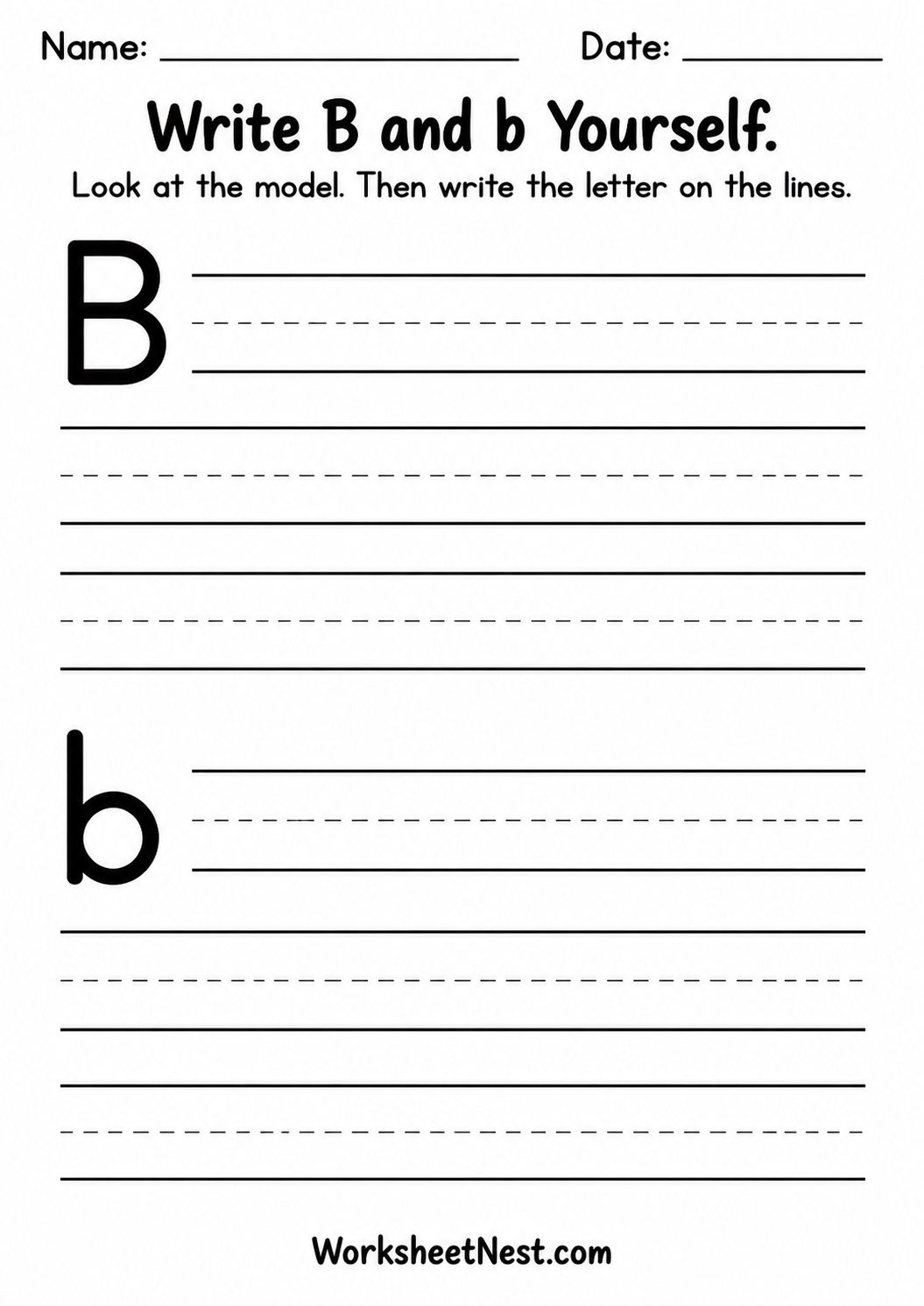
Look at the solid capital and lowercase models, then write on the blank ruled lines. This page gives practice forming both letters without following dotted outlines.
Worksheet 10: I Know B and b
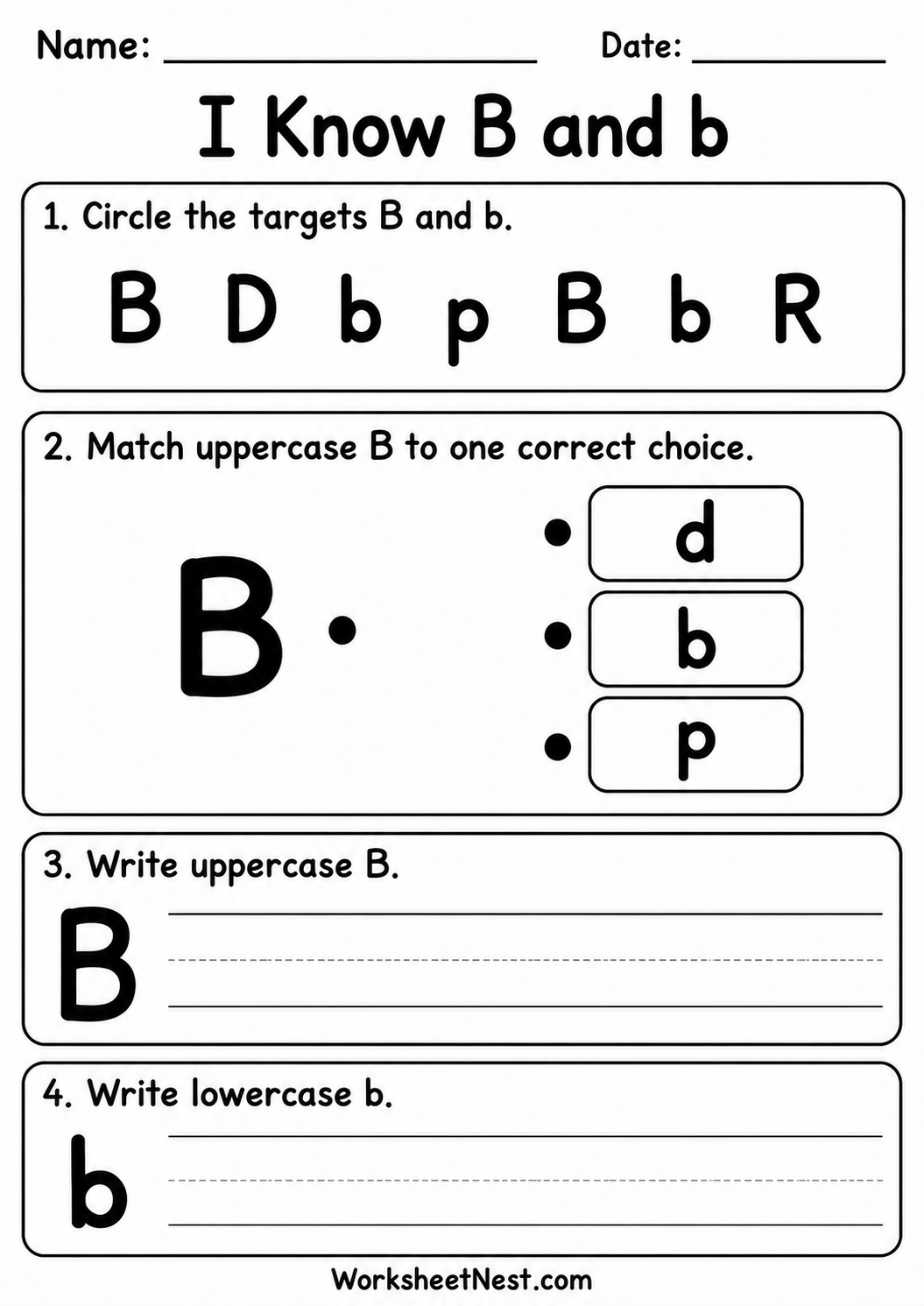
Review the two letter forms by circling B and b, matching capital B to lowercase b, and writing each form on its own lines. Use the child’s responses to choose the next practice page.
Download the Complete Bundle
The Letter B collection has eleven A4 portrait pages: one cover followed by ten worksheets. Use the whole booklet or select individual activities. The practice pages have white backgrounds and black outlines, so the colorful cover can be omitted from everyday printing.
How to Use the Letter B Tracing Worksheets
Show capital B and lowercase b together and say their shared letter name. Point out the tall stem and the rounded part on the right. Ask the child to find each form before beginning to write. A child may recognize a letter well while still needing help making its shape.
Knowing letter names matters for later reading, as explained in Teaching Letters in Kindergarten on Reading Rockets.
Model One Letter at a Time
On the uppercase formation page, follow the printed arrows and numbered instructions. Start with the vertical stroke, then form the upper and lower rounded sections. On the lowercase page, follow its own model rather than treating b as a smaller capital B. Trace the large example with a finger before moving to pencil work.
Use a short part of a tracing row first. Watch whether the child begins at the model’s starting point and keeps the rounded shape on the correct side. If the movement becomes difficult, return to the larger model and try one example together. Save the remaining rows for another session.
Connect Recognition with Handwriting
The uppercase hunt includes B among letters such as P, R, and D. The lowercase hunt places b among d, p, and q. Scan one row at a time and ask the child to point before circling. If two forms are confused, compare their stems and rounded parts calmly, using the visible example. The matching page also includes D, P, and R with their lowercase partners. Name unfamiliar pairs before asking the child to draw connecting lines. Its tracing and writing section brings the focus back to B and b.
Read Ball, Bat, and Bear Together
Name the three pictures on the familiar-words page before tracing. Say each word slowly and draw attention to its first sound. The pictures support discussion, while the dotted word models support handwriting. Adult help with reading is appropriate; completing the tracing does not establish independent word reading.
Move toward Independent Writing
Use the page with solid B and b models and blank ruled lines when the child is ready to try without dots. Observe one attempt before requesting more. Give a specific prompt about the stem or bowl if needed. The final review page combines recognition, matching, and writing, making it useful for deciding which activity to revisit.
Printing and Choosing Pages
Open the PDF in a PDF reader and select A4 portrait. Inspect print preview and try one worksheet before printing a larger set. If using US Letter paper, use the printer’s fit setting and check that the outer edges and footer remain visible; a separate US Letter print test has not been performed.
Common Core Connections
This collection gives partial practice with one letter, B and b, through tracing, recognition, and matching. It does not cover the full alphabet.
Kindergarten RF.K.1.d: Recognize and name all upper- and lowercase letters of the alphabet. In this collection, Worksheets 1, 2, 3, 7, and 10 support recognition and naming.
Kindergarten L.K.1.a: Print many upper- and lowercase letters. In this collection, Worksheets 4, 5, 6, and 9 support printing B and b.
For preschool, use this collection for general letter recognition and fine-motor practice.
FAQs
Do All Eleven Pages Contain Activities?
There are ten activity worksheets and one separate colorful cover.
Does the Collection Include Both Letter Forms?
Yes. There are separate uppercase and lowercase formation pages, shared tracing, and independent writing for B and b.
Must Every Page Be Finished at Once?
No. Choose one page, notice what the child can do, and select the next activity from that response.
License and Terms of Use
Free for personal, homeschool, and classroom use; do not sell, re-upload, or redistribute.