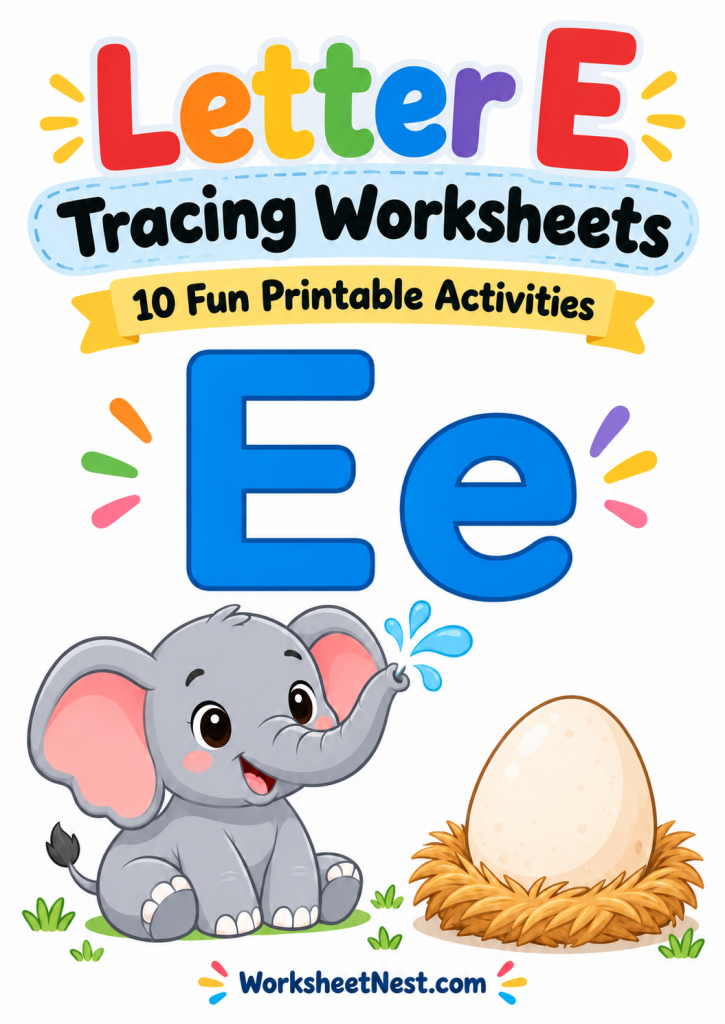
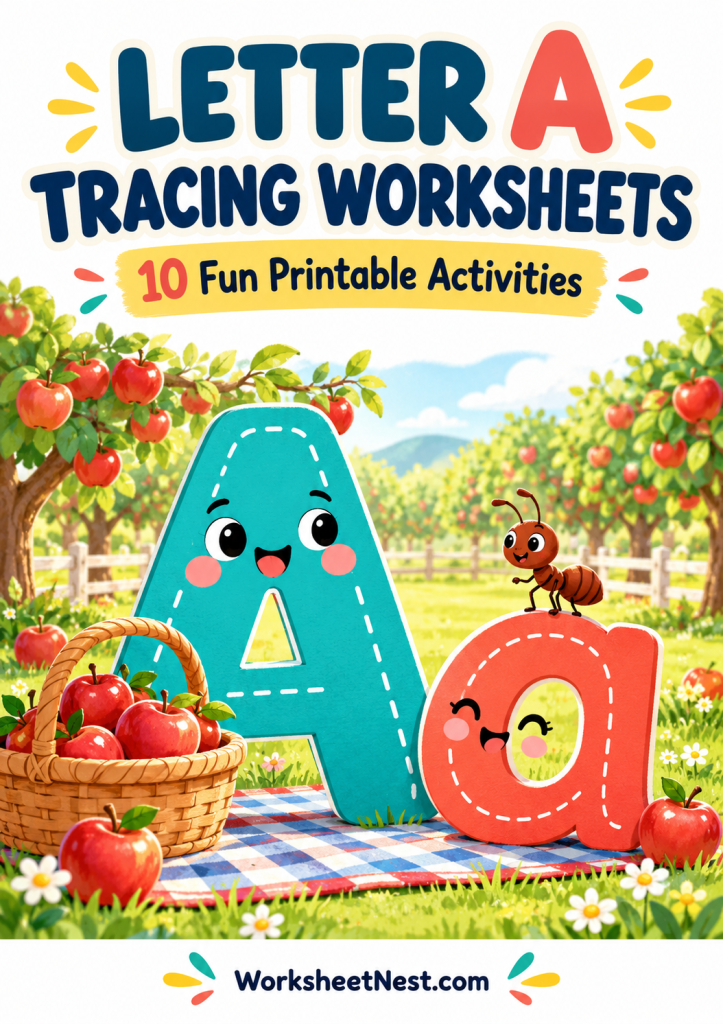
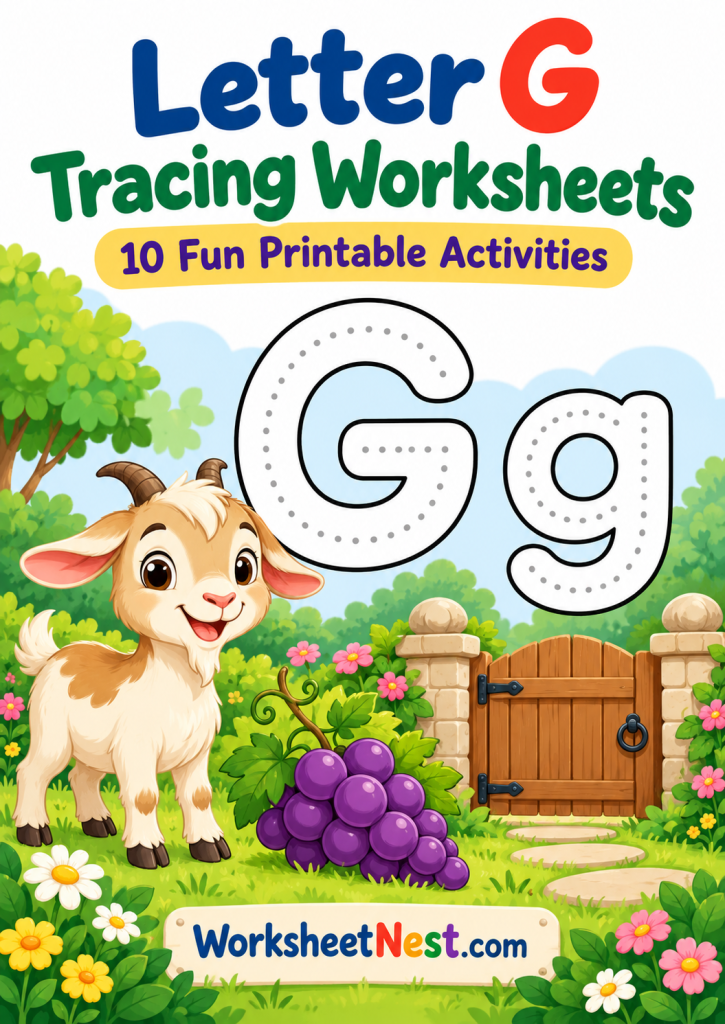
These letter E tracing worksheets give preschool and kindergarten learners ten different ways to explore uppercase E and lowercase e. Children move through coloring, letter recognition, tracing, matching, word practice, and independent handwriting. The collection includes one colorful cover and ten black-and-white activity pages.
Choose a single worksheet for a short lesson or work through the set over several days. Elephant pictures connect the activities, while egg and envelope appear in the word practice. Each preview below shows the activity so you can choose the right level of support for your child or class.
Choose a Letter to Practice
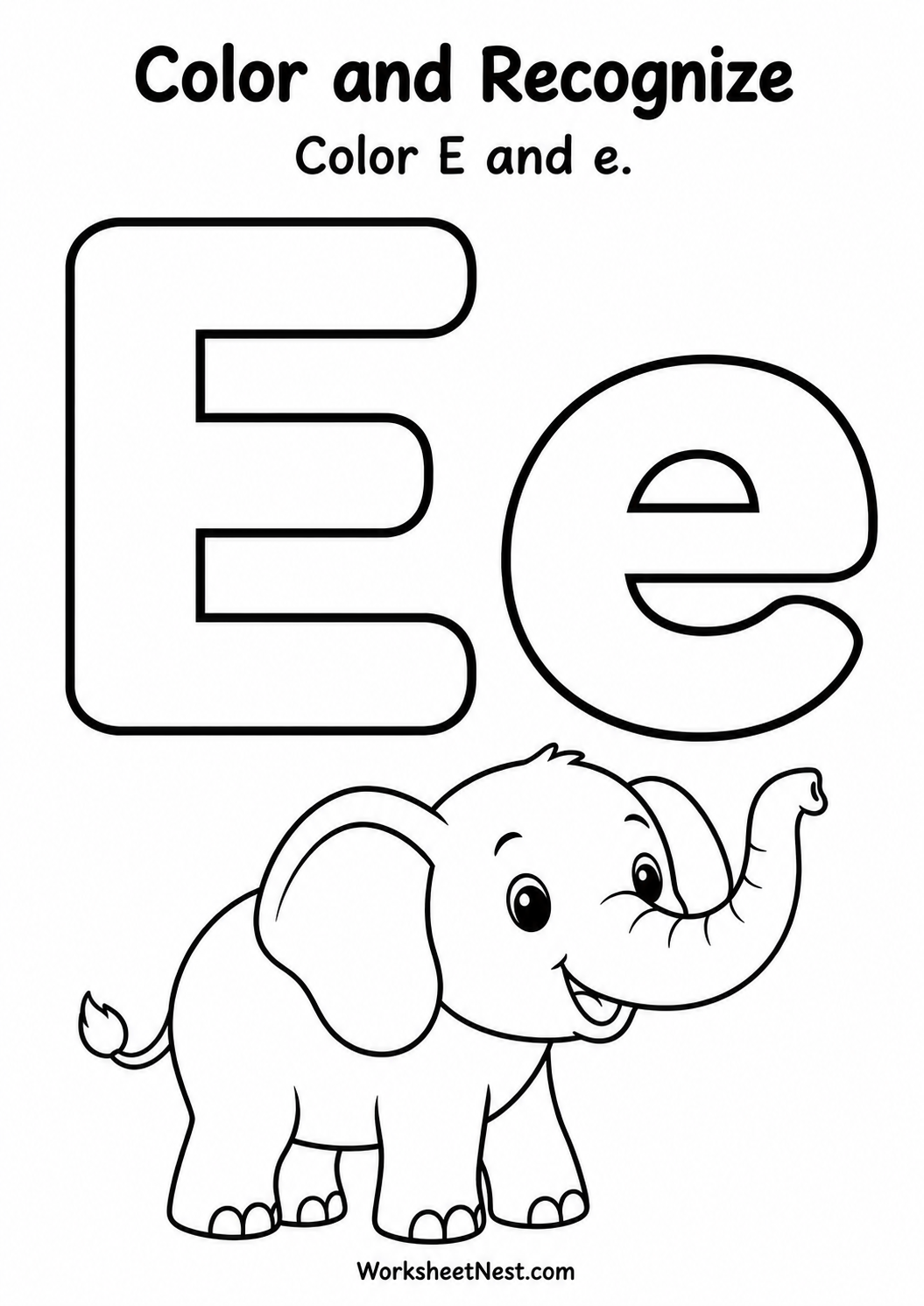
Worksheet 1: Color and Recognize E and e
Start with the large outline letters and the friendly elephant. Children color uppercase E and lowercase e while noticing how different the two shapes look. Say the letter name together and point to each form before coloring. This letter E coloring worksheet offers a gentle introduction before the smaller tracing activities.
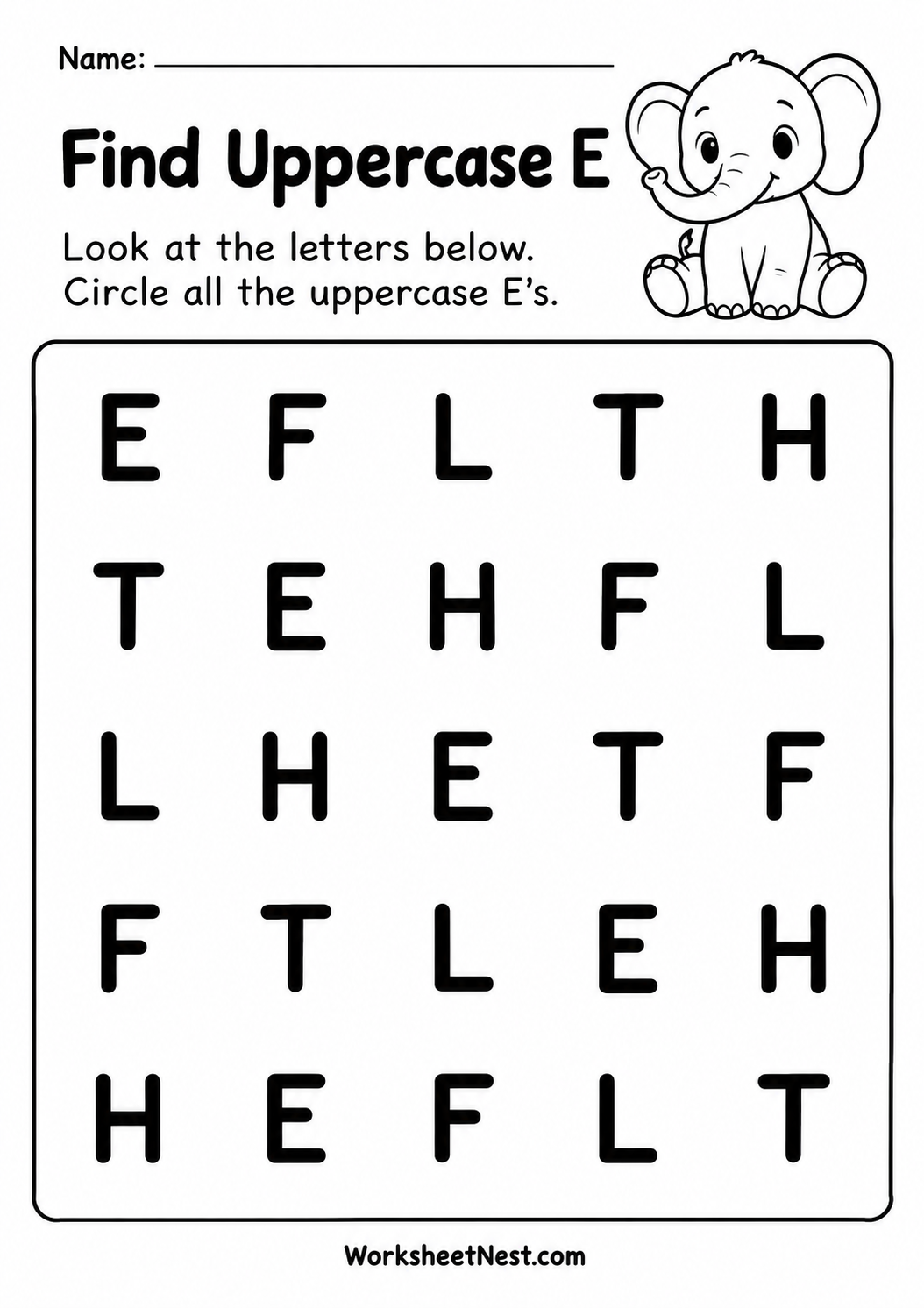
Children circle capital E in a grid that also contains F, L, T, and H. Encourage them to look for all three horizontal lines instead of choosing a letter with a similar shape. This uppercase letter E recognition activity lets you check visual identification before asking children to form the letter with a pencil.
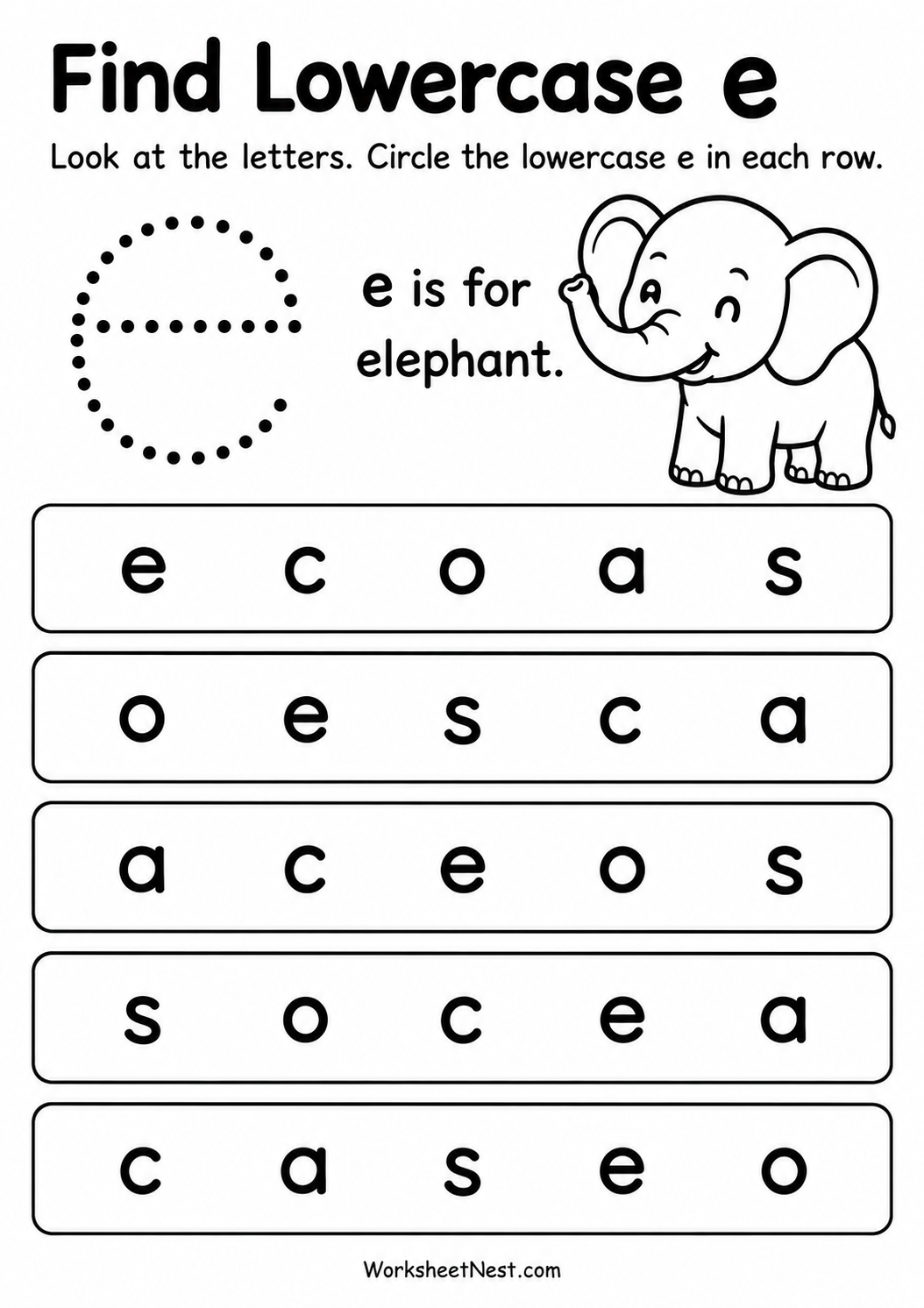
A large dotted e introduces the lowercase shape, followed by rows of mixed letters. Children circle the lowercase e in each row while comparing it with c, o, a, and s. Ask them to notice the short line inside e. The elephant picture gives you a familiar word to discuss together.
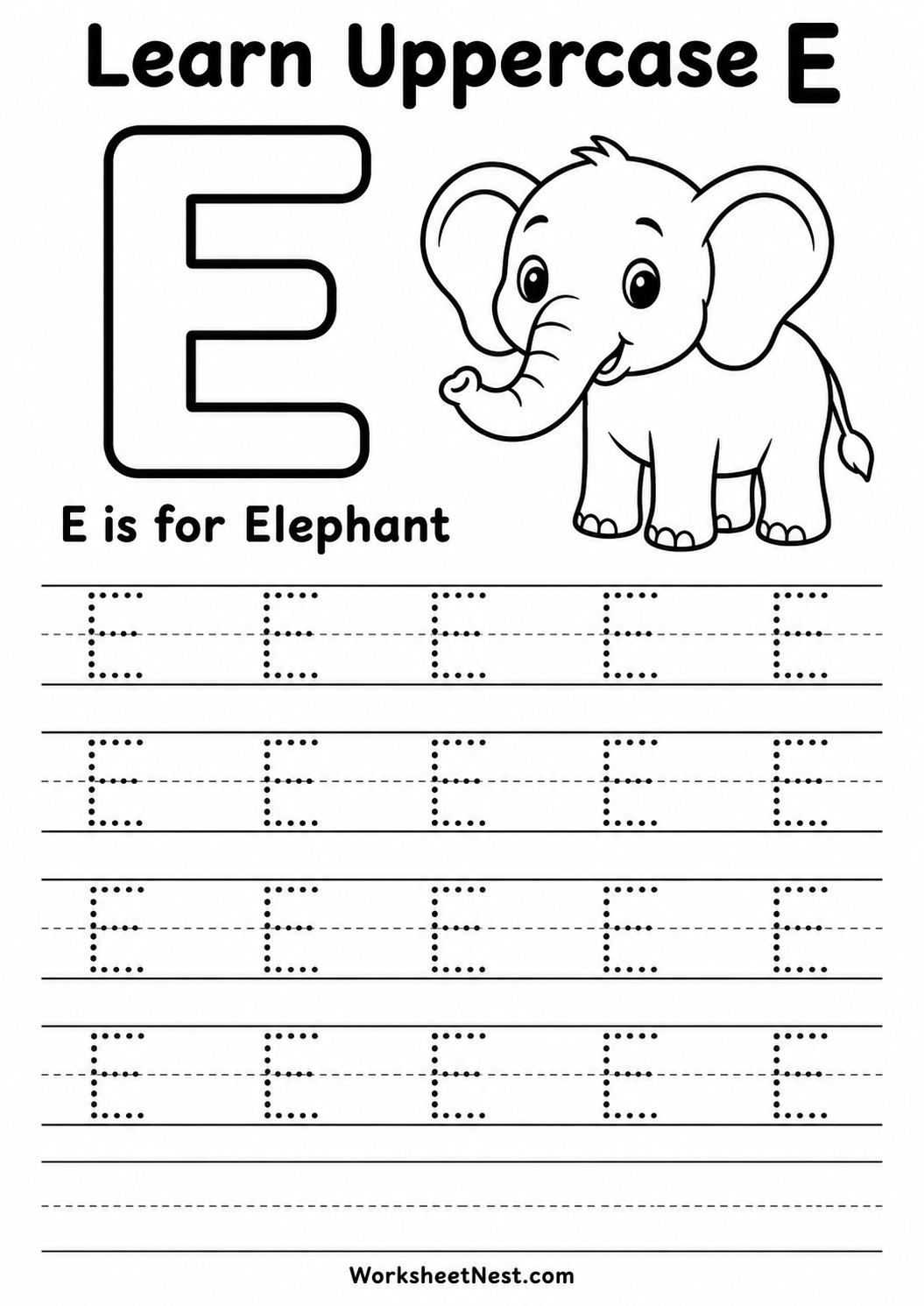
Use this uppercase E tracing worksheet to practice the capital letter on handwriting lines. A large model and an elephant picture sit above rows of dotted letters. Demonstrate a tall line and three shorter lines, then invite children to trace slowly. Focus on clear shapes and comfortable pencil control rather than finishing every row quickly.
This lowercase e tracing worksheet moves from dotted letters to an independent writing line. At the bottom, children color pictures whose names start with e: elephant, egg, and envelope. Apple is the distractor. Name the pictures aloud together, then return to the small e model if the child needs help forming its curve.
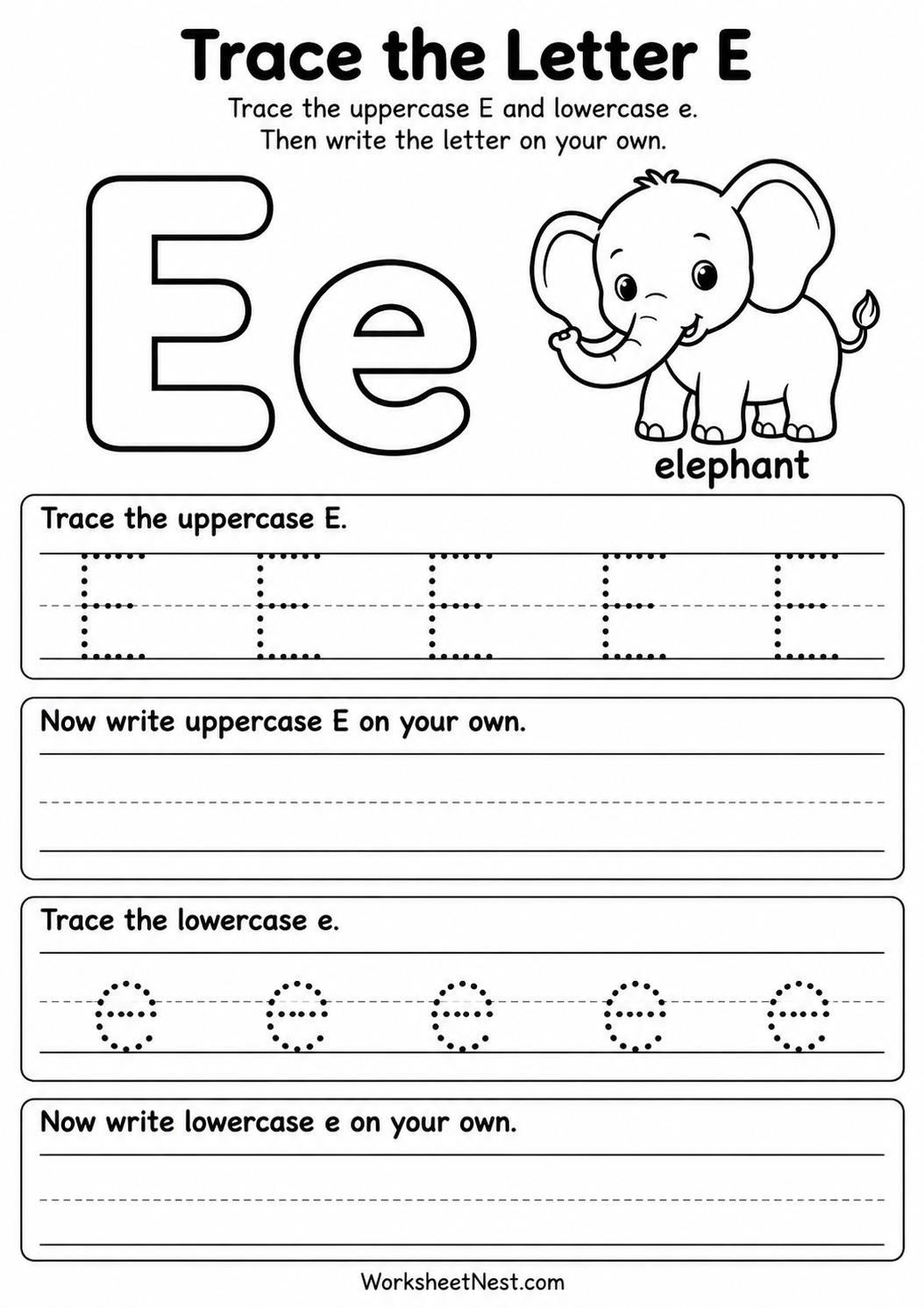
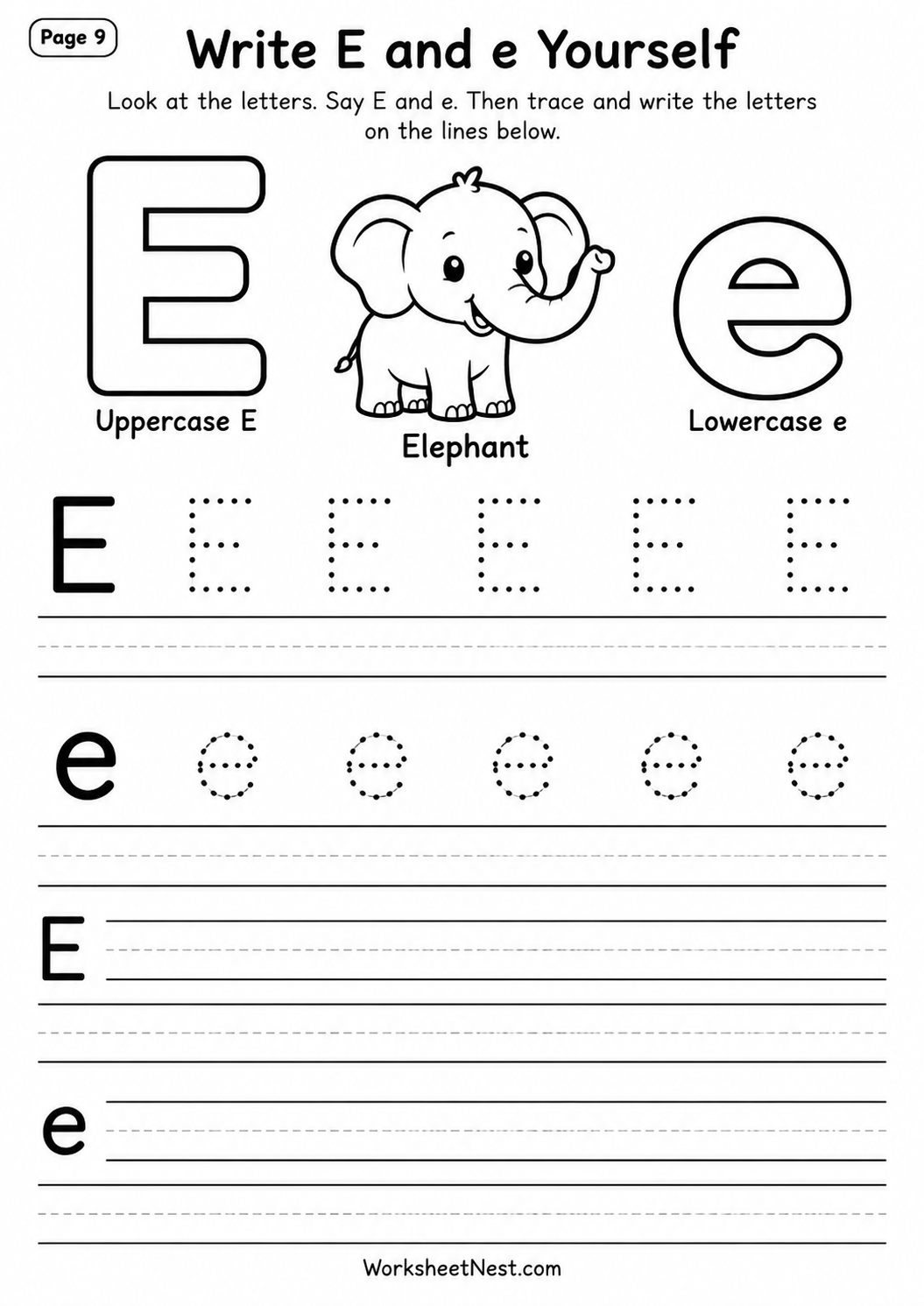
Both letter forms appear on one page, with a tracing section and an independent writing section for each. Children trace uppercase E, write their own, and repeat the process with lowercase e. This mixed letter formation practice helps them switch between capital and small letters while keeping the two shapes distinct.
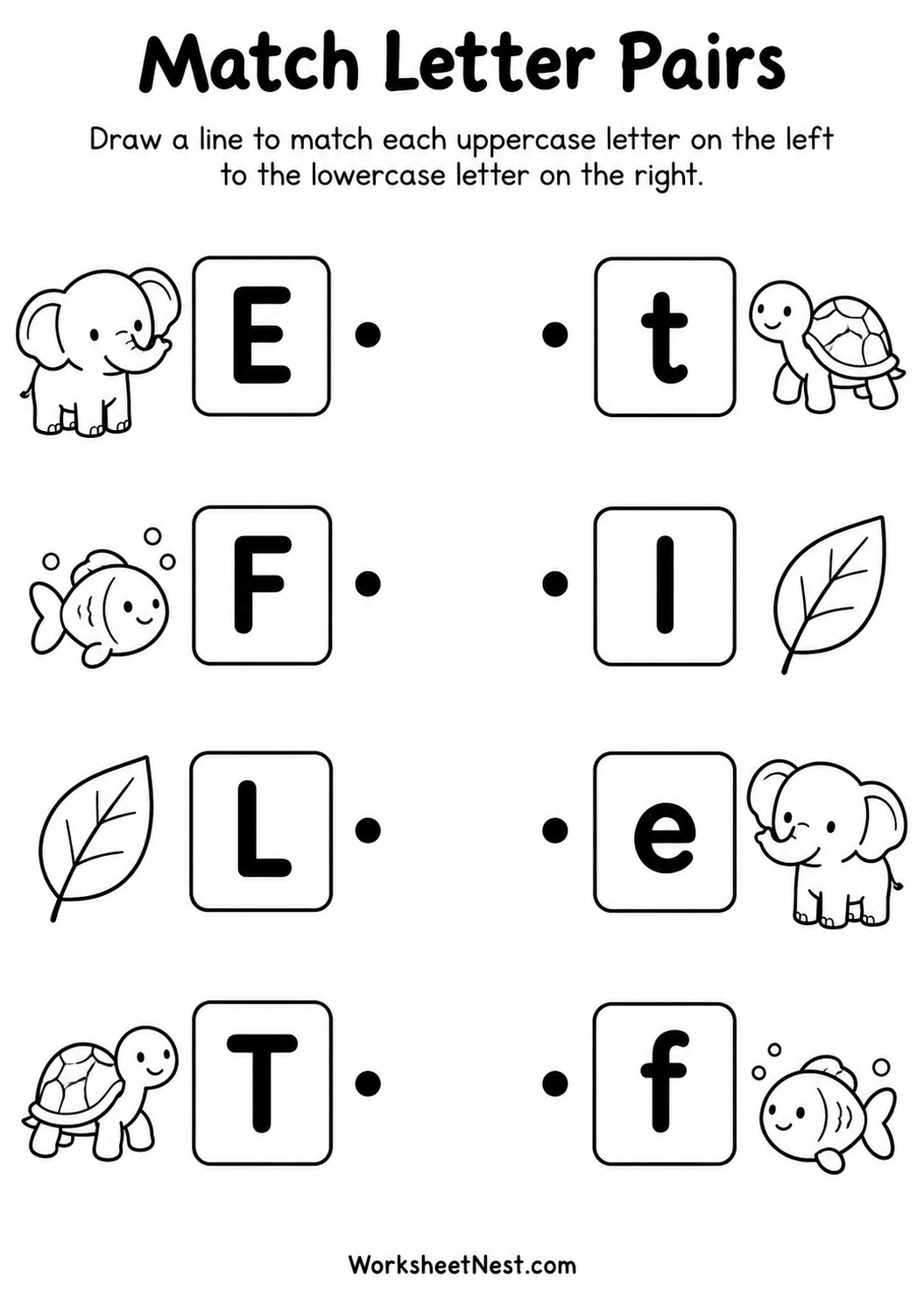
Children draw lines from E, F, L, and T to their matching lowercase letters in a different order. Picture clues show elephant, fish, leaf, and turtle. Use this uppercase and lowercase matching worksheet to talk about letter pairs. Invite children to name each pair after connecting it, especially E and e.
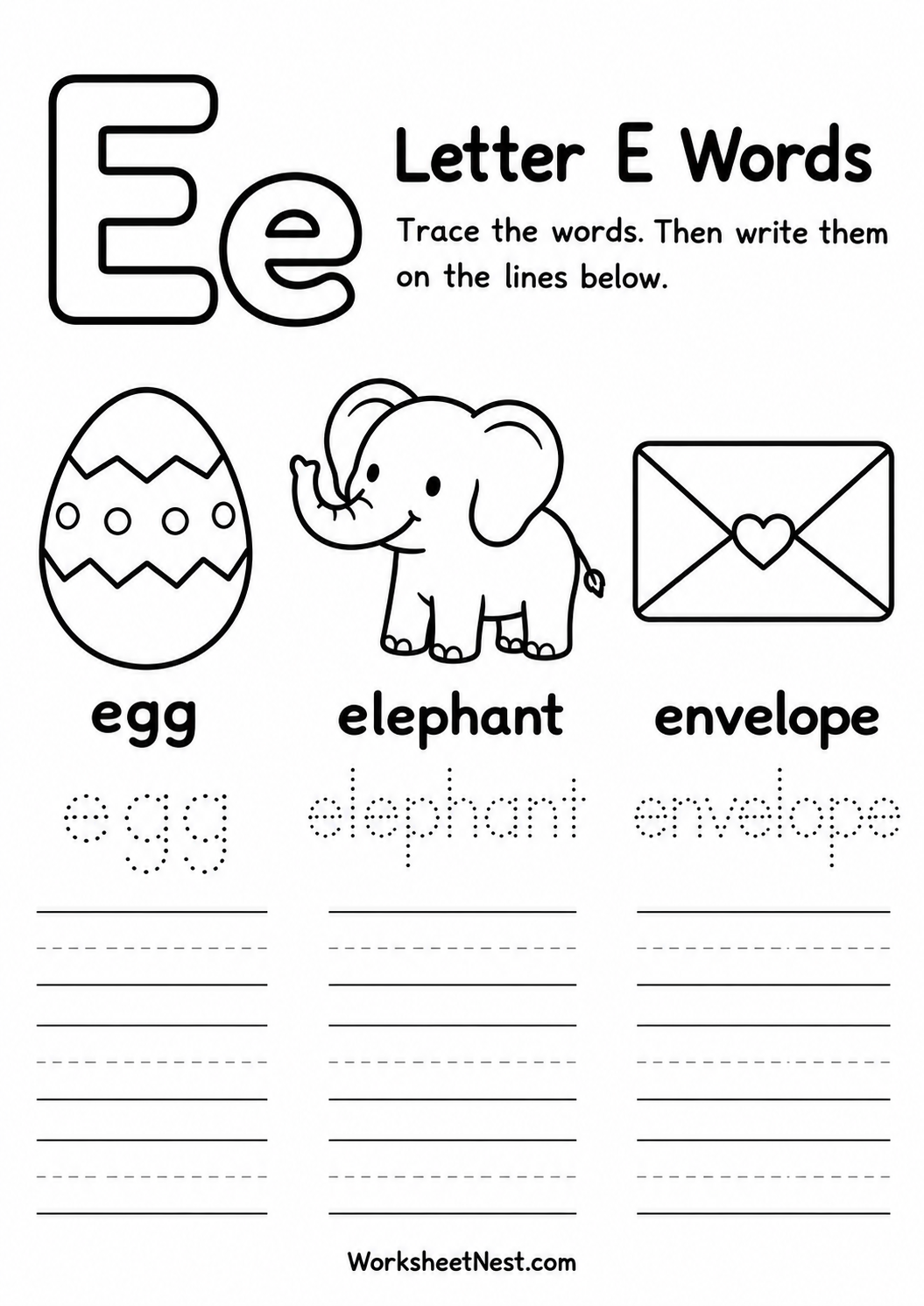
The word tracing page features egg, elephant, and envelope, with a picture, dotted word, and writing lines for each. Read the words together before tracing. Children can notice the first letter without being expected to read every word independently. This activity adds vocabulary to the handwriting practice and gives meaning to the repeated e.
A model letter leads into dotted practice and then separate writing areas for uppercase E and lowercase e. Encourage children to look back at the model before trying their own letters. This letter E handwriting worksheet is useful when a learner is ready for less support, with tracing still available as a reminder.
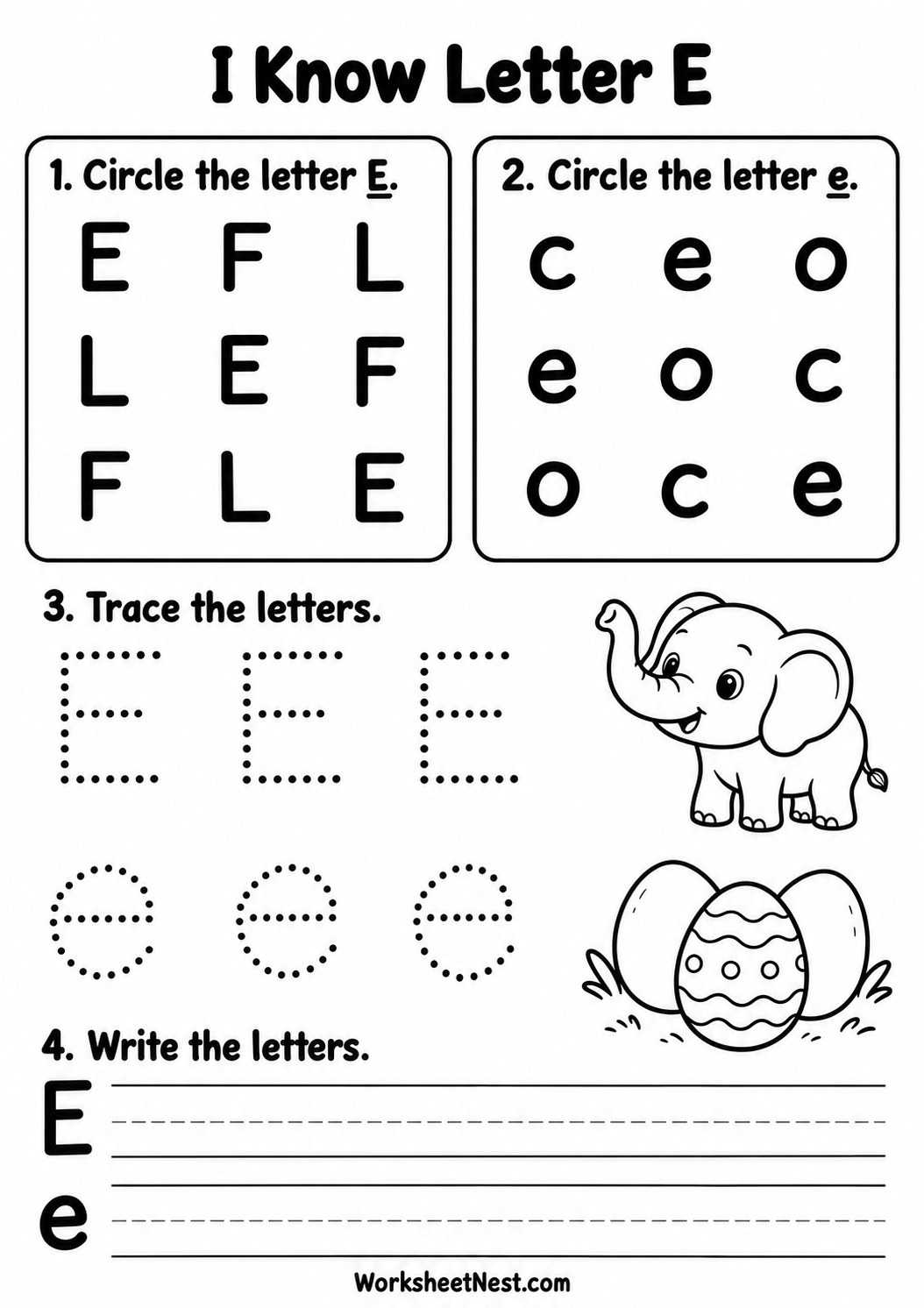
Finish with a review that combines capital and lowercase letter recognition, tracing, and independent writing. Children circle the target letters, follow the dotted E and e, and write both forms on the lines below. Notice which part feels easiest and which needs another short practice session; use the page to guide your next lesson.
Keep the ten activity pages together for a letter-of-the-week folder, or print only the pages your learners need. The complete set includes the cover plus all ten worksheets. The individual options are helpful when a child needs another recognition page or an extra opportunity to write independently.
Begin by saying the letter name and pointing to E and e. Model one example, let the child trace, and then offer a chance to write without dots. Keep sessions short and pause when the child needs a break. You can use the recognition and matching pages alongside handwriting rather than requiring every page in order.
As a listening activity, say E words aloud, such as elephant, egg, and envelope, while children trace, so they hear the sounds in words. For background on listening for sounds in words, see the Reading Rockets article Phonemic Awareness: An Introduction.
Printing Tips
The source pages use an A4 portrait layout. Check print preview and choose a fit setting if you use US Letter paper, making sure the footer and writing lines remain visible. A pencil and crayons are enough for the activities. Use a page protector if you want to repeat tracing with an appropriate erasable marker.
Common Core Connections
These letter E tracing worksheets offer partial practice with uppercase E and lowercase e only; they do not cover a full standard on their own. Preschool use is general letter practice with no assigned code.
RF.K.1.d (recognize and name all upper- and lowercase letters of the alphabet): Worksheets 1, 2, 3, 7, and 10, which focus on recognizing, finding, matching, and reviewing E and e.
L.K.1.a (print many upper- and lowercase letters): Worksheets 4, 5, 6, and 9, which focus on tracing and writing E and e. Worksheet 8, tracing E words, is not mapped to either standard above.
More Alphabet Practice
Keep practicing after you finish this set. Letter B offers another animal-themed introduction, Letter D repeats the same sequence with a different letter, and Letter C provides early handwriting practice. Browse the category pages below to discover sets for other letters as they are added.
License and Terms of Use: Free for personal, homeschool, and classroom use; do not sell, re-upload, or redistribute.