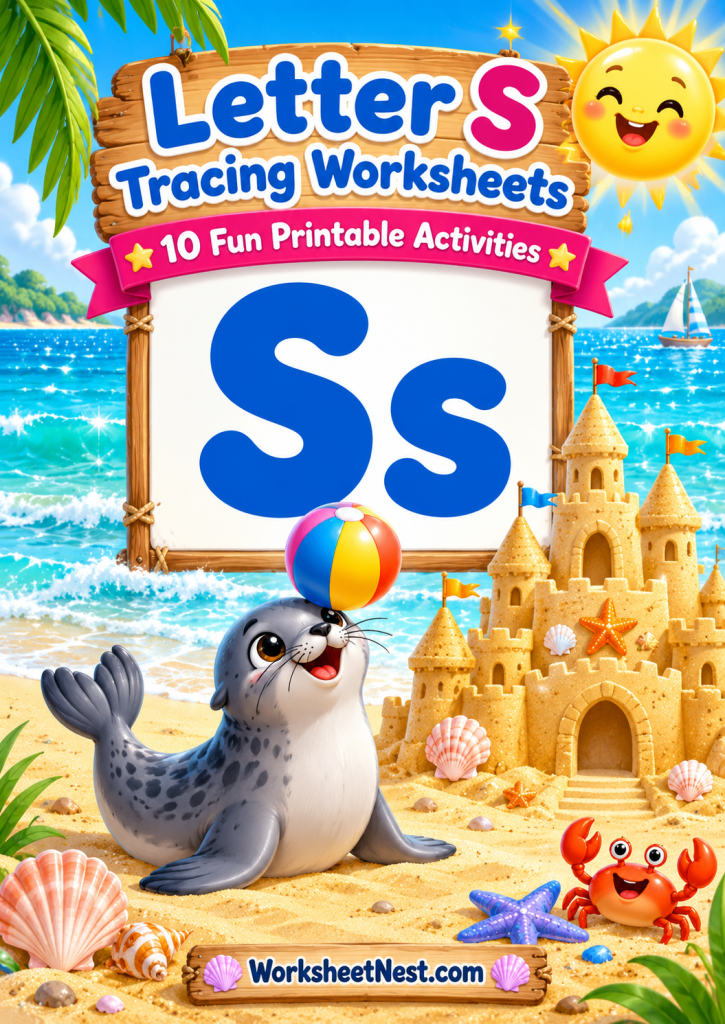
These letter S tracing worksheets pair picture-supported activities with practice in recognizing and forming S and s. A colorful cover featuring a seal and sandcastle beside the sea introduces the collection, followed by ten black-and-white worksheets. The word practice uses sun, seal, sock.
Capital S and lowercase s both use opposing curves, with size marking the case difference. Choose a page that matches your learner’s current needs, or spread the activities across several short lessons. The previews below show the actual tasks so parents, teachers, and homeschoolers can plan suitable preschool or kindergarten practice.
Choose a Letter to Practice
1. Color and Recognize S and s
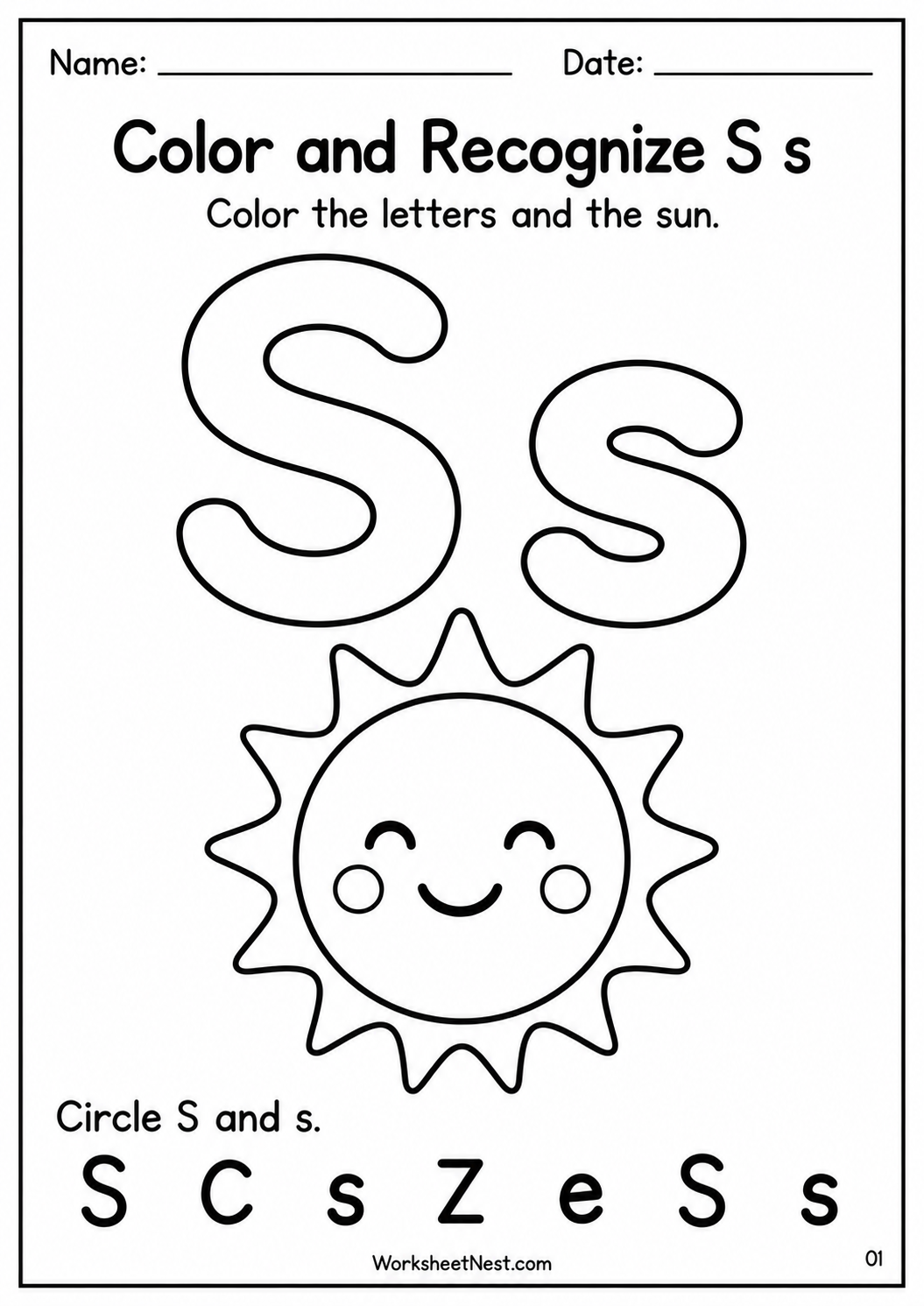
Children color S and s with a sun and then circle target letters in a short mixed-case strip. Use the large outlines for a first look at the two letter forms. Name the picture together and let children choose where to begin coloring before they move to pencil practice.
2. Find Uppercase S
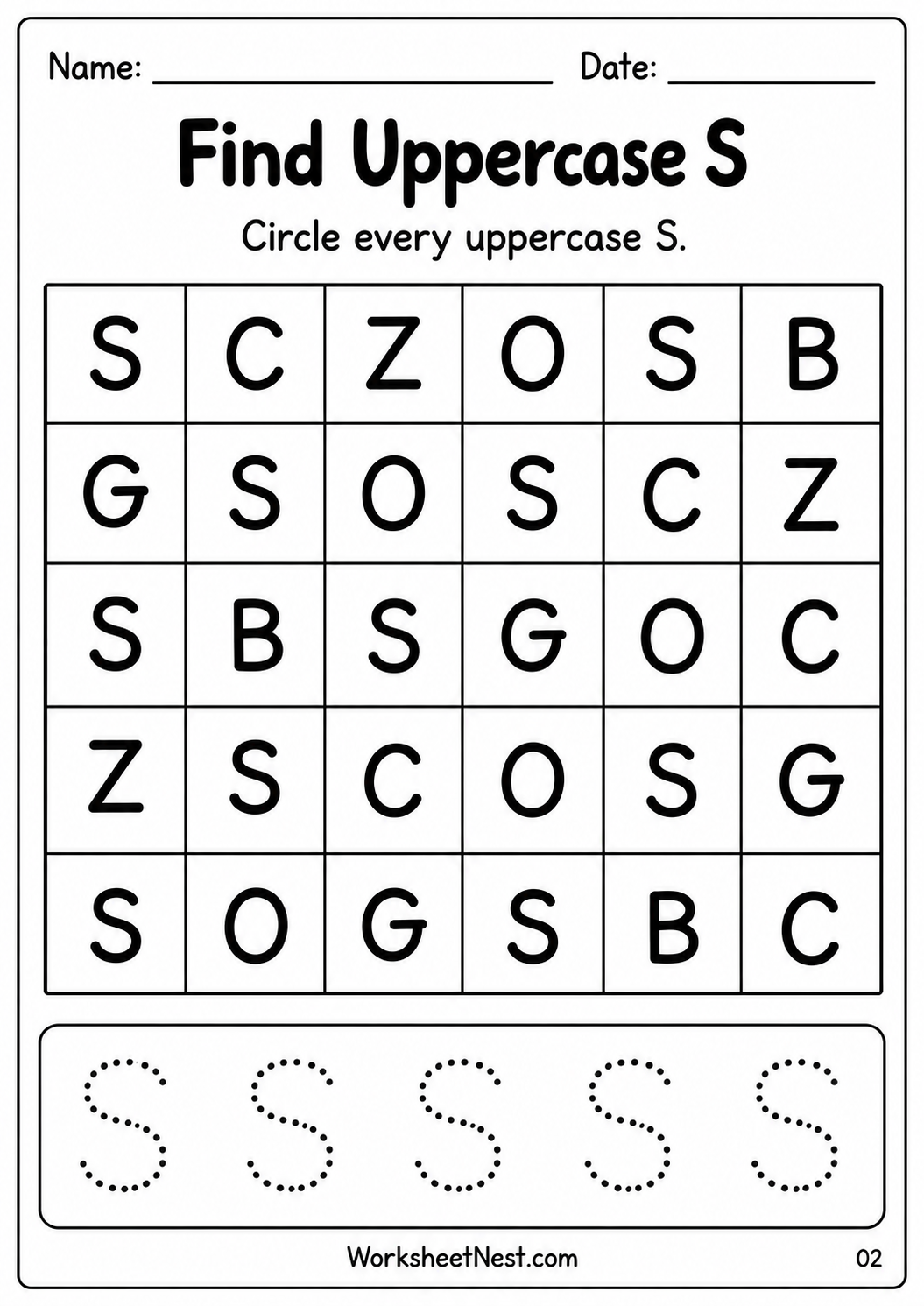
The capital search grid mixes S with C, Z, O, B, and G and adds a large dotted S practice row. Treat the grid as a visual search. Have children name a letter they selected and one they rejected, explaining which feature helped them decide.
3. Find Lowercase s
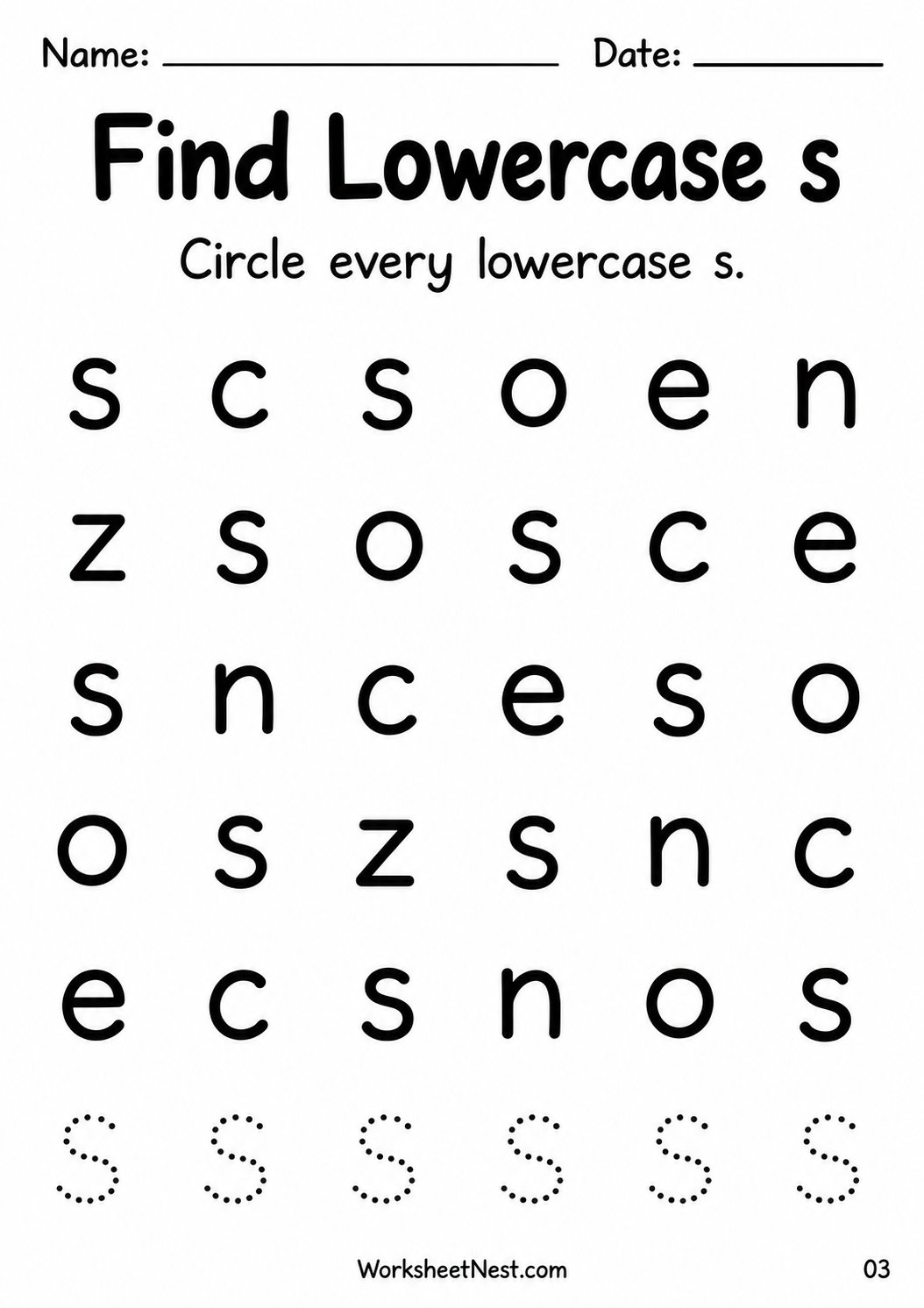
The lowercase recognition page mixes s with c, o, e, n, and z and includes dotted s along the bottom. Compare the small-letter shapes aloud before starting. If a learner is unsure, cover the other rows and work through a single row together.
4. Uppercase S Tracing Worksheet
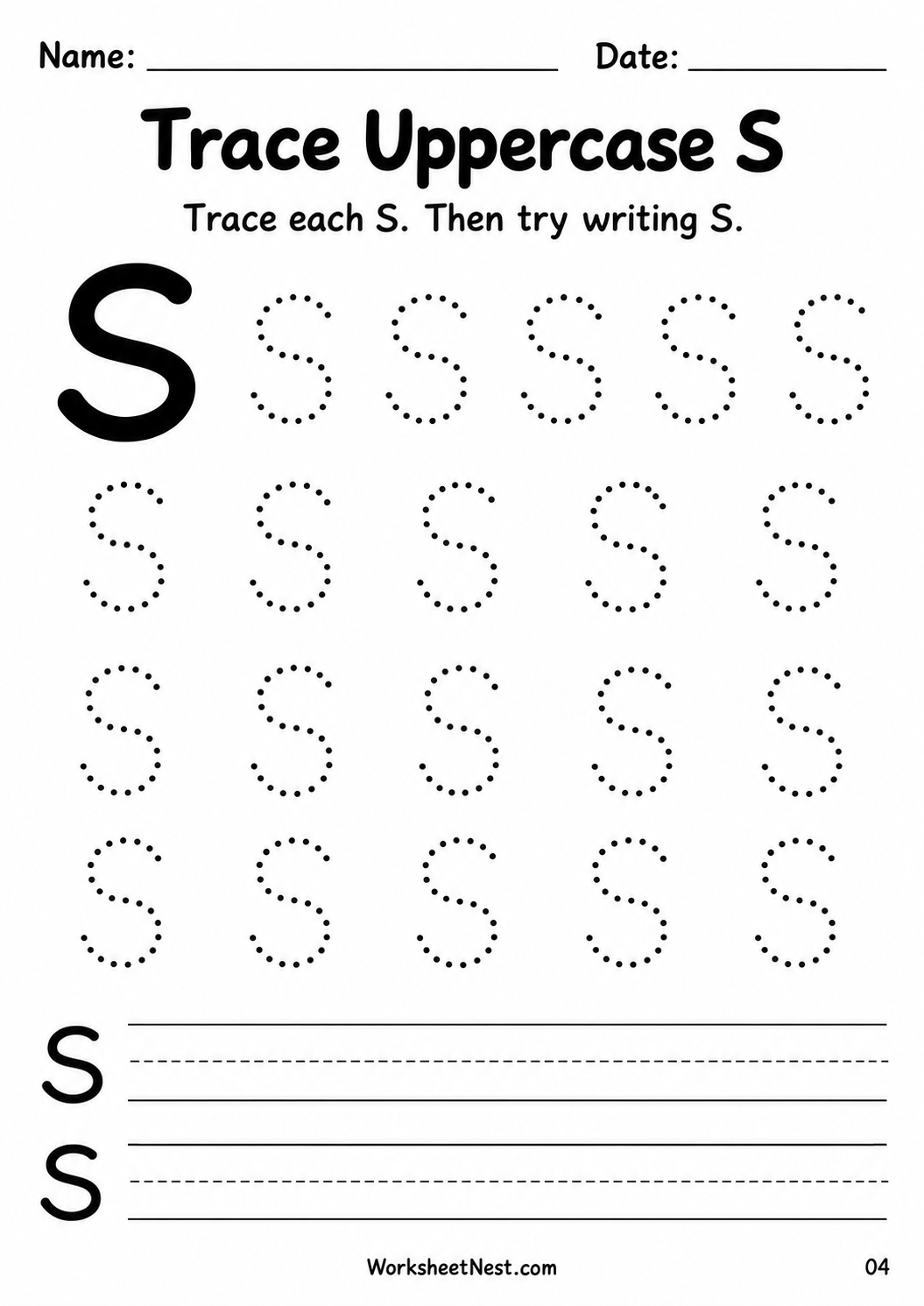
A large S model leads to repeated dotted capitals and independent lined writing at the foot of the page. Finger-trace the model before using a pencil. Work along one guided row, then invite an independent attempt without requiring the whole page in one sitting.
5. Lowercase s Tracing Worksheet
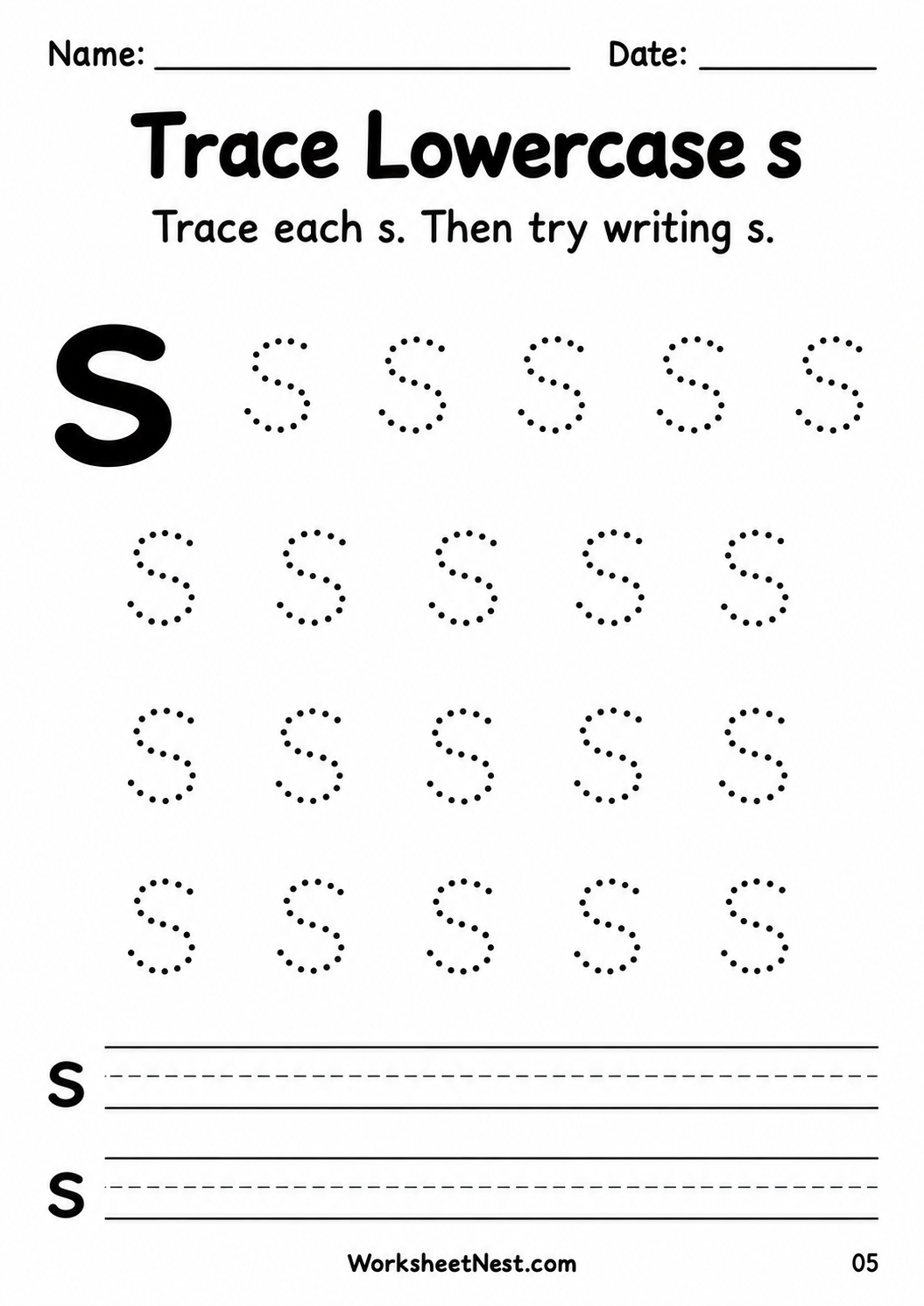
The lowercase page provides a large s, rows of dotted small letters, and ruled space for independent writing. Compare one traced letter with the model and notice a useful detail together. Short, repeated attempts can be easier to manage than completing all rows at once.
6. Trace S and s Together
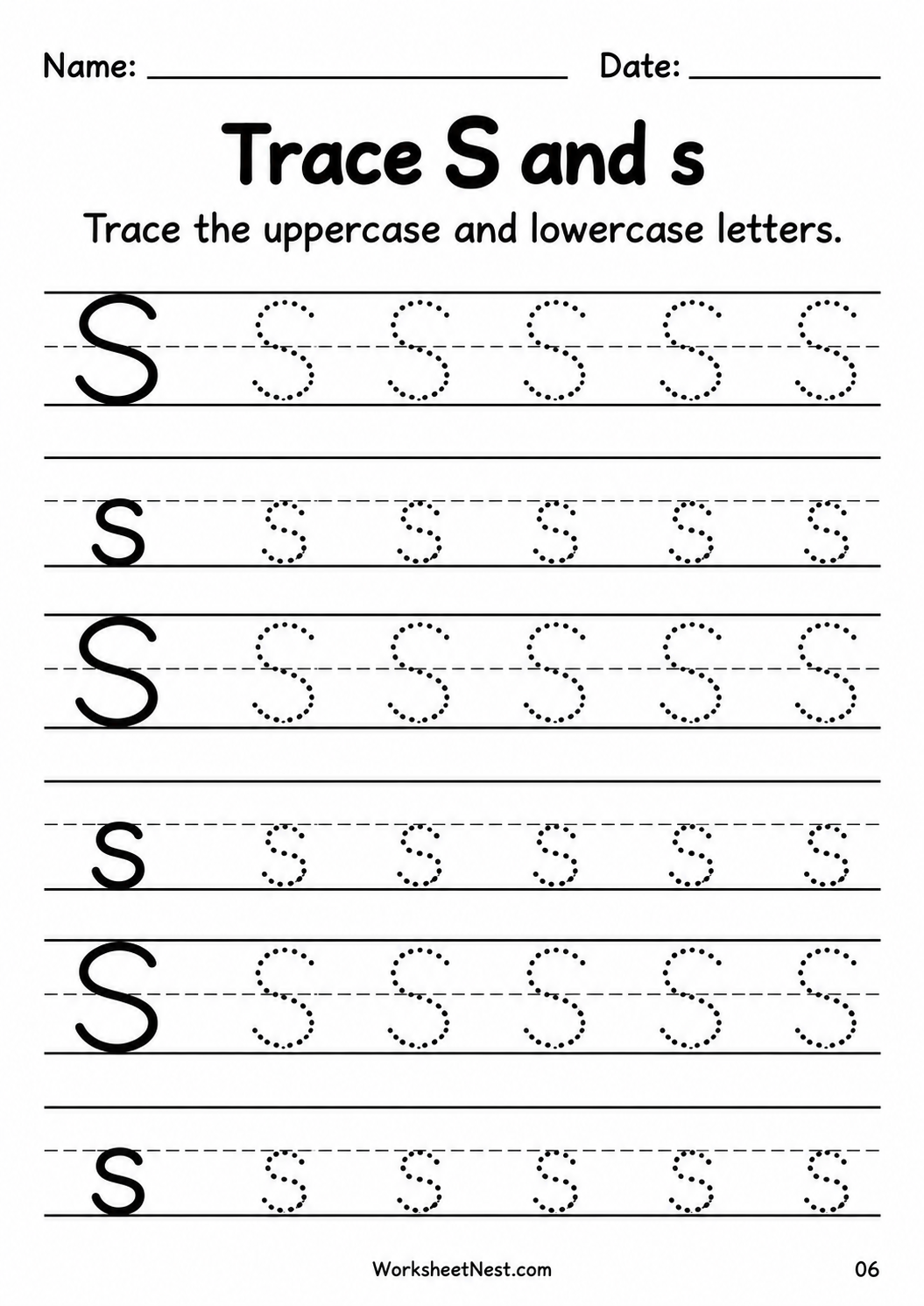
Alternating S and s rows begin with printed models and continue with dotted letters on handwriting guides. Name each form as you trace it. Switching between capital and small letters gives children a chance to notice their relationship while still attending to the different shapes.
7. Match Uppercase and Lowercase Letters
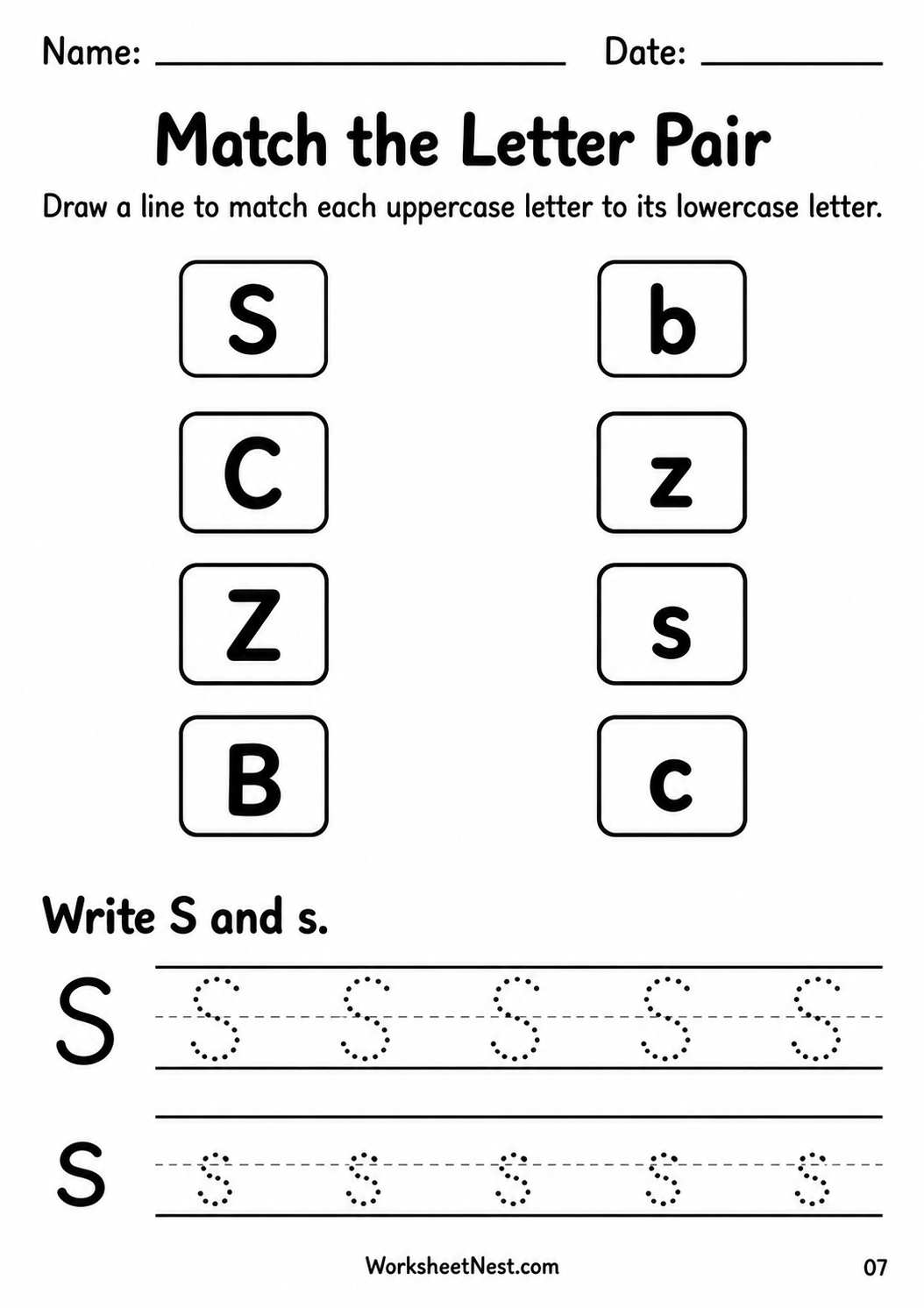
S, C, Z, and B must be matched to b, z, s, and c before extra tracing practice. Point to a capital, find its lowercase partner, and draw one line at a time. Check the completed connections together and name the target pair again.
8. Letter S Word Tracing
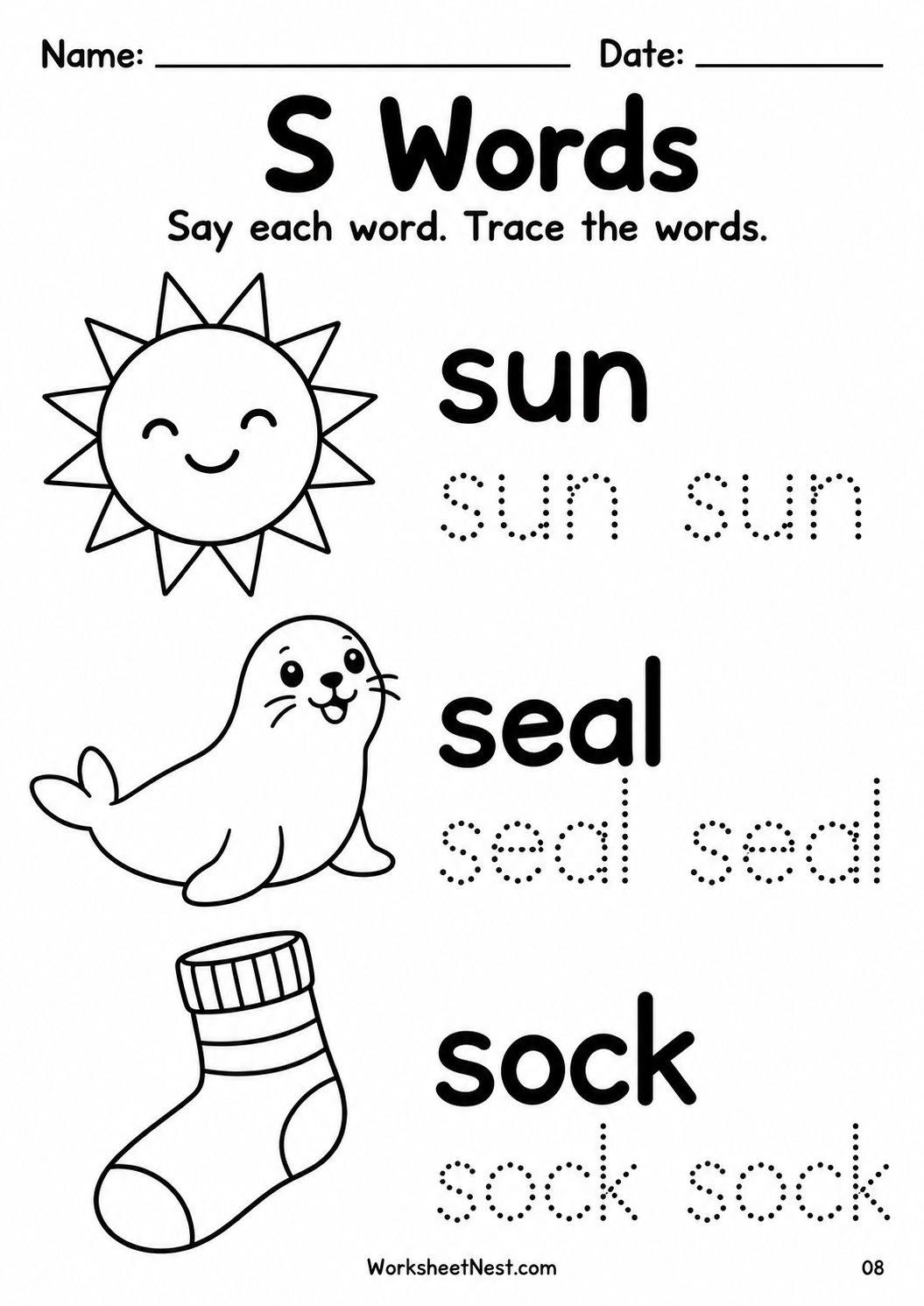
Sun, seal, and sock have pictures, printed names, and repeated dotted words to trace. Read the labels aloud, connect them to the pictures, and trace one word at a time. A child can practice letter shapes while an adult supplies the vocabulary.
9. Write S and s Independently
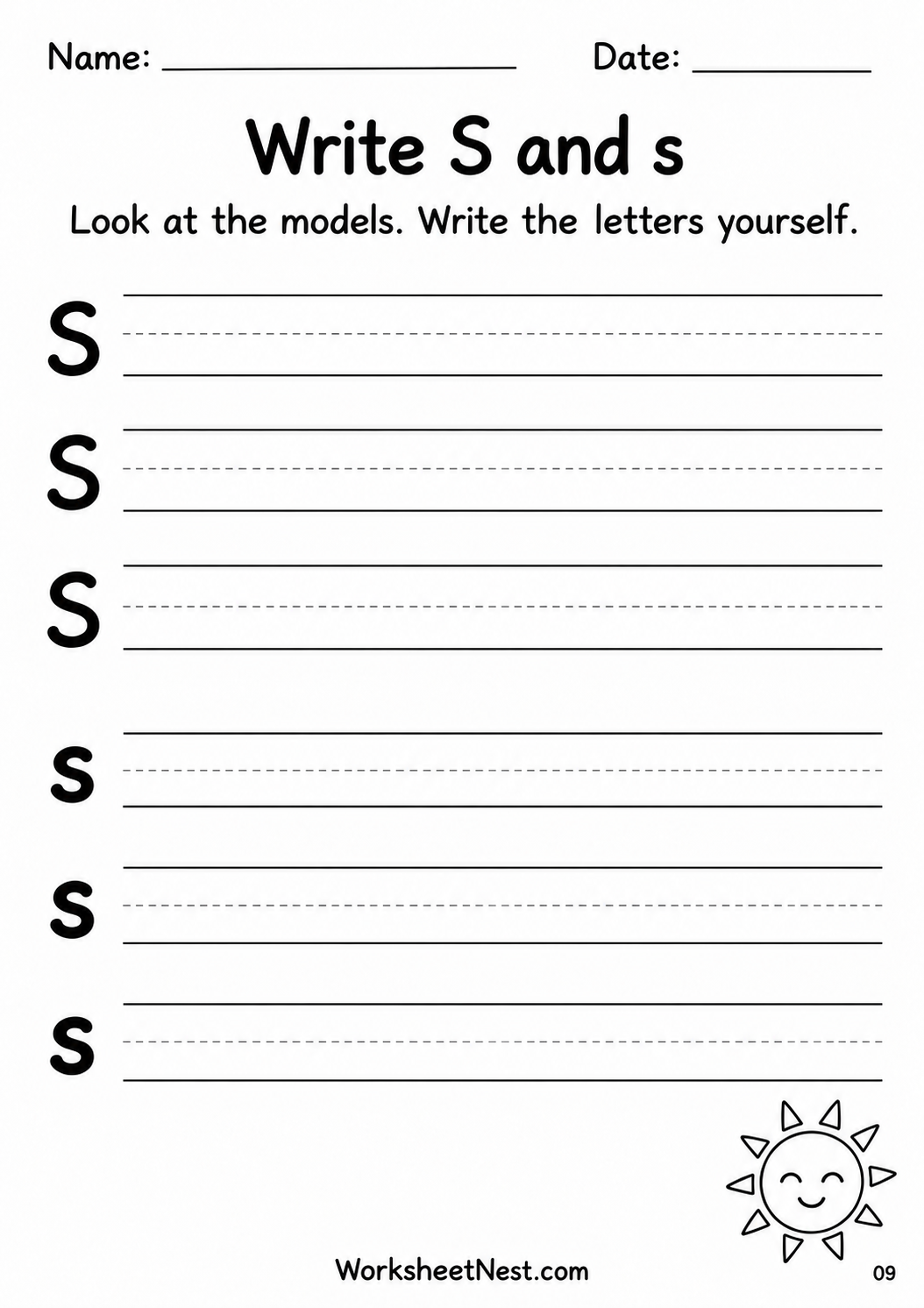
The current independent page offers separate modeled rows for uppercase S and lowercase s with a sun below. Let children look back at a model before trying their own letters. Choose a few careful attempts and talk about one clear example rather than filling every line immediately.
10. Letter S Review
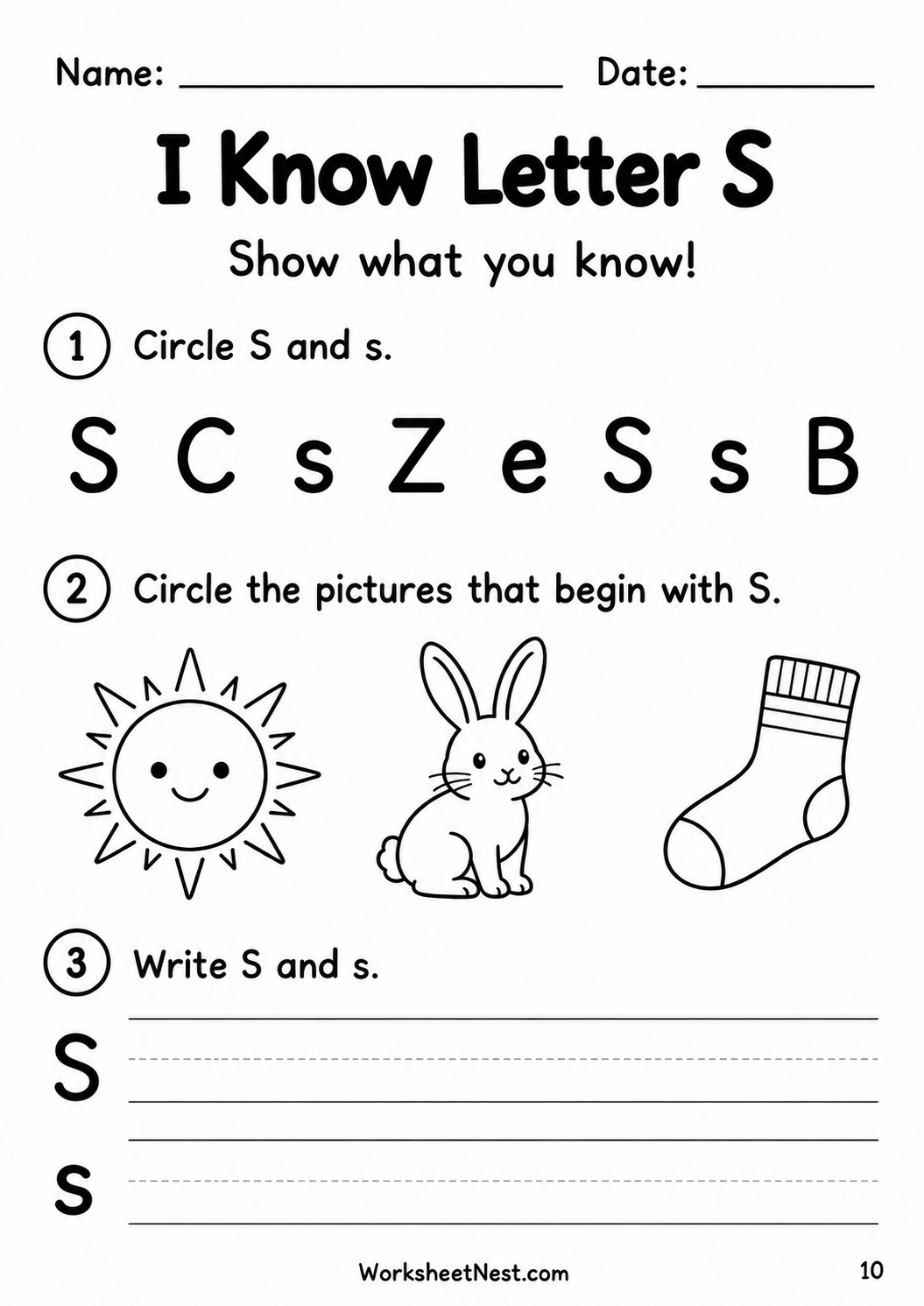
The corrected review asks children to identify S/s, choose sun and sock rather than rabbit, and write both forms. Check the page together without rushing. Notice whether your learner needs help finding the letter, following its shape, or writing it without dotted support.
Download the Complete Letter S Worksheet Set
Use the individual PDF buttons to select one activity, or choose the complete collection to keep the cover and ten worksheets together. A folder makes it easy to revisit a recognition task or repeat a handwriting page later. There is no need to complete every activity in one sitting.
Teaching Ideas for S and s
Start by showing the two letter forms and saying the letter name. Capital S and lowercase s both use opposing curves, with size marking the case difference. Model one example, then let your learner take a turn. Follow their responses: a child who identifies the letter confidently may still need support with handwriting. Name sun, seal, sock together and look for s in the printed words.
Try a recognition page alongside a tracing activity, or use matching as a change of pace. Keep practice brief and stop for a break when needed. Praise a clear feature in the child’s work, such as a recognizable shape or a carefully checked match, and offer another opportunity later.
Printing and Preparation
The source pages are A4 portrait. Check the print preview and choose a fit setting when using US Letter paper so the writing areas and footer remain visible. A pencil and crayons suit the activities; the colorful cover can be kept separately. A page protector and an appropriate erasable marker can make a selected tracing sheet reusable.
Common Core Connections
These activities give focused practice with selected parts of the kindergarten skills below. They do not cover a full standard on their own — each activity supports only the part named.
CCSS.ELA-LITERACY.RF.K.1.D — Recognize and name all upper- and lowercase letters of the alphabet. Practiced in (S/s part only): Worksheet 1 (Color and Recognize S and s), Worksheet 2 (Find Uppercase S), Worksheet 3 (Find Lowercase s), Worksheet 7 (Match Uppercase and Lowercase Letters), Worksheet 10 (Letter S Review). CCSS.ELA-LITERACY.RF.K.1.D. Preschool use = early practice toward this kindergarten skill.
CCSS.ELA-LITERACY.L.K.1.A — Print many upper- and lowercase letters. Practiced in (S/s part only): Worksheet 4 (Uppercase S Tracing Worksheet), Worksheet 5 (Lowercase s Tracing Worksheet), Worksheet 6 (Trace S and s Together), Worksheet 9 (Write S and s Independently). CCSS.ELA-LITERACY.L.K.1.A.
Related Alphabet Practice
Keep these letter S tracing worksheets with your alphabet resources and revisit them when useful. Pair the practice with picture books, letter naming, and everyday conversations before moving to another collection.
License and Terms of Use
License and Terms of Use: Free for personal, homeschool, and classroom use. Printing and link-sharing are allowed. Selling, re-uploading, or redistributing these worksheets is not permitted.