These letter z tracing worksheets bring recognition, handwriting and beginning-sound practice into one collection. The set contains a colorful cover and ten black-and-white activity pages. Children meet Z and z through a zebra, search for the letters, trace each form, match cases, explore three words and finish with independent writing and review. Choose the page that matches the learner’s current needs; completing the entire collection at once is unnecessary.
Choose a Letter to Practice
1. Color and Recognize Z z
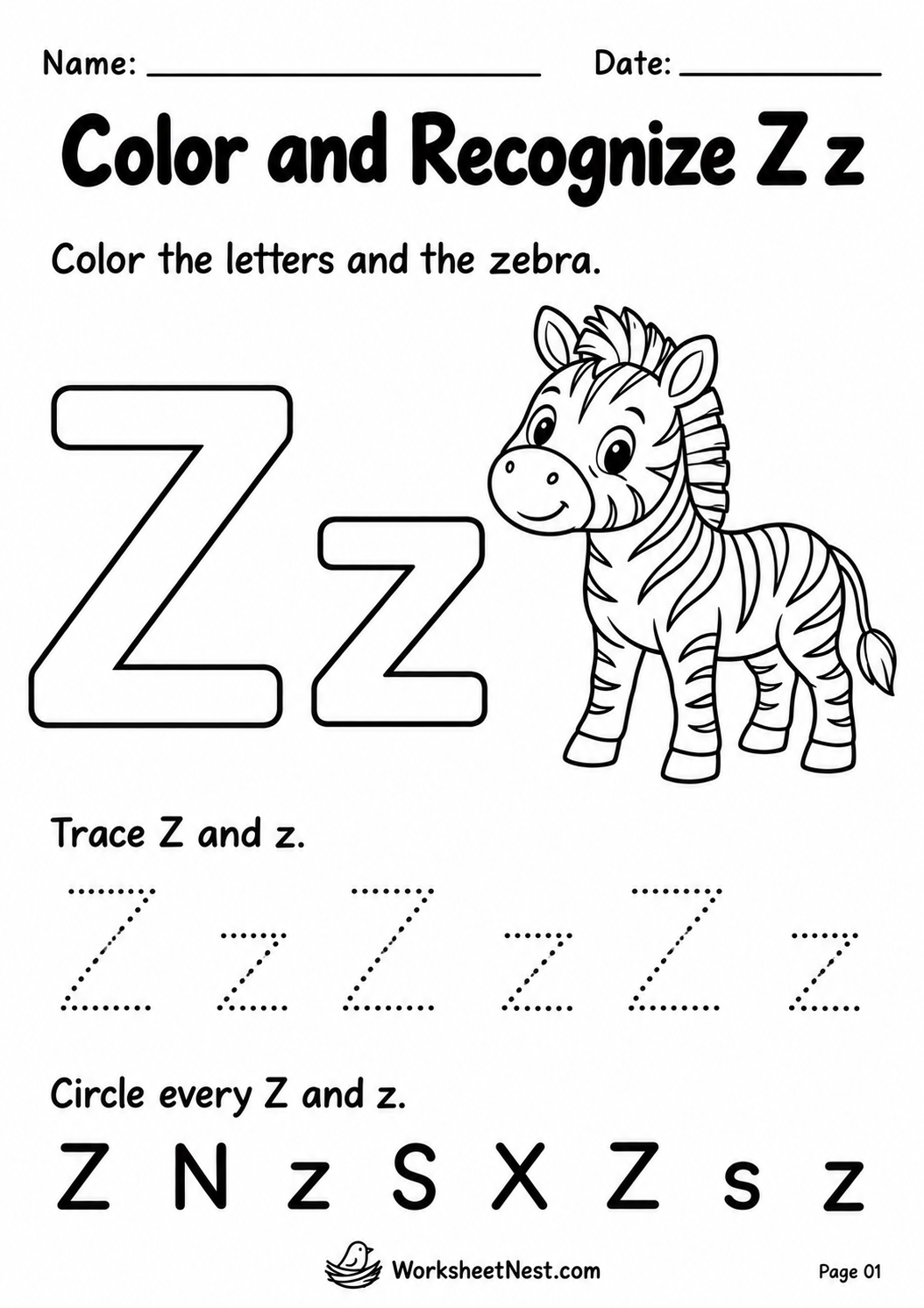
Begin with the large outline Z and z beside the zebra. Children color the letters and picture, trace the short mixed-case row, and circle the target letters at the bottom. This page introduces the two forms through three different responses, so a child can point and name the letter before using a pencil. Keep coloring relaxed and return to the letter shapes afterward.
2. Find Uppercase Z
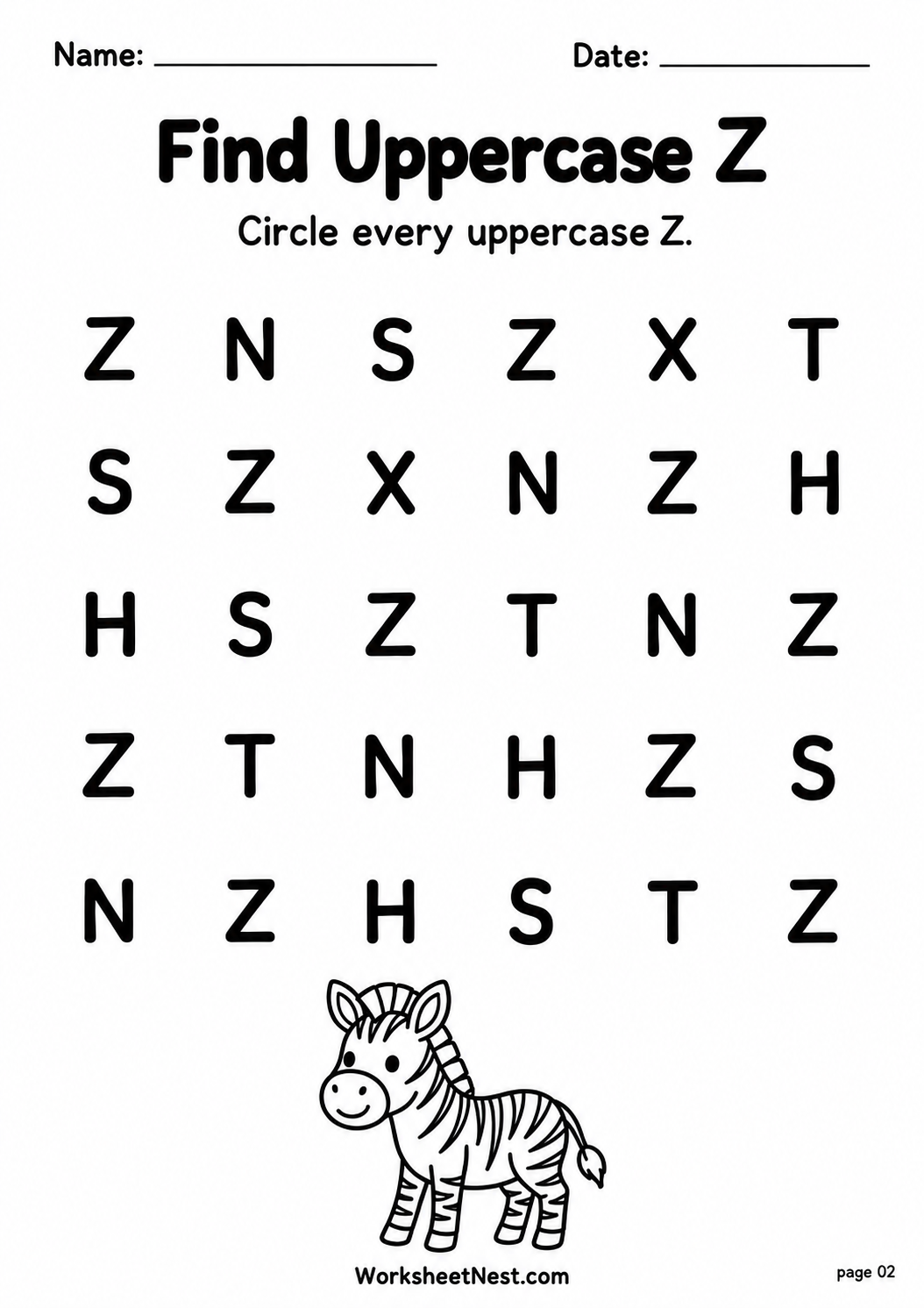
This uppercase letter recognition worksheet asks children to circle every capital Z among other capital letters. Encourage a steady scan across one row at a time. The zebra illustration gives the page a familiar visual connection without changing the search task. Ask the learner to explain how a Z looks different from N or S instead of guessing from its position.
3. Find Lowercase z
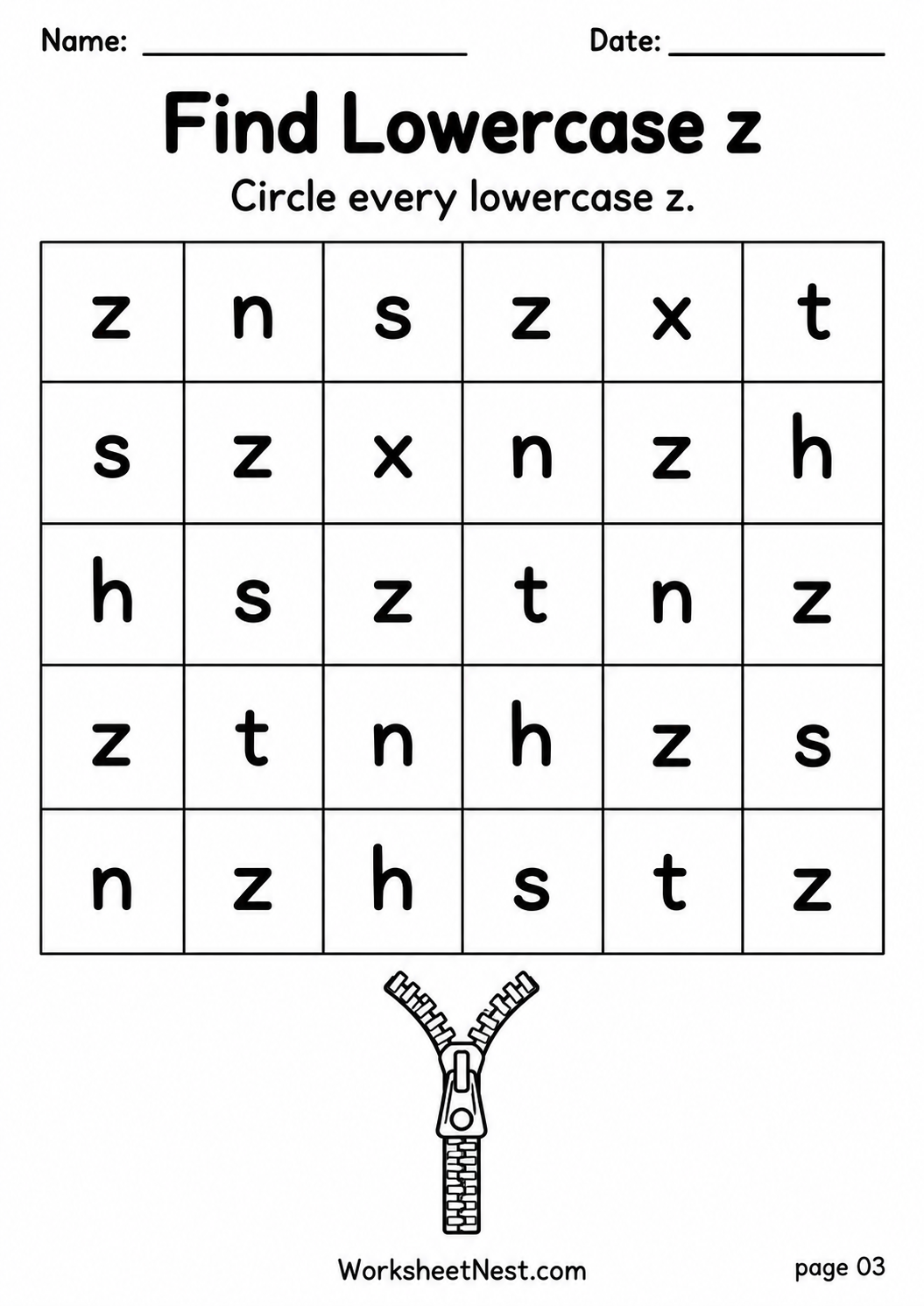
The lowercase search uses a grid containing z and several distracting letters. Children circle each small z while moving through the boxes in order. This is recognition practice rather than handwriting practice: learners can first point to a candidate and then circle it. The zipper picture reinforces a useful word beginning with the target sound while keeping the grid easy to follow.
4. Trace Uppercase Z
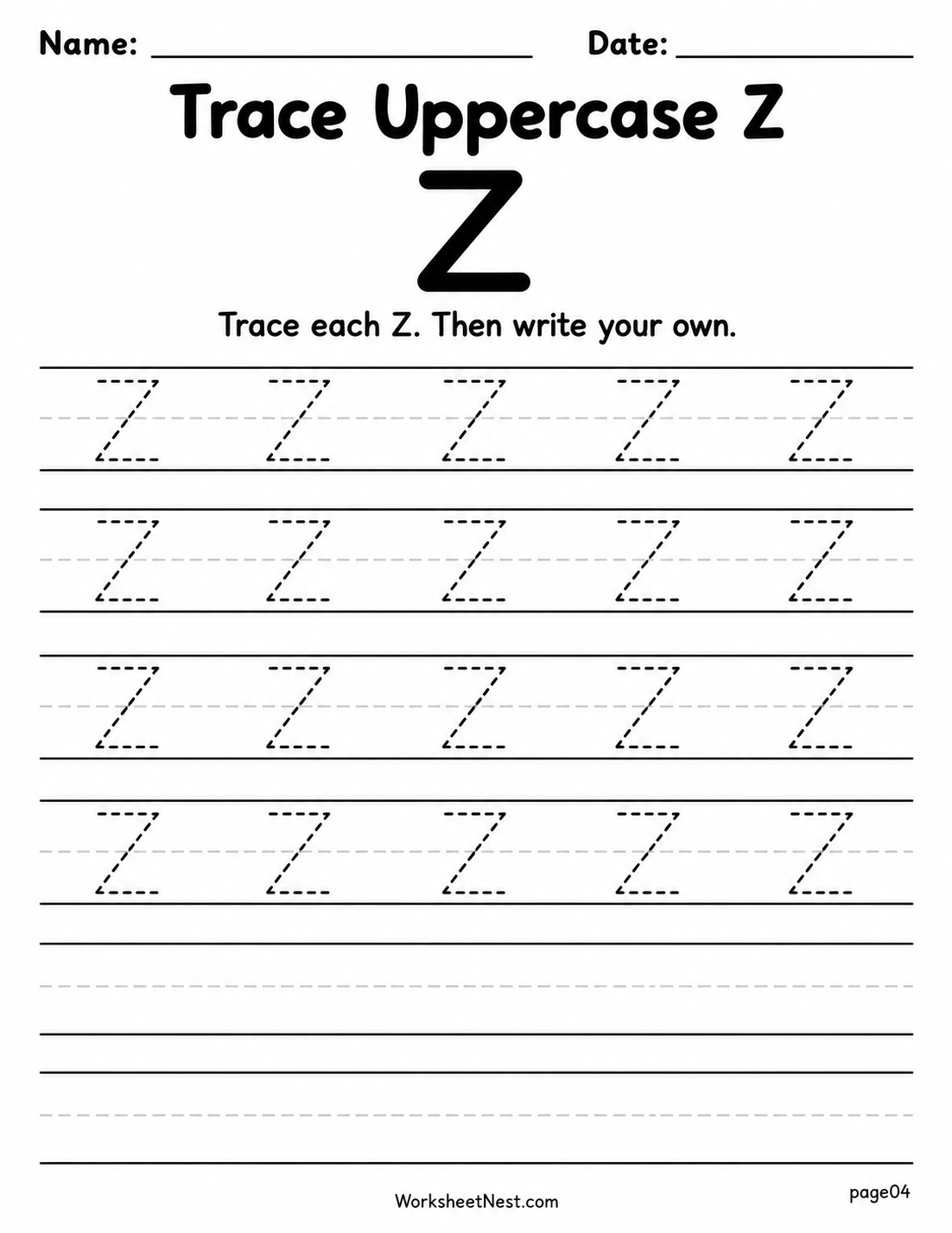
A large capital Z model sits above rows of dotted letters on handwriting guides. Children trace the uppercase forms and then use the empty lines for their own attempts. Model a horizontal top stroke, a diagonal down toward the left, and a horizontal bottom stroke. Focus on the direction of the diagonal and comfortable pencil movement rather than finishing every row in one sitting.
5. Trace Lowercase z
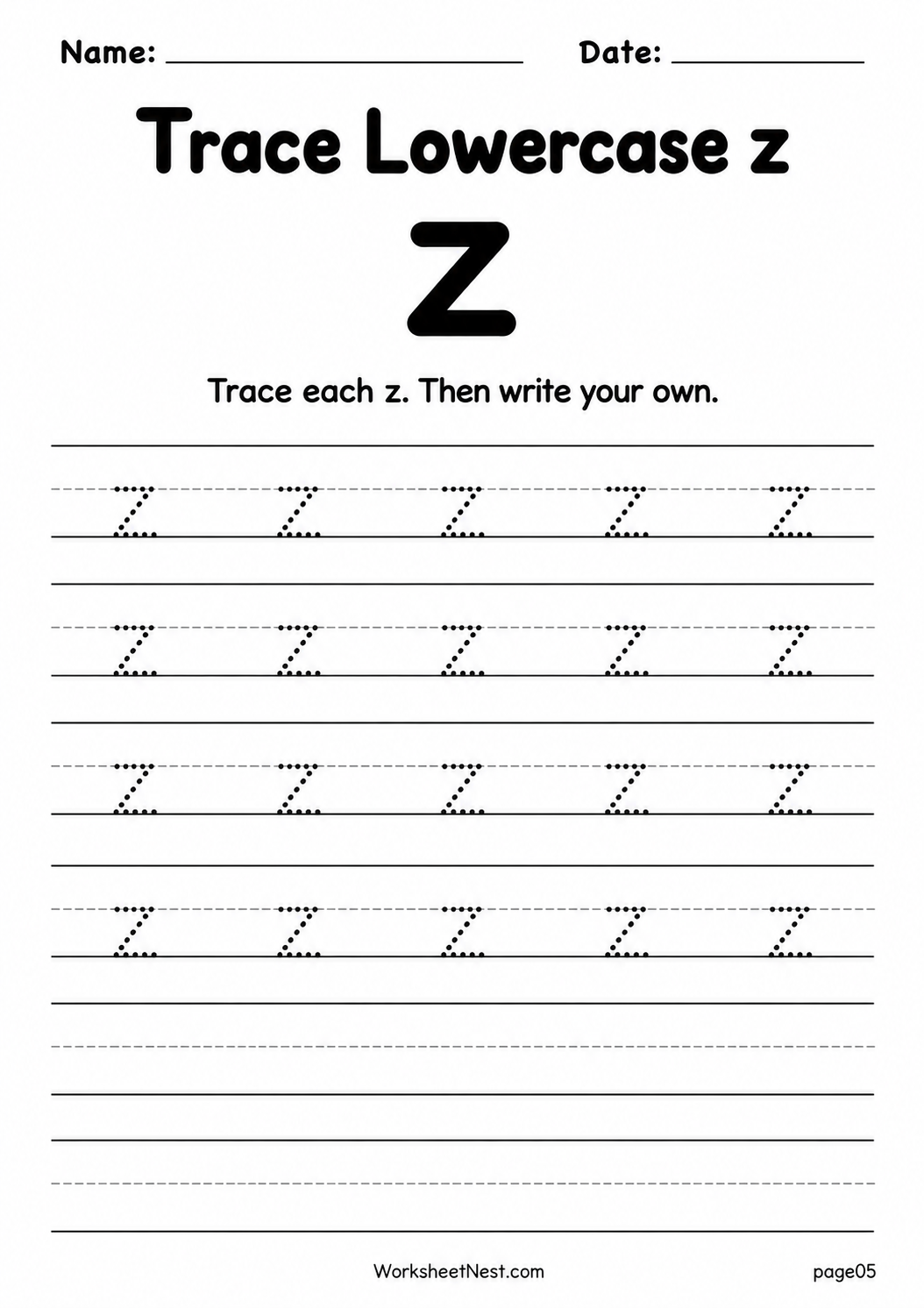
The lowercase letter z tracing page follows the same model-to-practice approach with smaller forms. Learners trace the dotted examples before trying the blank guided lines. Compare the lowercase model with the capital: the overall shape is similar, but the small letter occupies less vertical space. A short row completed carefully can be more useful than repeating the whole sheet when a child is tired.
6. Trace Z and z
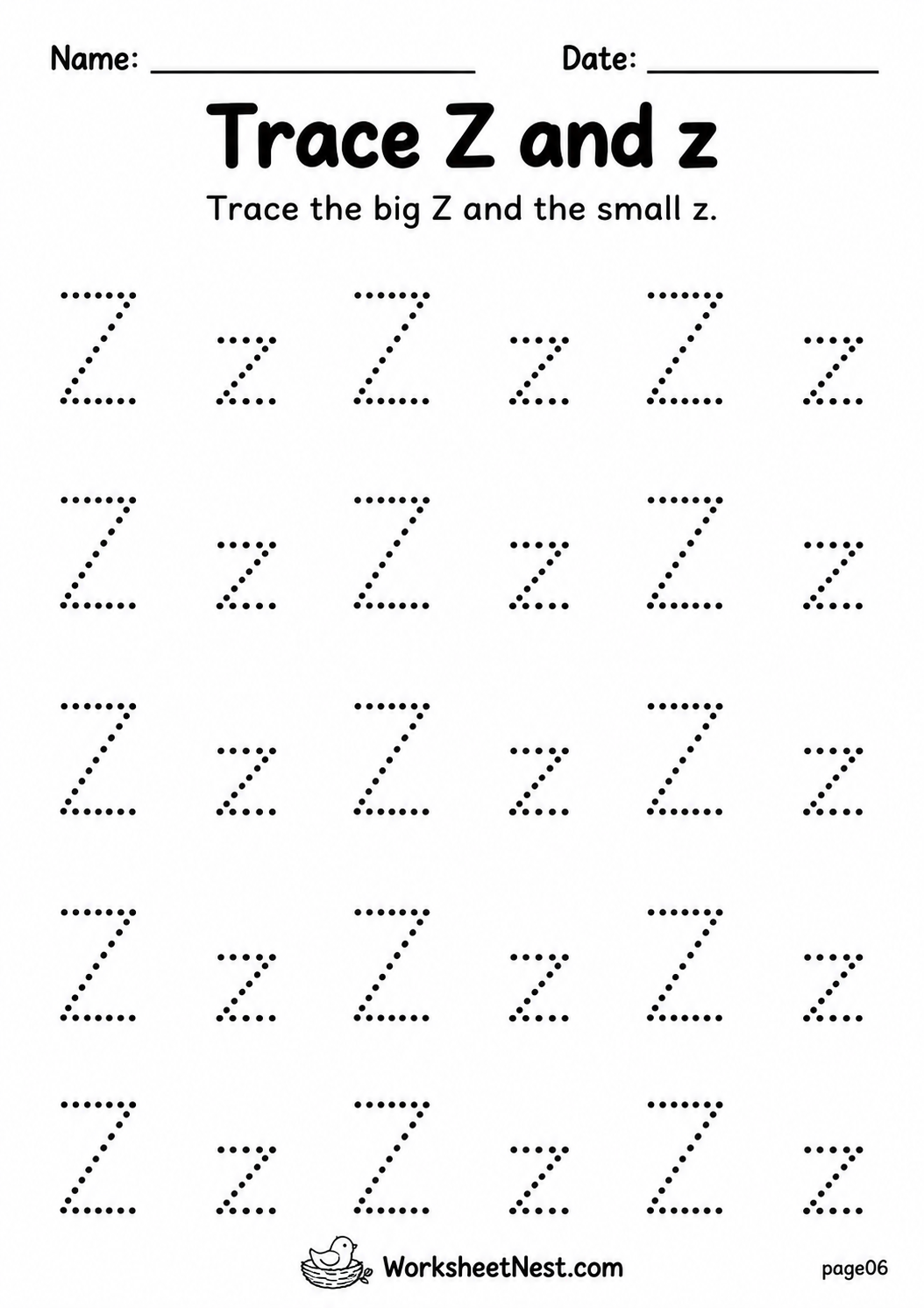
This mixed-case page presents repeated dotted Z and z pairs. Children alternate between the large and small forms as they trace across each row. Use it after separate uppercase and lowercase practice so the size change has a clear purpose. Ask the learner to name the form before tracing it, then notice whether the smaller z stays consistently smaller than its capital partner.
7. Match the Letters
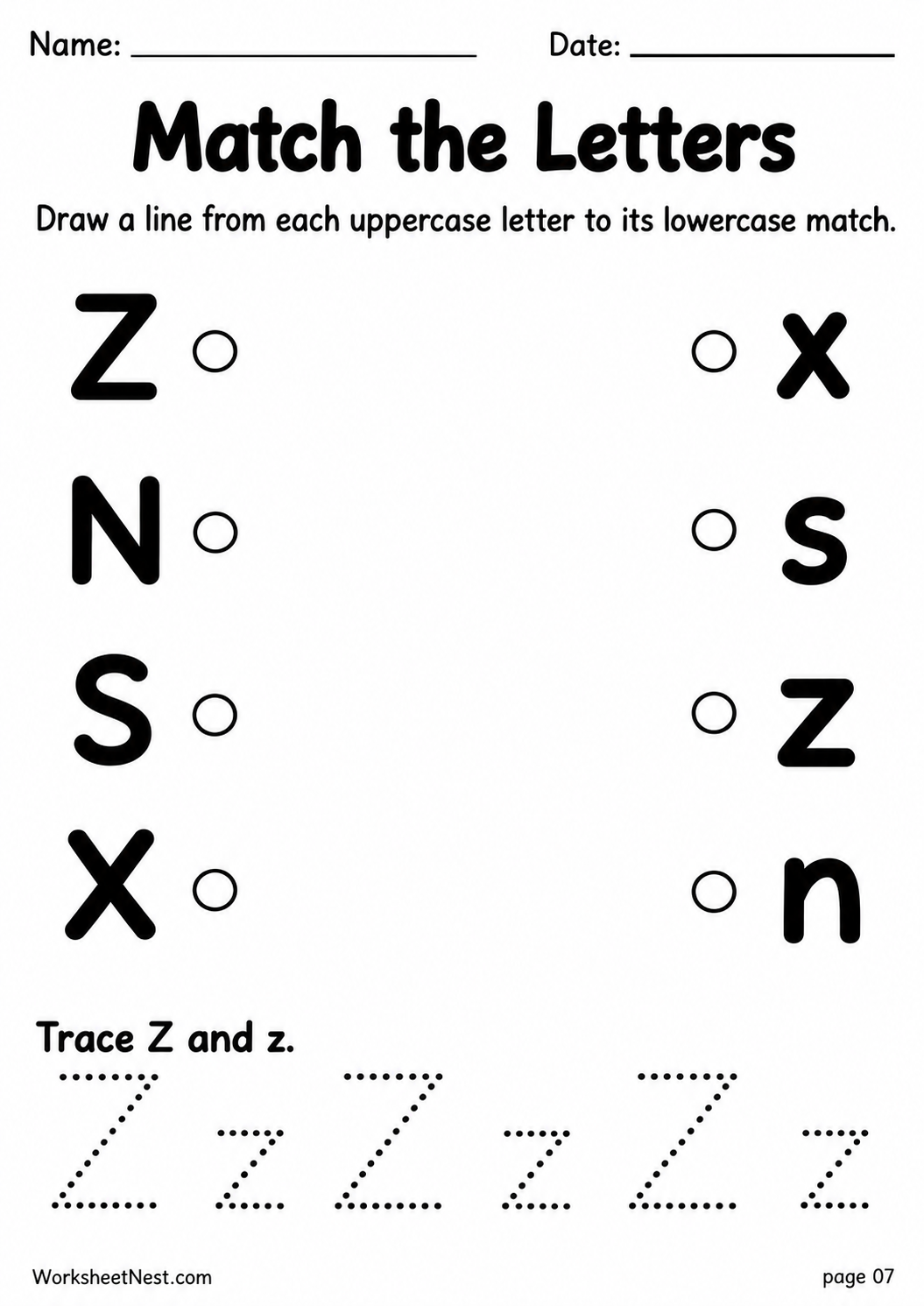
Children draw lines from uppercase Z, N, S and X to their matching lowercase forms in a different order. A short Z and z tracing row follows the matching activity. Encourage children to check the shape of each partner before drawing a line. The task combines case matching with pencil movement; it does not ask children to connect pictures or to match every letter of the alphabet.
8. Words with z
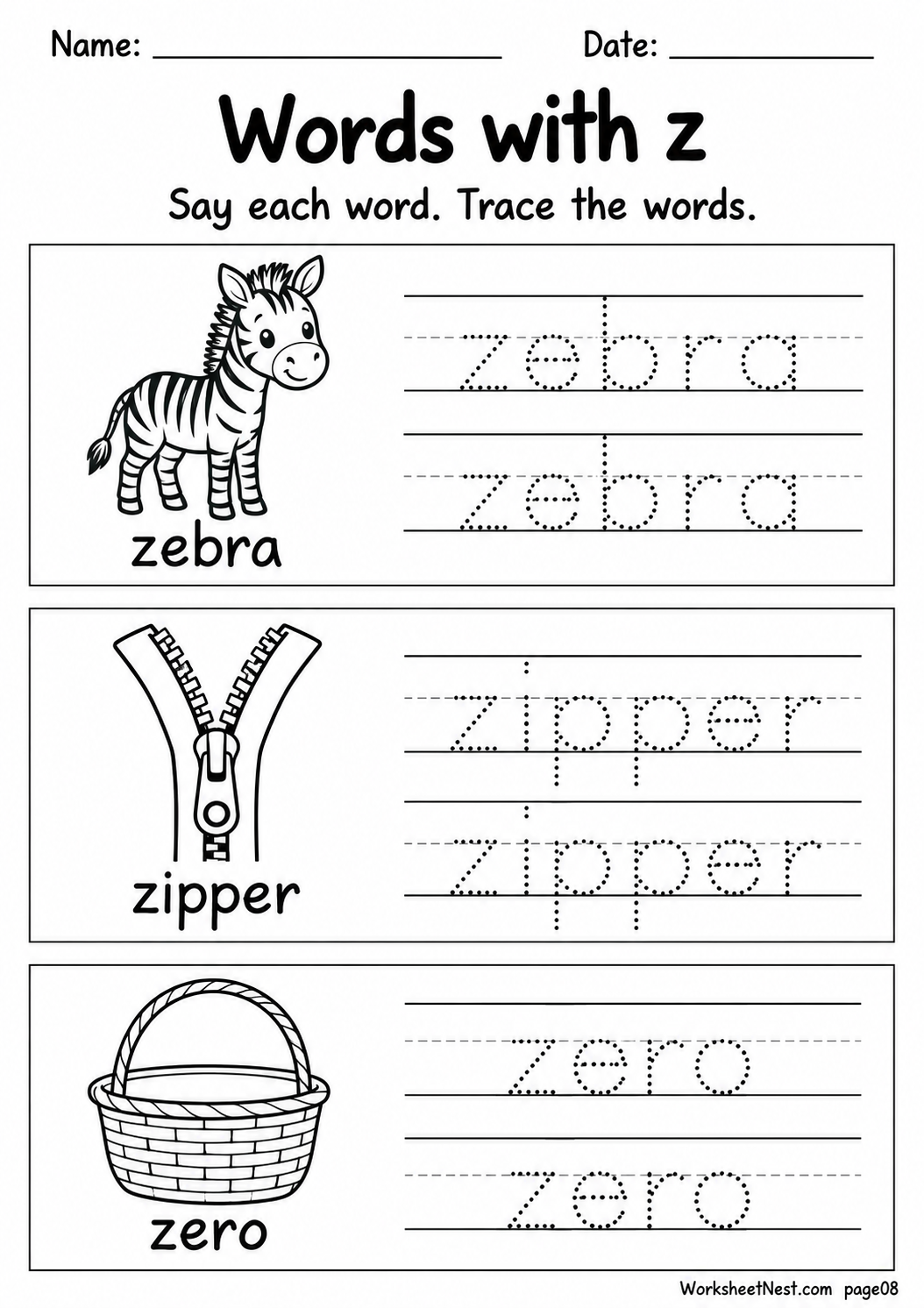
The word practice page contains zebra, zipper and zero with labeled illustrations and dotted word rows. Say each word together before tracing. The empty basket illustrates zero, giving adults a concrete opportunity to discuss nothing being inside. Keep the phonics focus on the initial z sound while recognizing that tracing a whole word requires more control than tracing a single letter.
9. Write Z and z
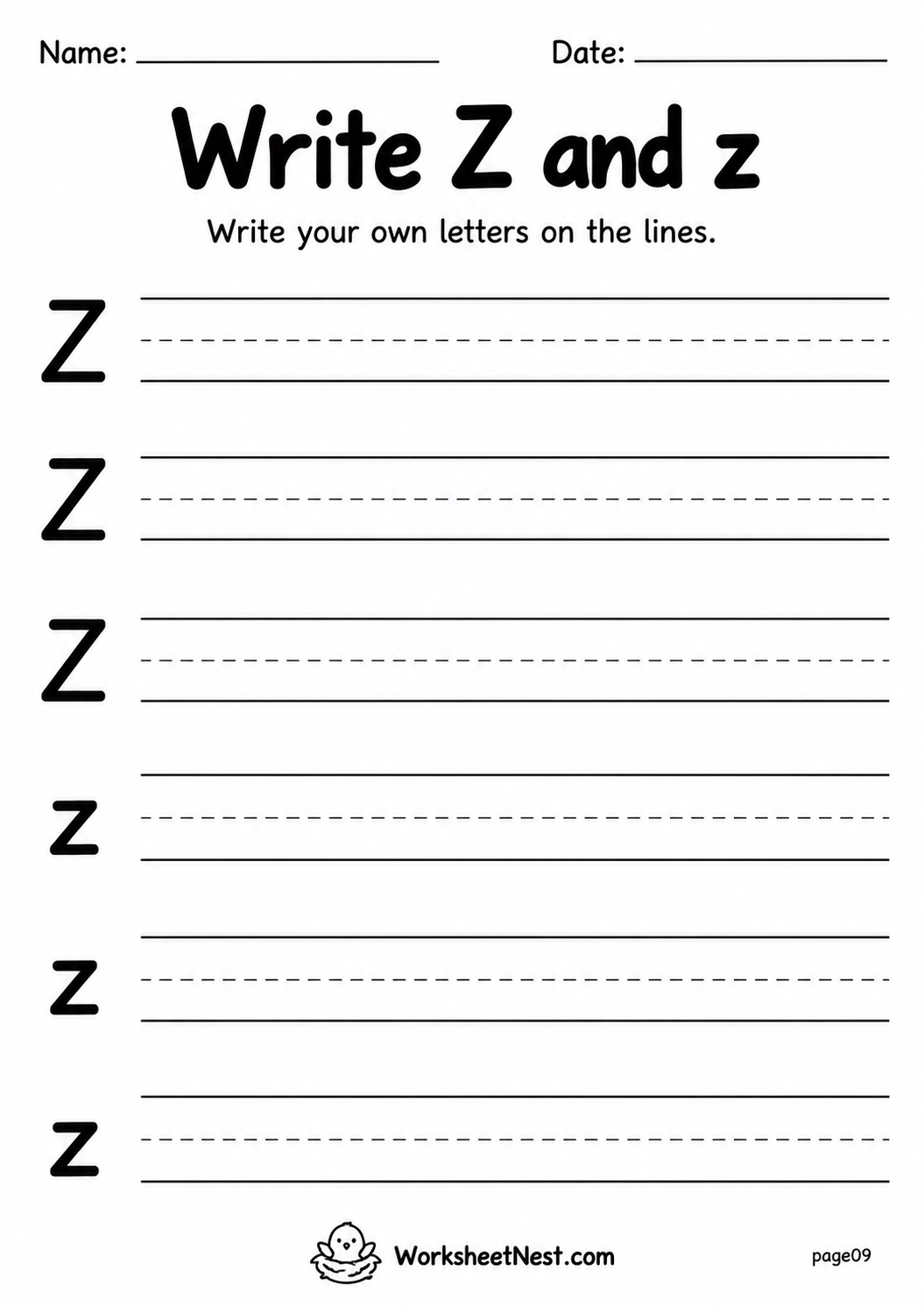
The independent writing page provides Z and z models beside blank handwriting guides. Children copy the appropriate form without dotted letters to follow. Invite a learner to look at the model, write one attempt, and compare the two. If the diagonal is reversed, demonstrate it once and allow another try. This page helps you see what the child can produce with less support.
10. Z and z Review
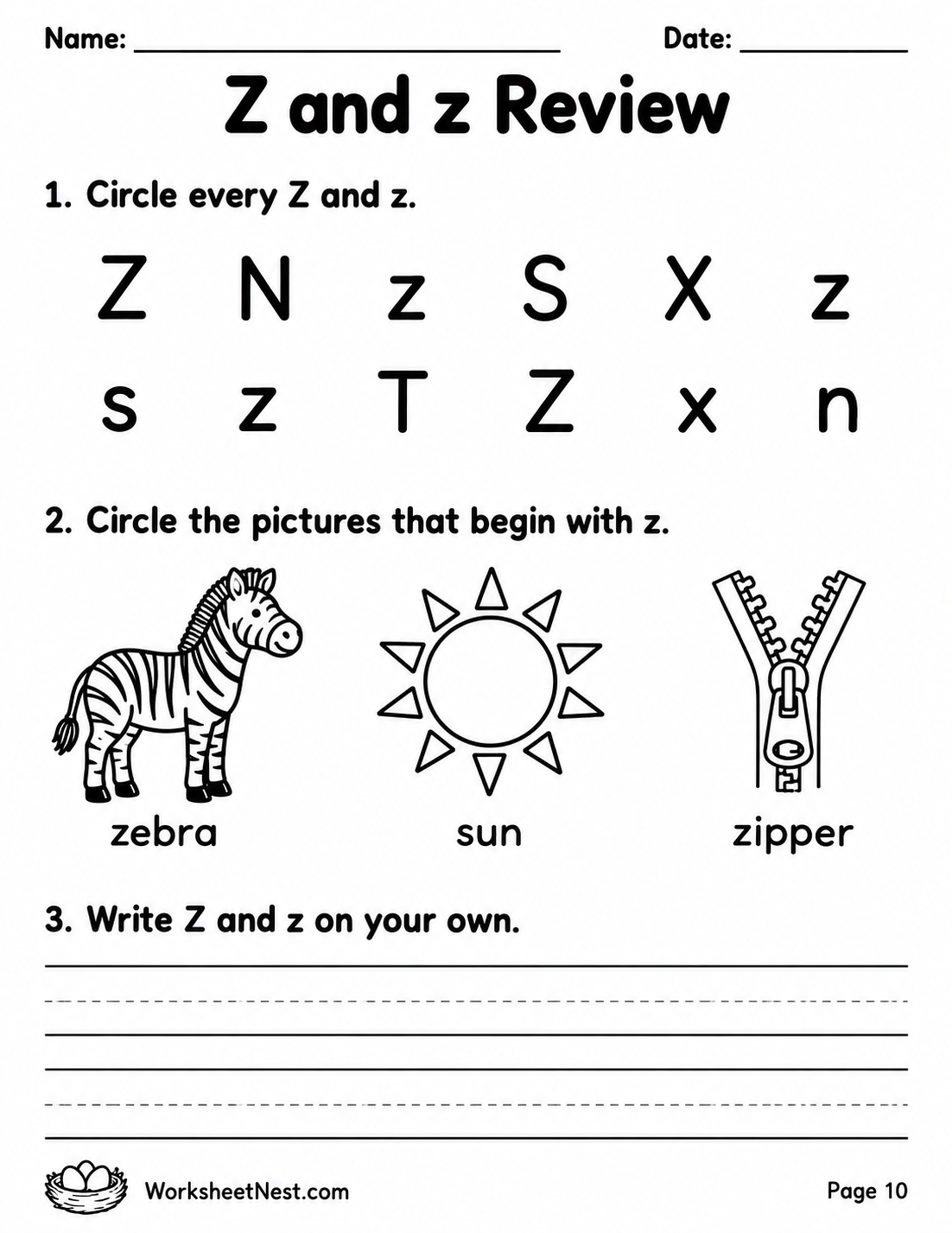
The final review brings together three tasks: circling Z and z among distractors, circling pictures whose names begin with z, and writing the letters independently. The pictures are zebra, sun and zipper. Say their names aloud before asking for a choice. Treat the page as a practical check of recognition, initial sound awareness and writing rather than a timed test or a promise of mastery.
Download the complete collection
Choose the complete PDF to keep the cover and all ten activities together, or select an individual worksheet above for focused practice.
Teaching and printing guidance
Start with naming and finding the letter, then demonstrate tracing before independent writing. Say zebra and zipper slowly to draw attention to the first sound. Offer a break between tasks and return to an easier page when needed. Print the A4 PDF in portrait orientation and inspect the preview before printing. For US Letter paper, use fit-to-page and check that the footer and writing guides remain visible. Print one test page first.
Common Core Connections
These activities give focused practice with selected parts of the kindergarten skills below. They do not cover a full standard on their own — each activity supports only the part named.
CCSS.ELA-LITERACY.RF.K.1.D — Recognize and name all upper- and lowercase letters of the alphabet. Practiced in (Z/z part only): Worksheet 1 (Color and Recognize Z z), Worksheet 2 (Find Uppercase Z), Worksheet 3 (Find Lowercase z), Worksheet 7 (Match the Letters), Worksheet 10 (Z and z Review — for its letter-recognition element ONLY; the review’s picture initial-sound element is NOT mapped to any standard). Preschool use = early practice toward this kindergarten skill.
CCSS.ELA-LITERACY.L.K.1.A — Print many upper- and lowercase letters. Practiced in (Z/z part only): Worksheet 4 (Trace Uppercase Z), Worksheet 5 (Trace Lowercase z), Worksheet 6 (Trace Z and z), Worksheet 9 (Write Z and z).
License and Terms of Use
Free for personal, homeschool, and classroom use. Printing and link-sharing are allowed. Selling, re-uploading, or redistributing these worksheets is not permitted.