Counting objects 11–20 worksheets: Help children move beyond counting to ten with a set of activities that connects pictures, spoken numbers and written numerals. These counting objects 11–20 worksheets give kindergarten learners different ways to work with larger groups: matching quantities, circling a number, writing a total and drawing the extra objects needed to reach a target.
The ten pages begin with small number ranges before mixing the numbers in different tasks. Apples, fish, stars, shells, leaves and circles provide clear objects to count. A ten-and-ones page and a double ten-frame page also invite children to notice a full group of ten, then work out how many more there are. Choose a page that fits your learner’s current confidence rather than expecting the whole set to be finished at once.
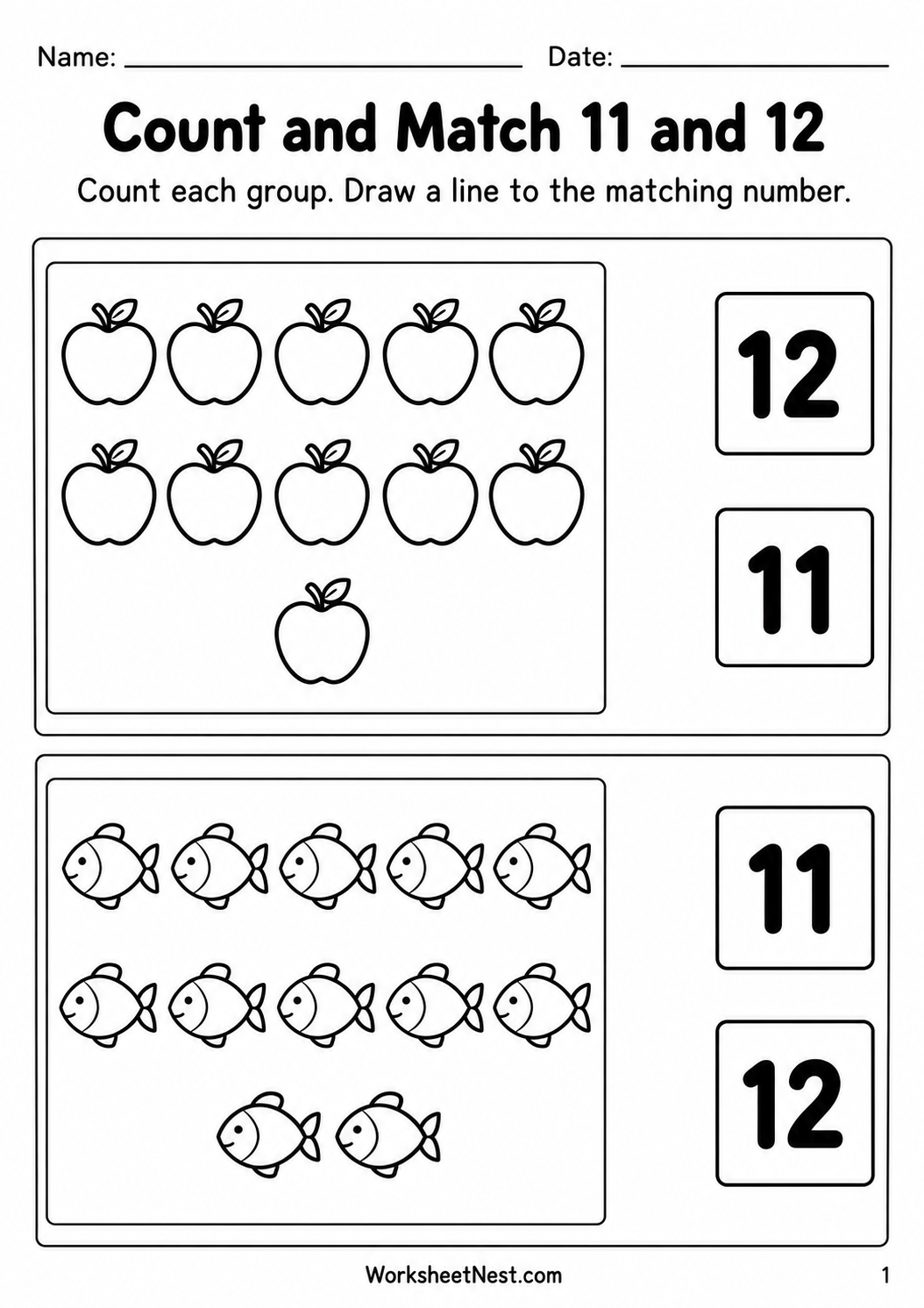
01. Count and Match 11 and 12
Start with two nearby numbers. Children count a group of apples and a group of fish, then draw a line from each group to the matching numeral. The numeral choices change position, so looking for the top or bottom answer will not work. Encourage learners to point to each picture once and say the final count before drawing their line. This keeps the focus on the quantity represented by the number.
Download Worksheet 01 PDF
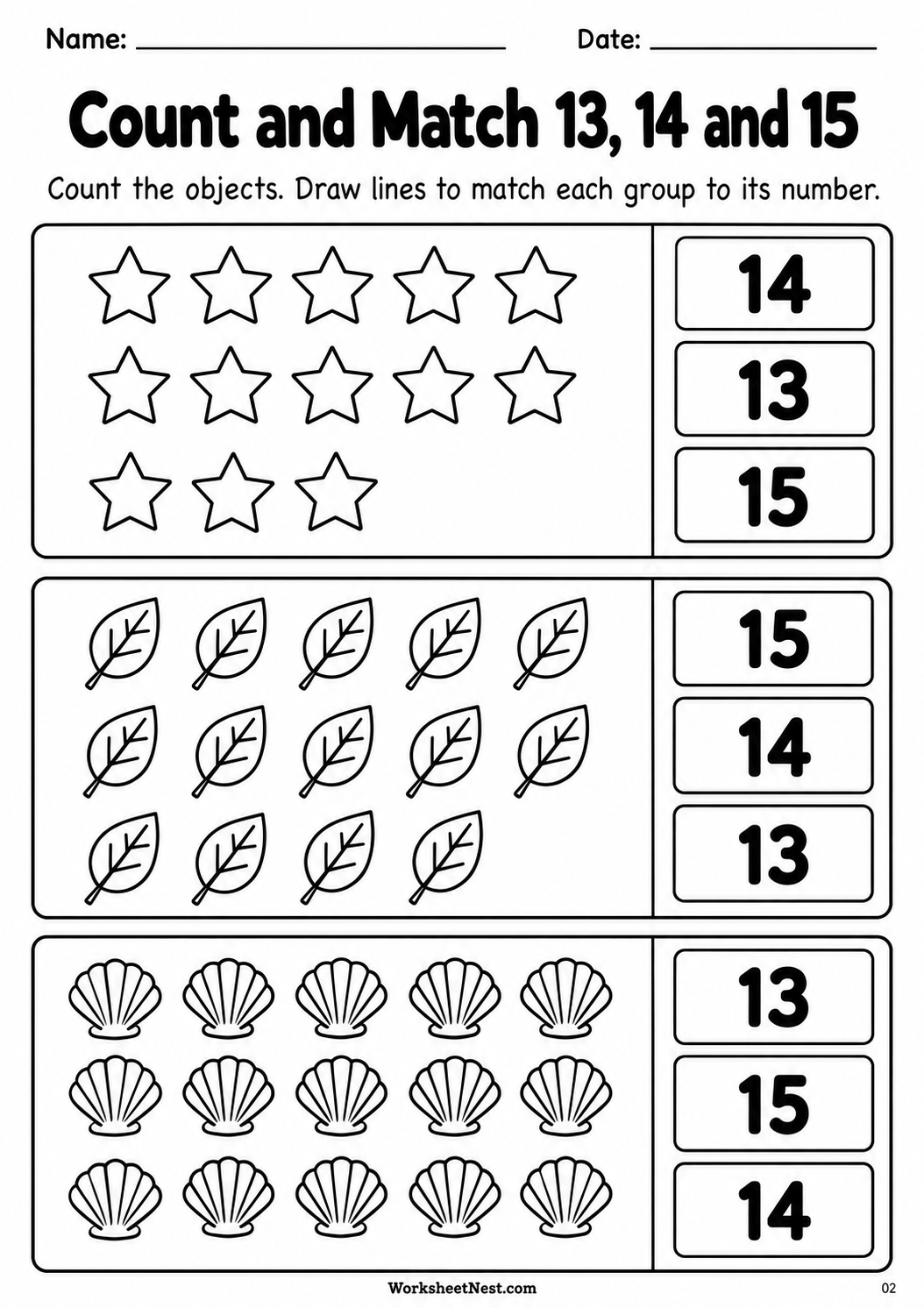
02. Count and Match 13, 14 and 15
Three rows introduce larger groups of stars, leaves and shells. Each row offers the same three numbers in a different order. Children count the objects and connect the group to its total. If a learner loses their place partway through, suggest moving across one row of pictures before starting the next. After matching, ask them to read the chosen numeral aloud and explain how they checked it.
Download Worksheet 02 PDF
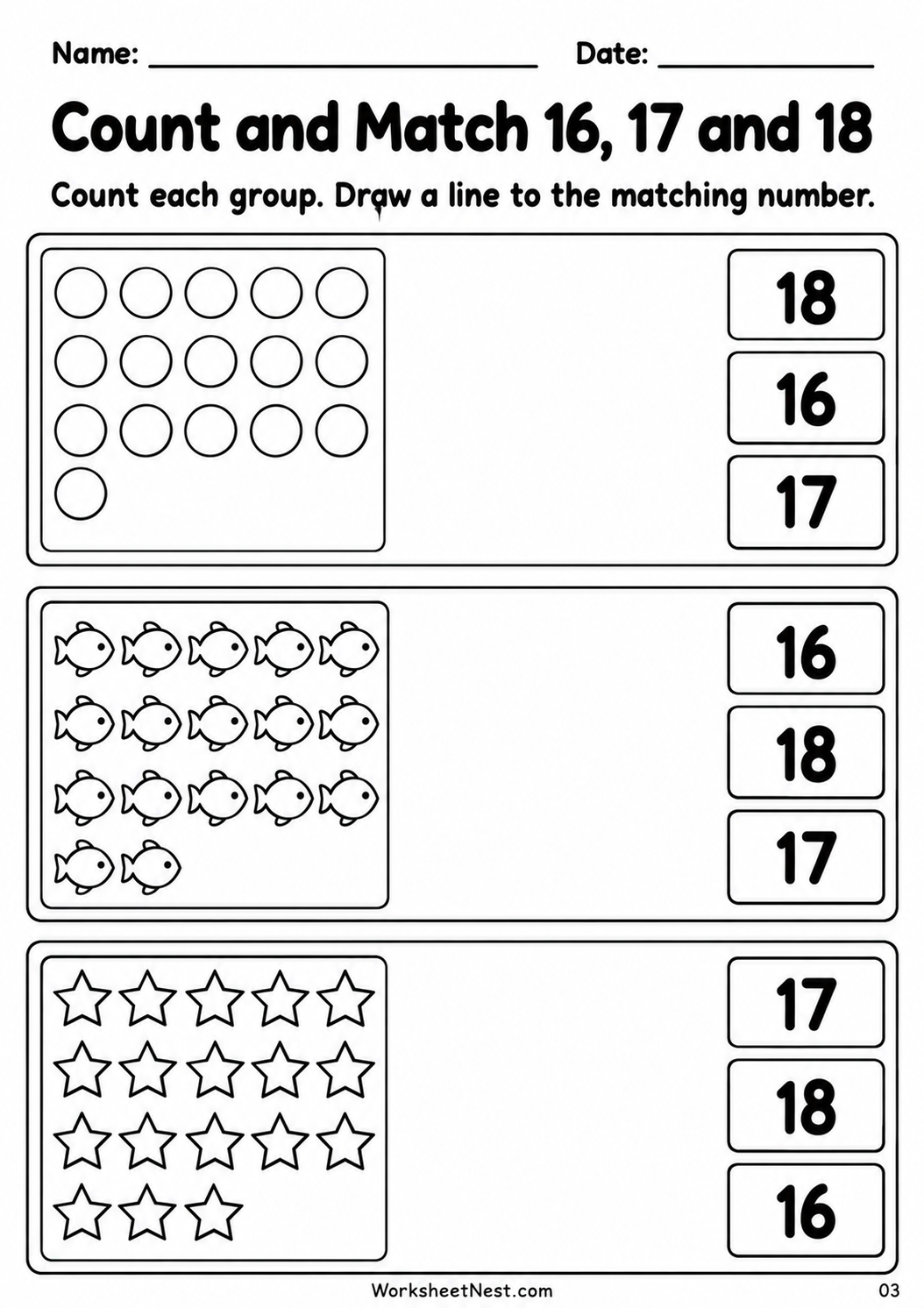
03. Count and Match 16, 17 and 18
This matching page uses circles, fish and stars to practise the next three numbers. Learners need to count every object, including the shorter final row in each group, before selecting a numeral. Point out that a short row still belongs to the same group. Let children use a light pencil mark beside each counted picture if pointing alone is not enough to keep track.
Download Worksheet 03 PDF
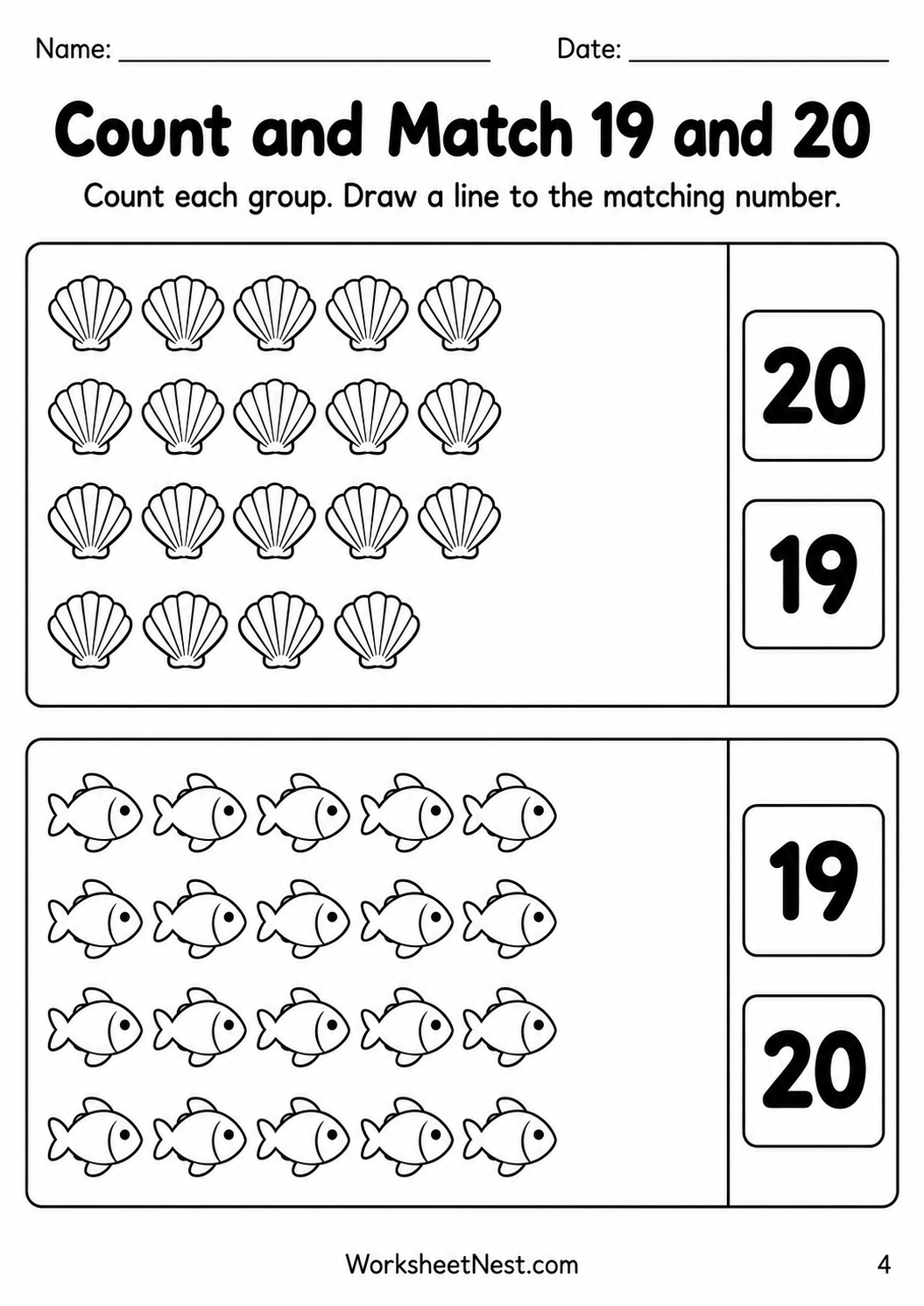
04. Count and Match 19 and 20
Two large groups bring the matching sequence up to twenty. Children count shells and fish, then draw a line to the correct number. The shell group has one fewer object than the fish group, which makes careful counting useful. Ask learners to check their result by counting again in the same order. They can then describe which group reaches twenty and which stops just before it.
Download Worksheet 04 PDF
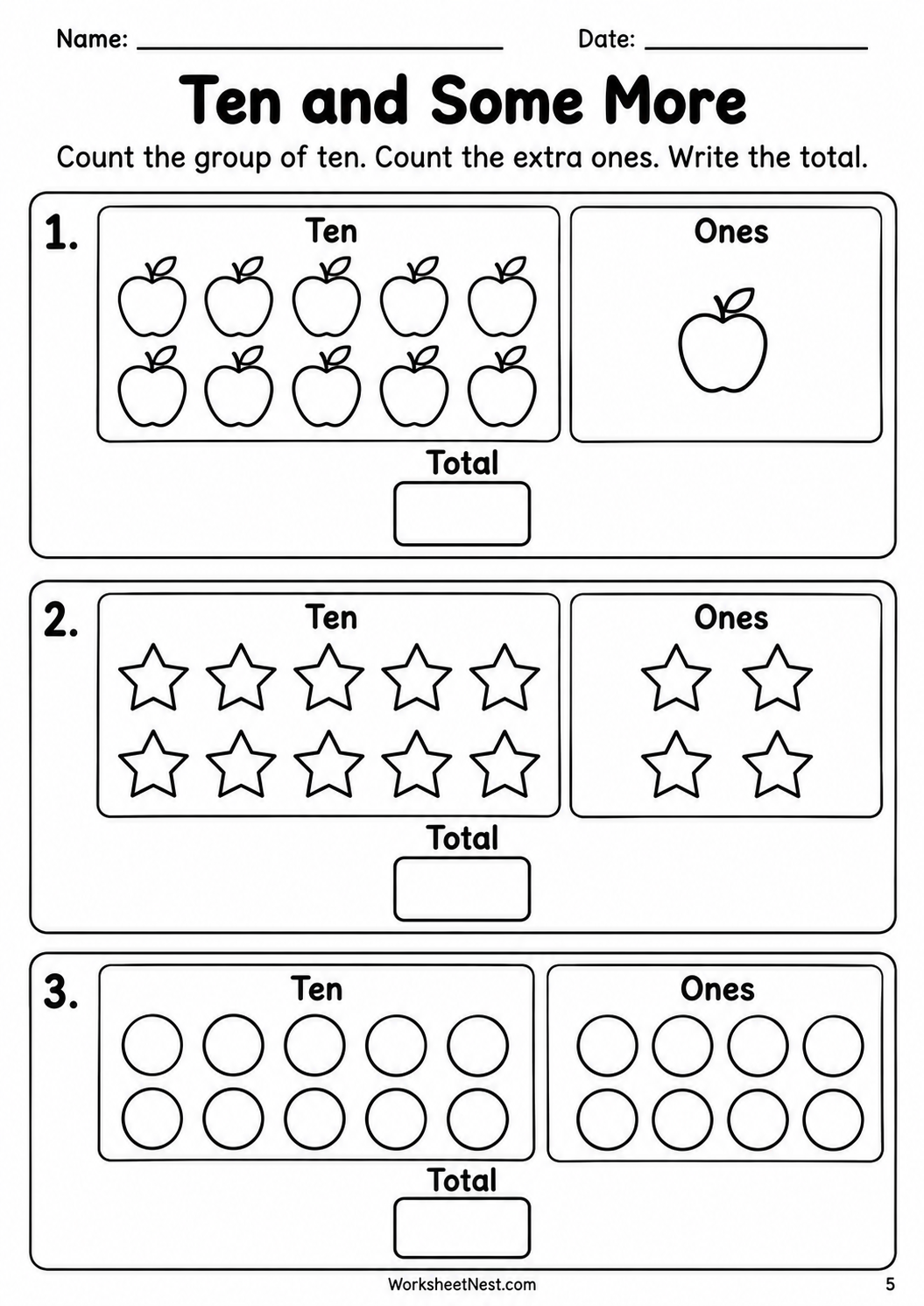
05. Ten and Some More
Each question separates a group of ten from some extra ones. Children count the apples, stars or circles and write the combined total in the box. Begin by checking the group labelled Ten, then ask how many objects are in the Ones box. Learners who are ready can count on from ten; others can count the full set first. Both approaches connect the written answer to the pictures.
Download Worksheet 05 PDF
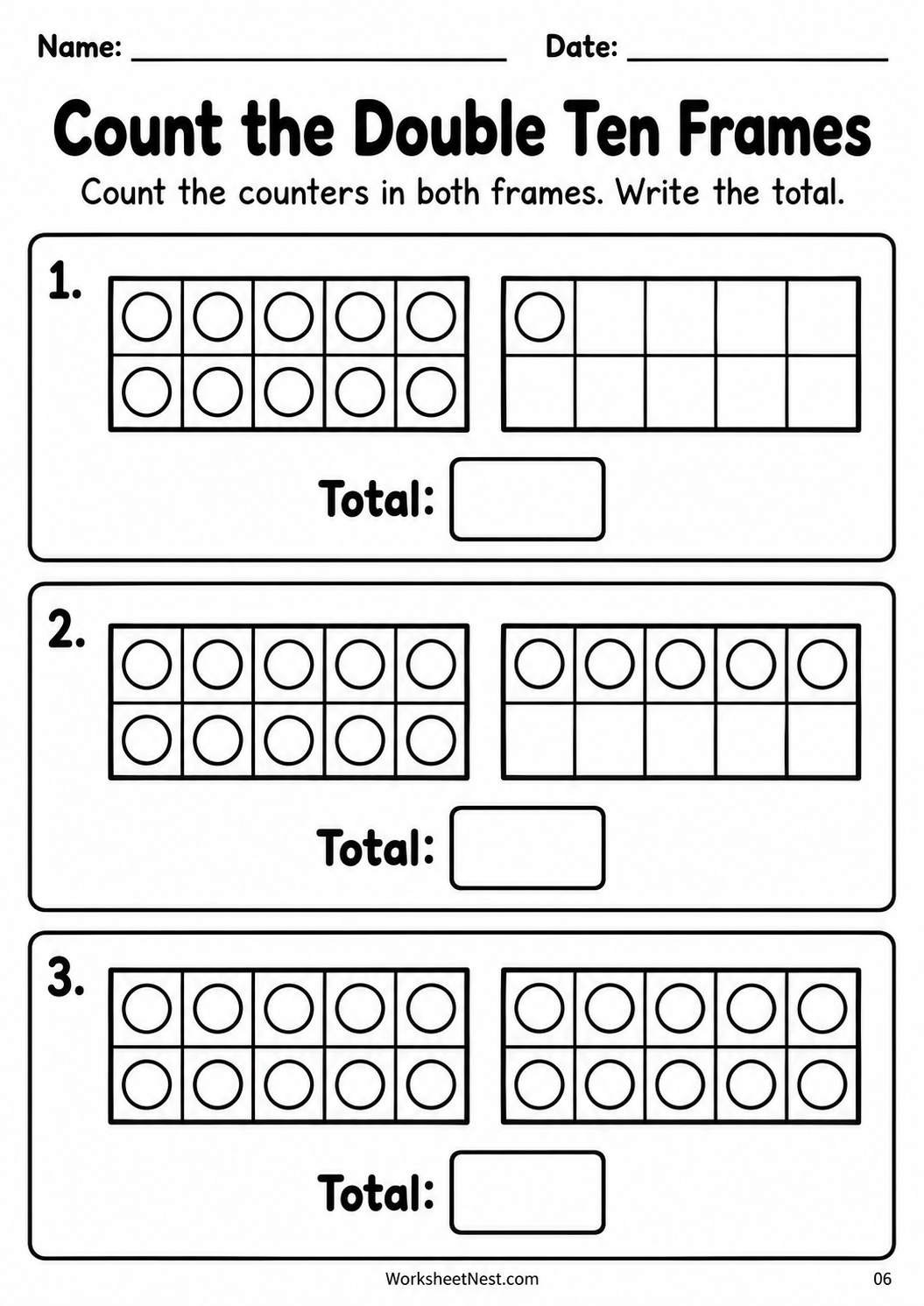
06. Count the Double Ten Frames
Three pairs of ten frames show different totals. Children count the counters across both frames and write how many there are. A full frame gives a visible group of ten; the second frame shows the extra counters or another full ten. Ask learners what they notice before they start counting. They may recognise the full frame, count on from ten, or count each counter while checking their place.
Download Worksheet 06 PDF
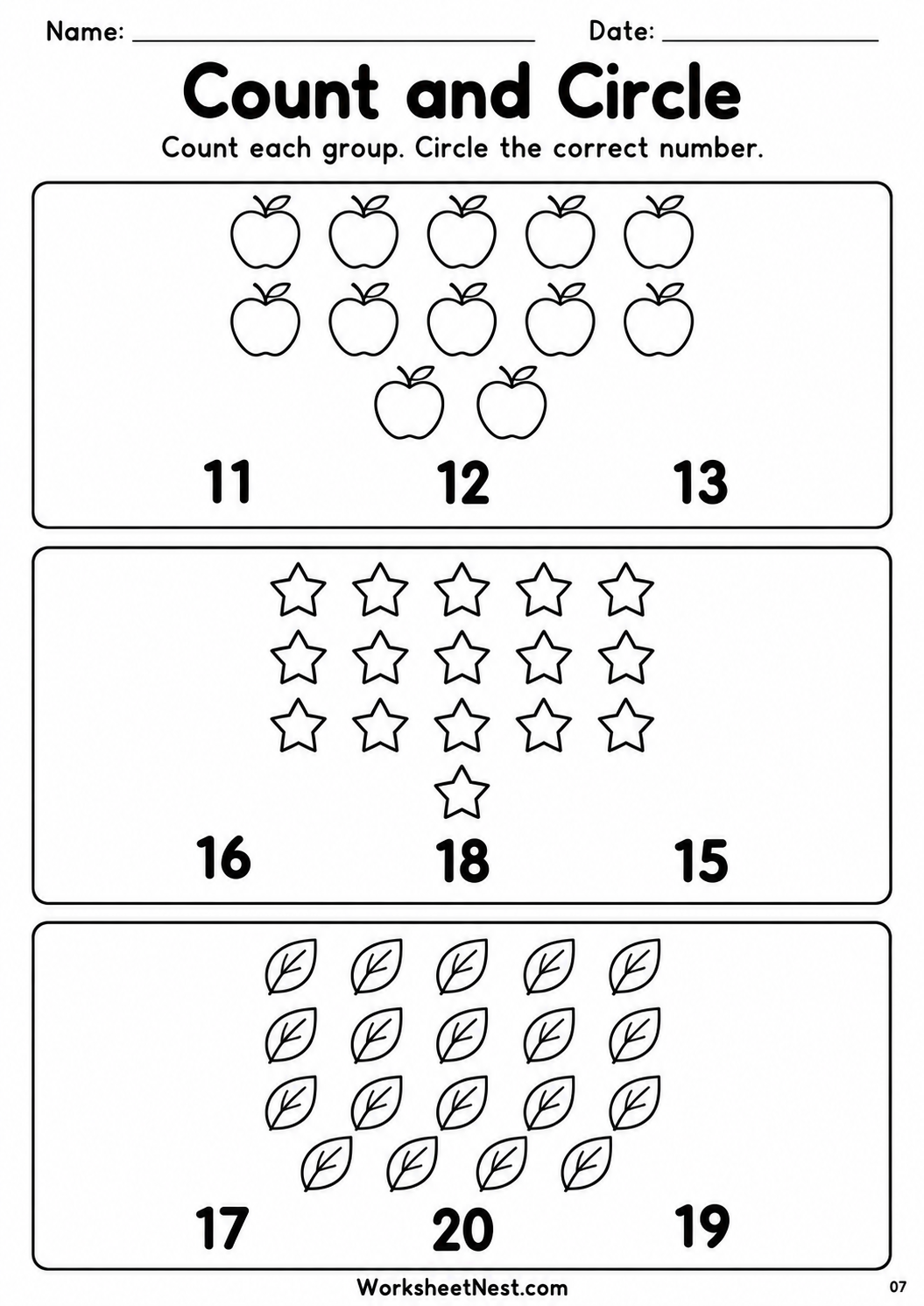
07. Count and Circle
Learners count groups of apples, stars and leaves, then circle the correct number from three choices. The answer positions vary, so each row needs its own count. This page reduces the writing demand while still asking children to connect a quantity to a numeral. If they select a nearby number, return to the pictures together and check for a skipped object or one counted twice.
Download Worksheet 07 PDF
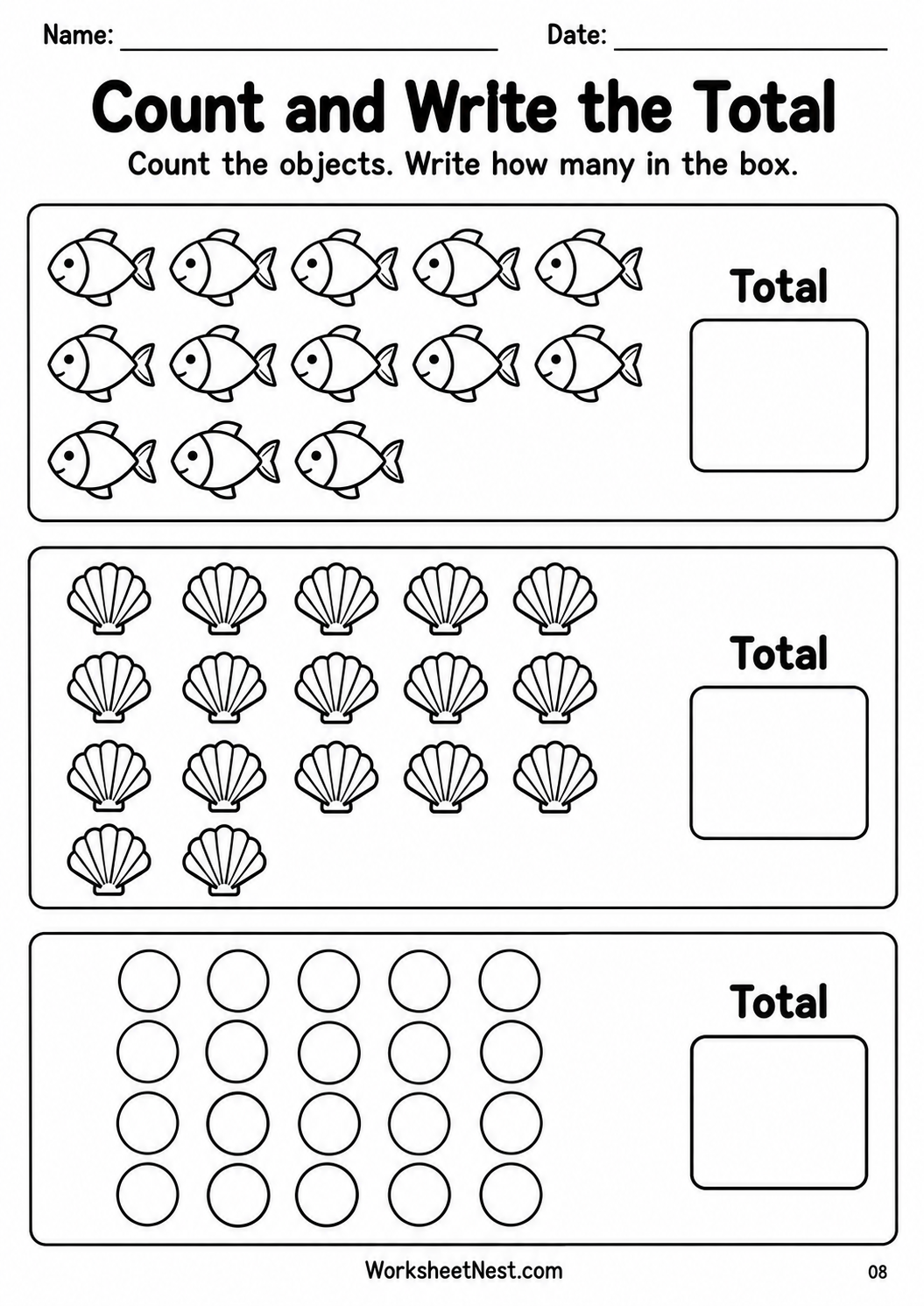
08. Count and Write the Total
This page removes the multiple-choice support. Children count the fish, shells and circles and record each total in an empty box. Ask them to say the number before writing it, which helps you hear whether a difficulty comes from counting or forming the numeral. A child who counts accurately but reverses a digit can practise that digit separately while keeping their successful count in view.
Download Worksheet 08 PDF
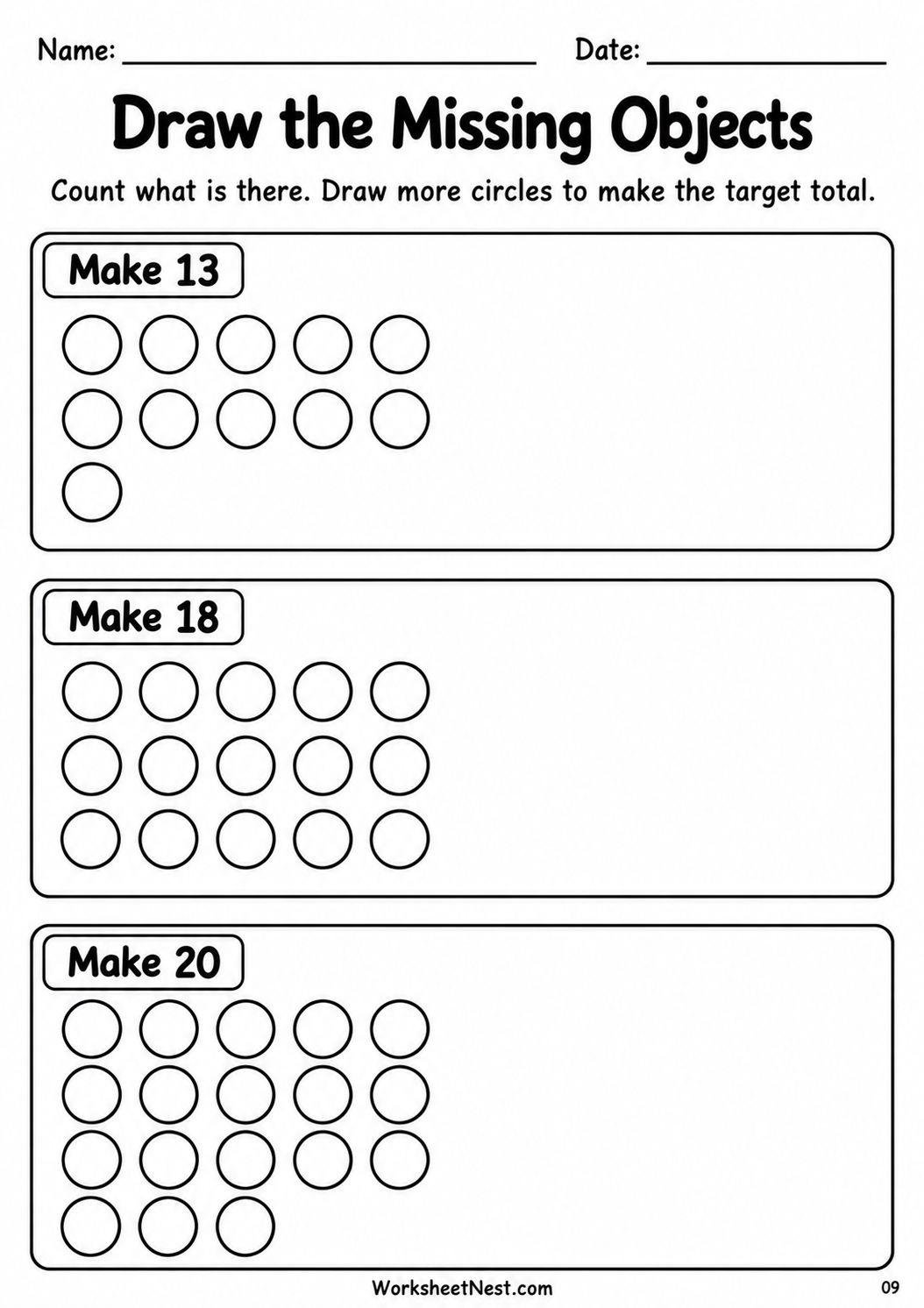
09. Draw the Missing Objects
Children begin with circles already drawn and add more to reach the target shown above each box. The three tasks build to thirteen, eighteen and twenty. First count what is there, then draw one circle at a time while counting on. Finally, count the completed group to check the target. This makes the added amount visible and gives learners a reason to connect counting forward with changing a quantity.
Download Worksheet 09 PDF
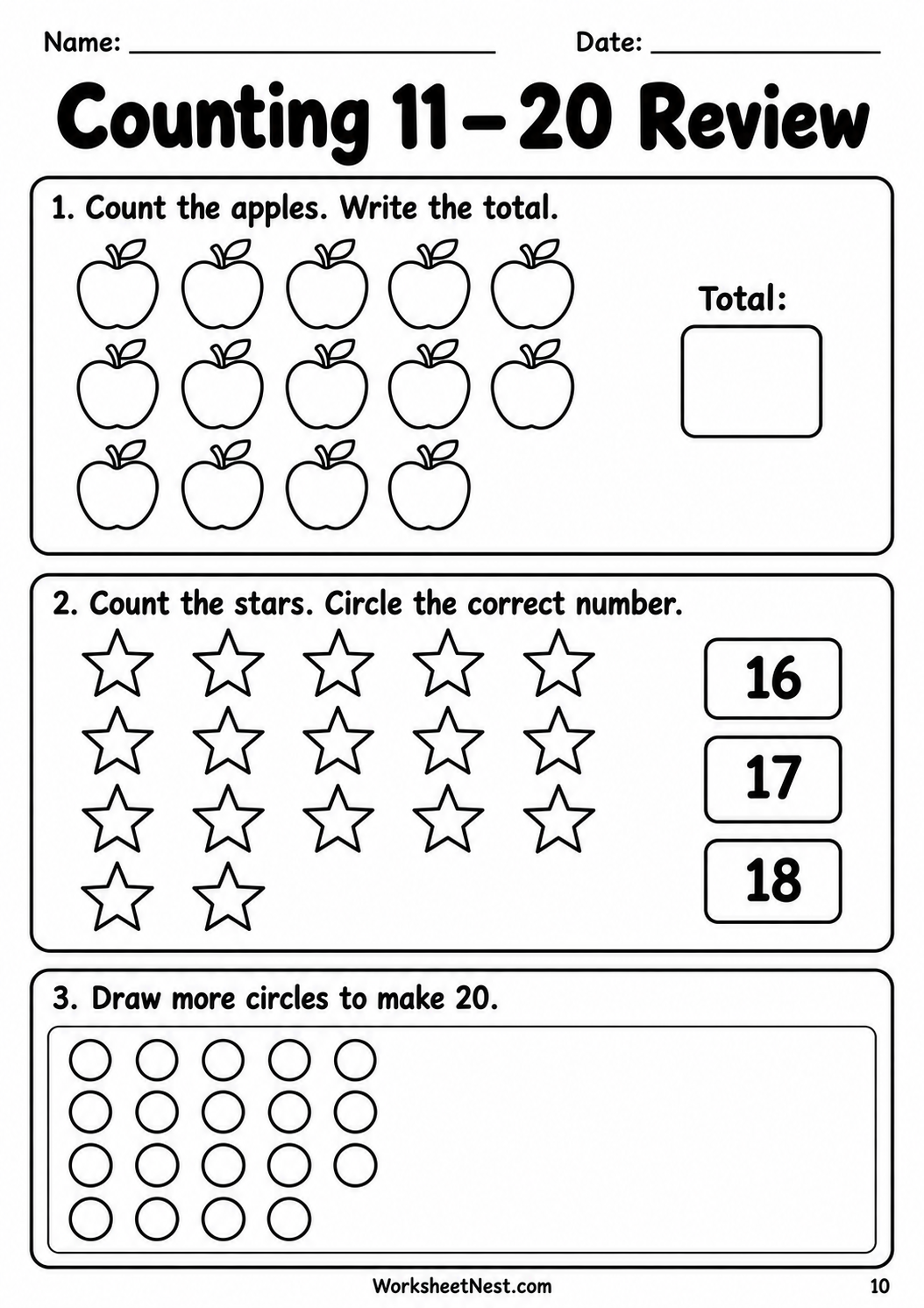
10. Counting 11–20 Review
The review combines three response types on one page. Children write the number of apples, circle the numeral matching the stars, and draw more circles to make twenty. Read each instruction together before starting because the task changes from one question to the next. Invite learners to explain one answer after completing the page. Their explanation can show how they kept track of objects and checked the total.
Download Worksheet 10 PDF
Complete Counting Objects 11–20 Worksheets Bundle
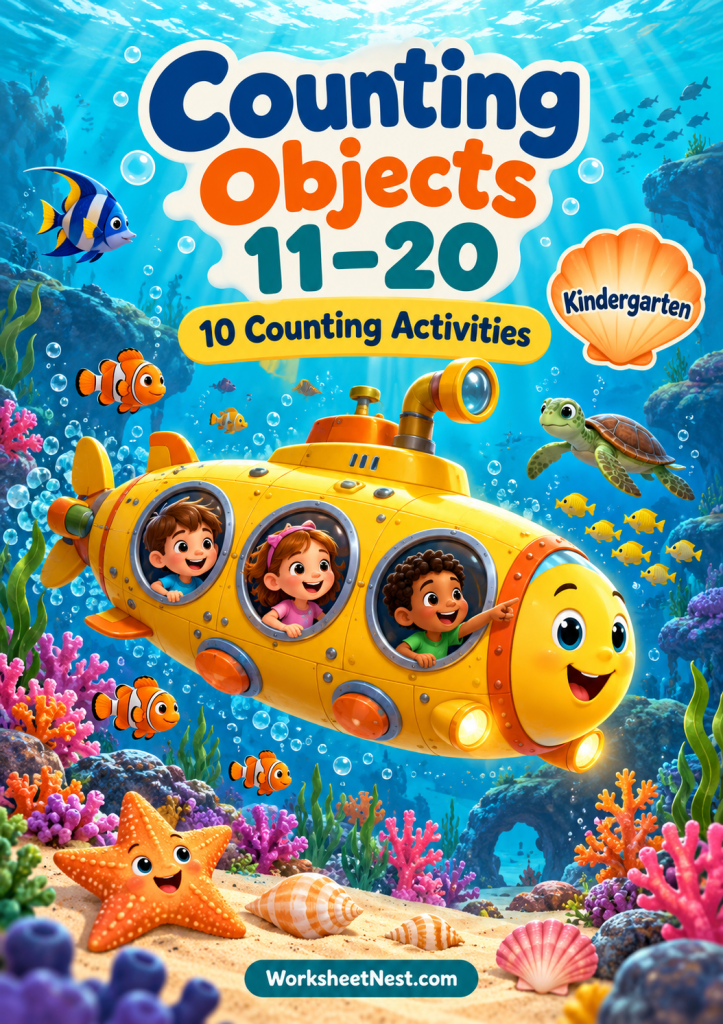
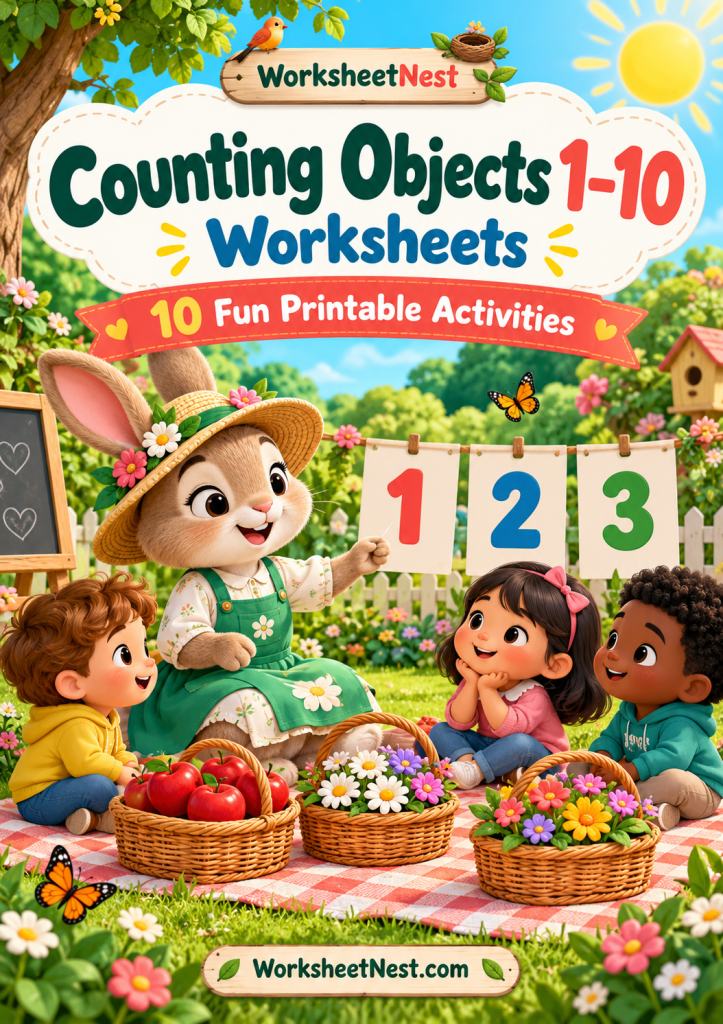
Use the complete set to move from matching small number ranges to recording totals and drawing missing objects. The eleven-page PDF includes the colorful cover followed by all ten activity pages. Choose individual activities for focused practice or keep the set together for later review.
Download the Complete Counting Objects 11–20 PDF Bundle
Teaching and Learning Guidance
Before using the pages, count a small collection of counters or blocks together. Check that your child gives one number word to each object and understands that the last number said tells how many objects are in the group. If counting past ten is still uncertain, rehearse the number sequence together and begin with the first matching page.
Keep Track of Every Object
Model a steady counting route across the rows of pictures. Children can point, move a counter over each picture or add a small pencil mark as they count. Choose one method at a time. The aim is to avoid missing a picture or counting it twice, while leaving enough attention for saying the number words in order.
Talk About Ten and Extra Ones
Use the ten-and-ones and double ten-frame activities to discuss a full group of ten. Ask, “How many more do you see?” and allow time to count the extra objects. When both frames are full, discuss two groups of ten making twenty. Keep the explanation close to the actual pictures rather than requiring a formal written number sentence.
For extra ten-frame practice, NCTM’s Ten Frame interactive lets children count items, build a frame, and work out how many more are needed to fill it.
Use Answers to Plan the Next Step
A matching or circling page can help a learner show quantity recognition without writing a whole numeral. A count-and-write page adds that recording step, while drawing missing objects asks the child to change a group. Move between these formats as needed. Repeat a short activity with real objects if a page feels difficult, then return to the pictures when the counting is secure.
Printing Your Worksheets
The PDF pages use A4 portrait paper. Select A4 and check the print preview before printing. Print one test page first, using your printer’s fit-to-printable-area setting if needed to keep the edges visible. The activity pages are black and white; the cover is in color. Give children a pencil for matching, circling, recording totals and drawing the missing objects.
Common Core Connections
These pages give partial practice toward selected kindergarten Common Core standards. They do not cover any standard in full.
K.CC.B.4.a — Pair each object with one number name when counting: Worksheets 01–10, where children count printed groups of objects one by one.
K.CC.B.5 — Count to answer ‘how many?’ and count out a given number: Worksheets 01–08 and 10 for finding a total, and Worksheets 09 and 10 for drawing circles to reach a stated total.
K.CC.A.3 — Write numbers from 0 to 20 and show a count with a written numeral: Worksheets 05, 06, 08, and the first task of Worksheet 10.
The standard links point to Common Core State Standards (Kindergarten) pages on an unofficial mirror site.
License and Terms of Use Free for personal, homeschool, and classroom use. Printing and link-sharing are allowed. Selling, re-uploading, or redistributing these worksheets is not permitted.