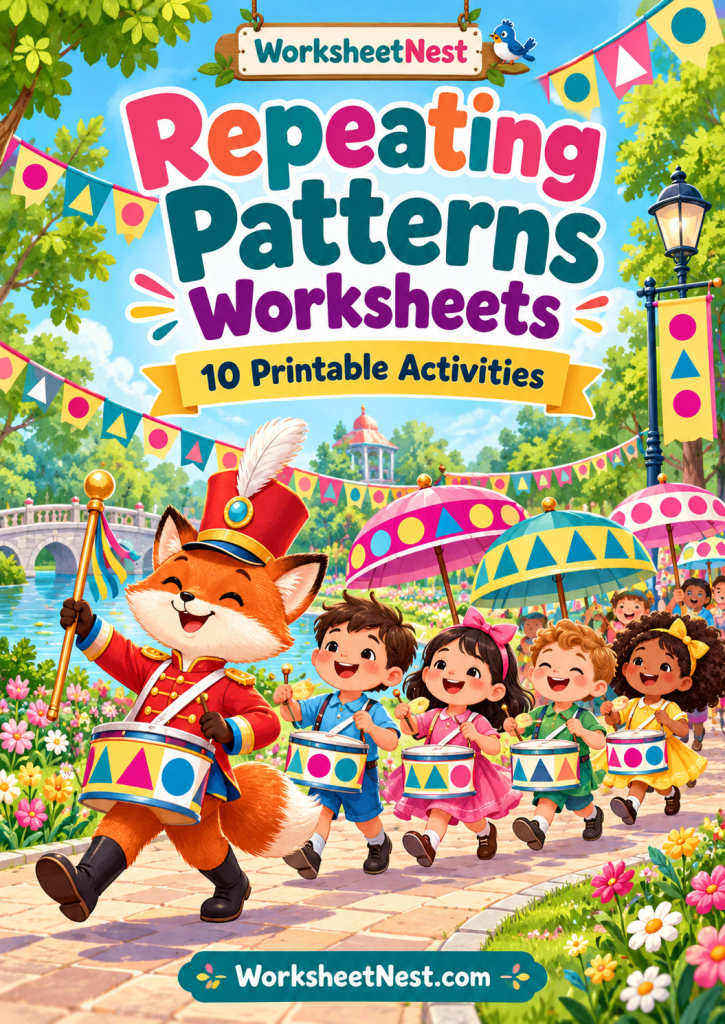
Help children notice what repeats with these repeating patterns worksheets. The collection contains ten black-and-white activities and a separate colorful cover. Learners copy picture models, continue shape sequences, fill gaps, choose the next element, repair a mistake, and make patterns of their own.
The activities introduce AB, AAB, ABB, and ABC structures through clear picture and shape differences. Preschool and kindergarten learners can work with adult direction-reading support. Begin with a familiar alternating pair before moving to a longer repeating group. Children can describe each sequence using picture names; understanding the repeated order matters more than memorizing its letter code.
01. Copy the Picture Pattern
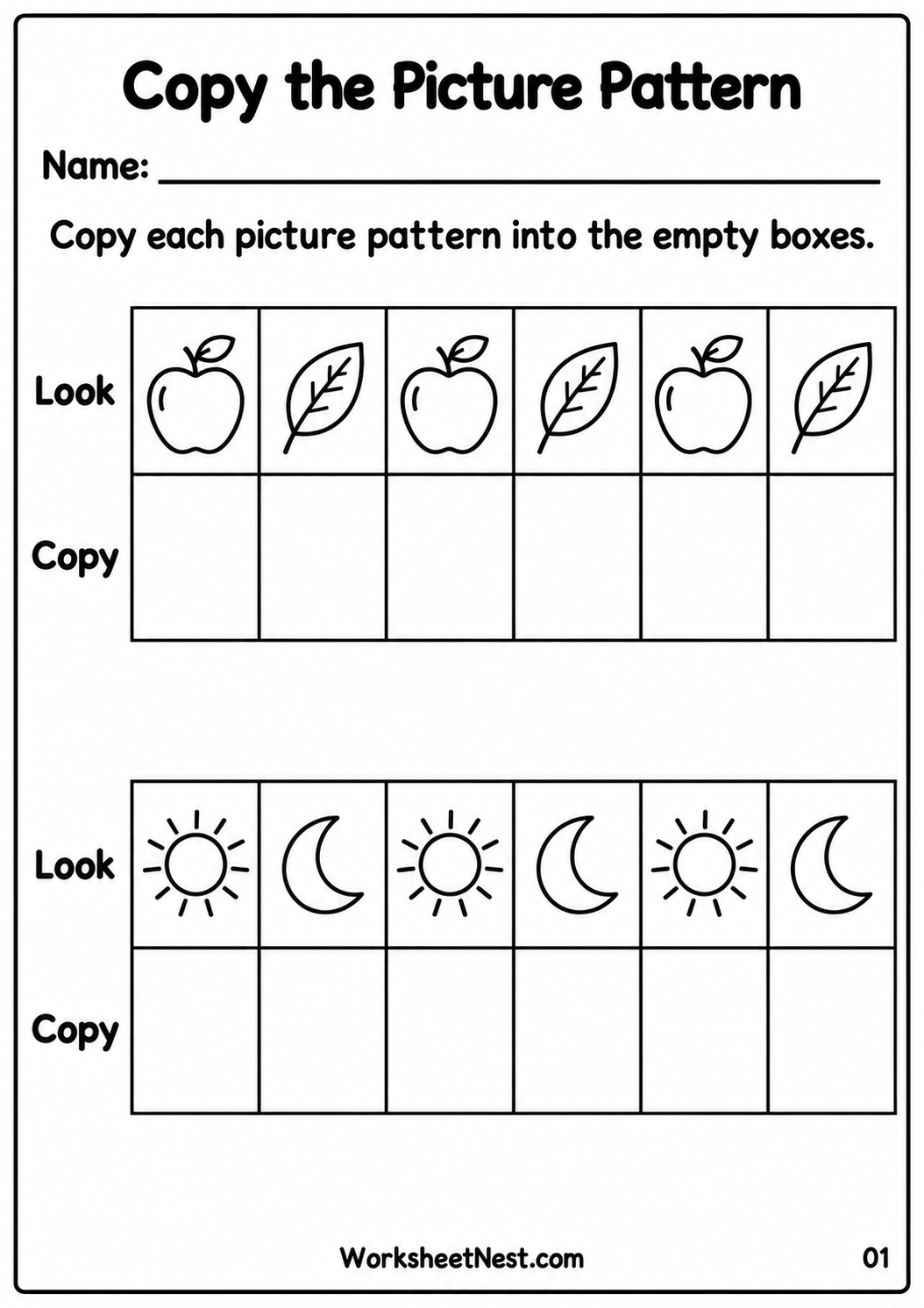
Children copy two AB picture sequences into empty rows beneath the models. One alternates apples and leaves; the other alternates suns and moons. The model stays visible so learners can compare their work one box at a time. Say the picture names together and check that each copied row preserves both the pictures and their order.
02. Continue the AB Pattern
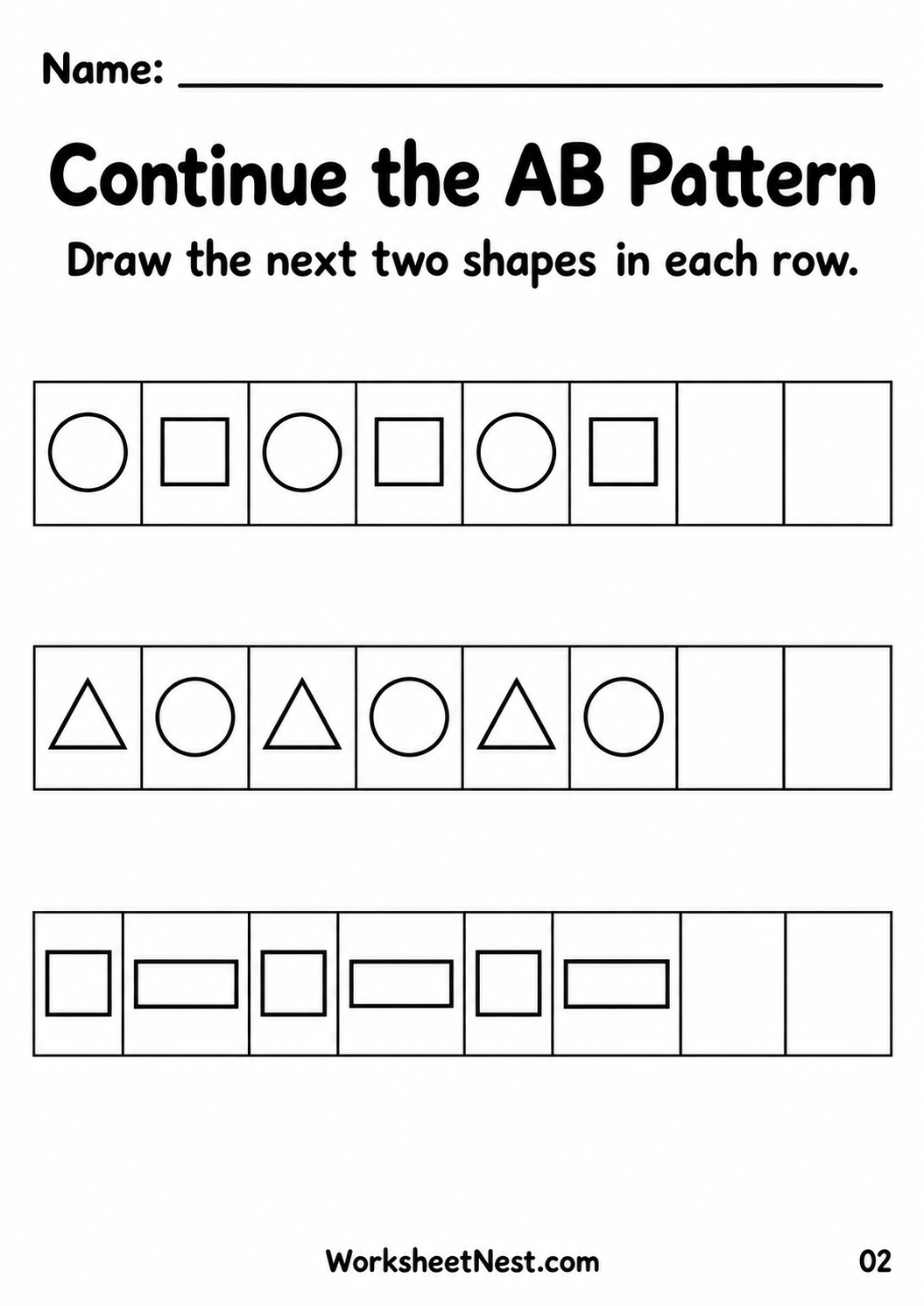
Three rows use alternating pairs of shapes. Children look across the printed examples and draw the next two shapes in the empty boxes. Encourage them to name the whole row before answering rather than repeat only its last shape. Each pair takes its turn again, making the change from copying a model to extending a sequence clear.
03. Find the Missing Shape
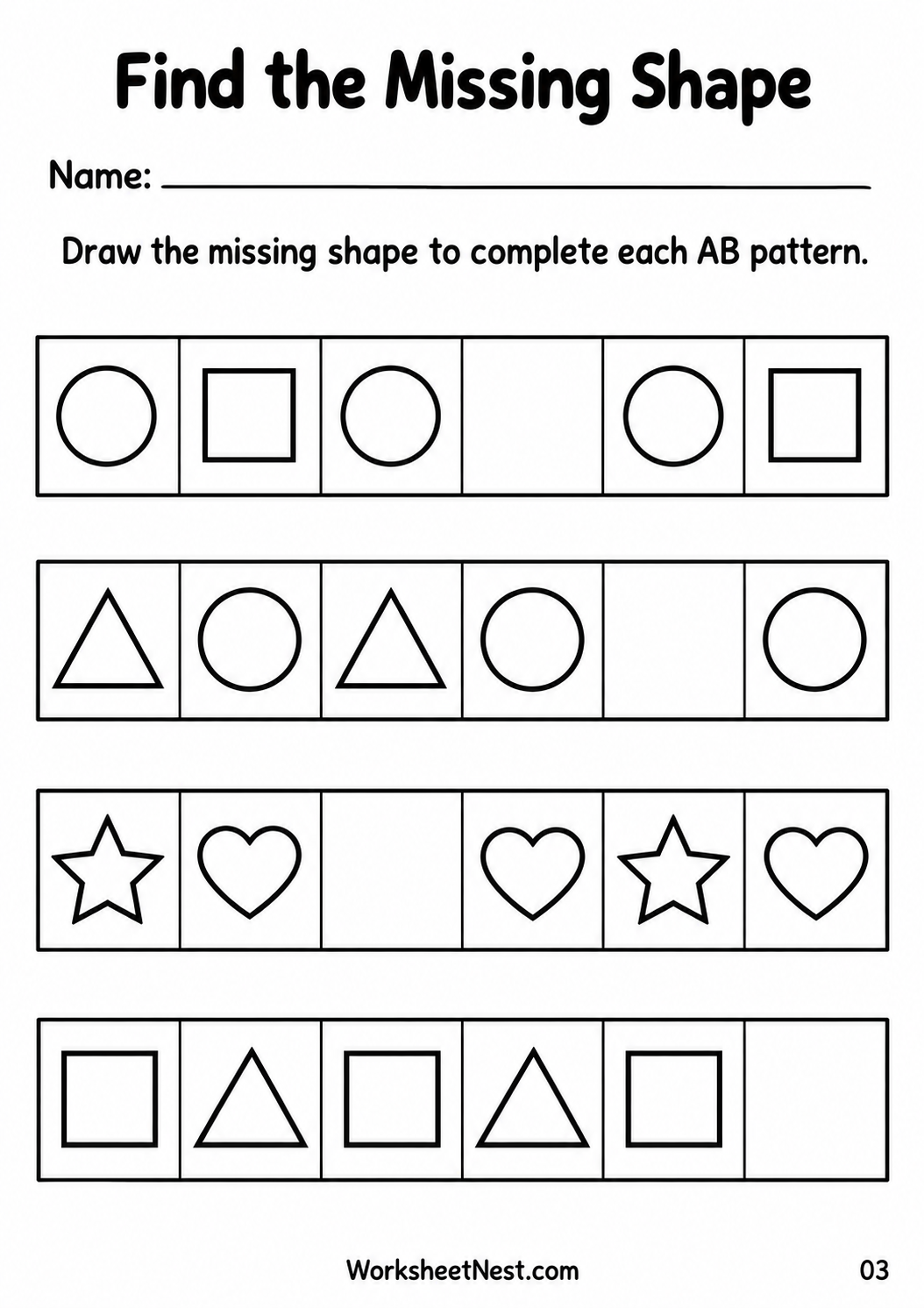
Each row has one gap inside an AB sequence. Children draw the shape that belongs in the empty box, using the printed shapes on either side to check their choice. The rows include circles, squares, triangles, stars, and hearts. Read through a completed row aloud to see whether the alternating order continues without a break.
04. Continue AAB Patterns
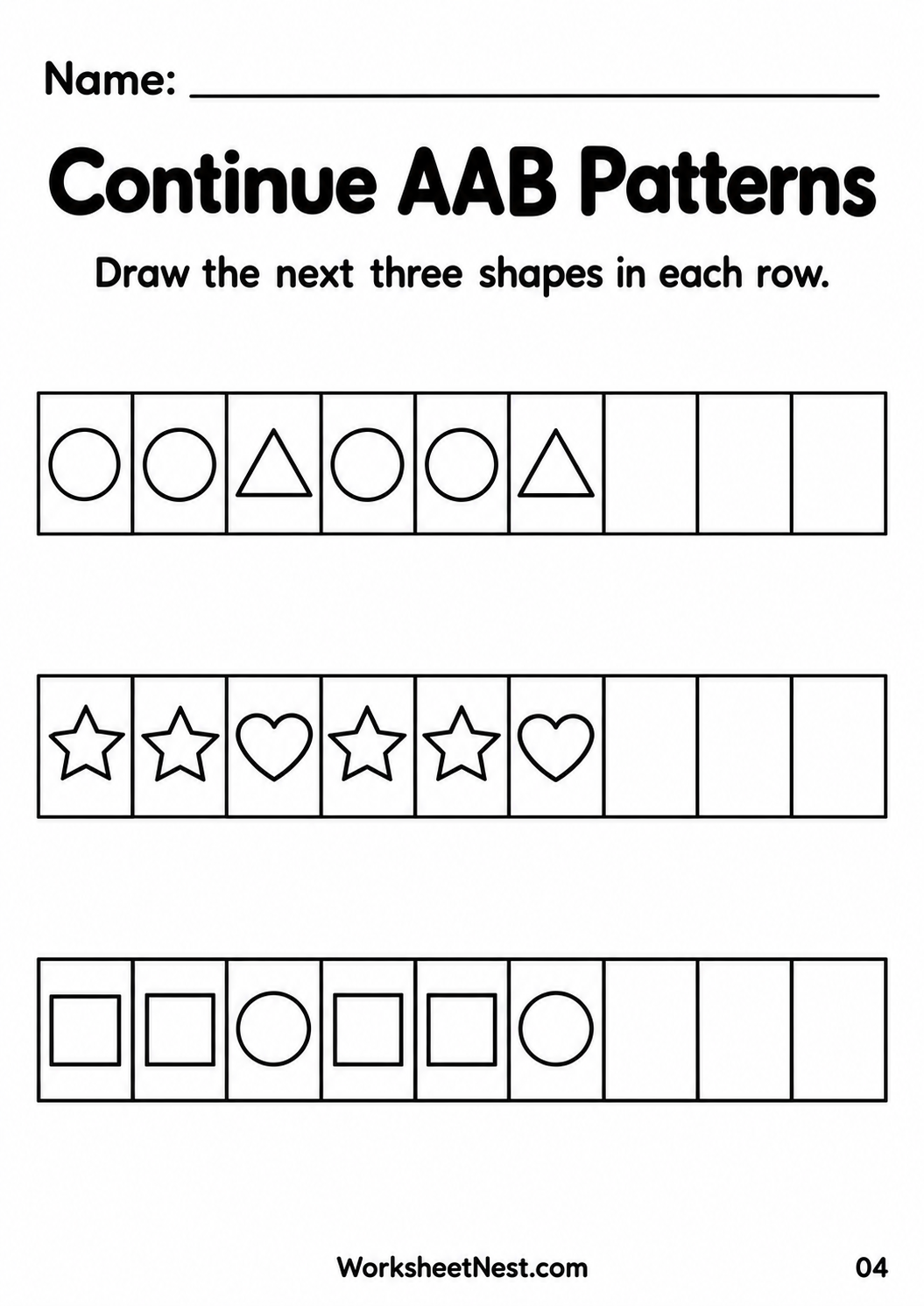
The repeating part now contains two matching shapes followed by a different one. Three models introduce this AAB structure, and learners draw the next three shapes. Point out one complete group before looking for the same group again. Children can use shape names instead of the letter code while explaining the repeated order.
05. Continue ABB Patterns
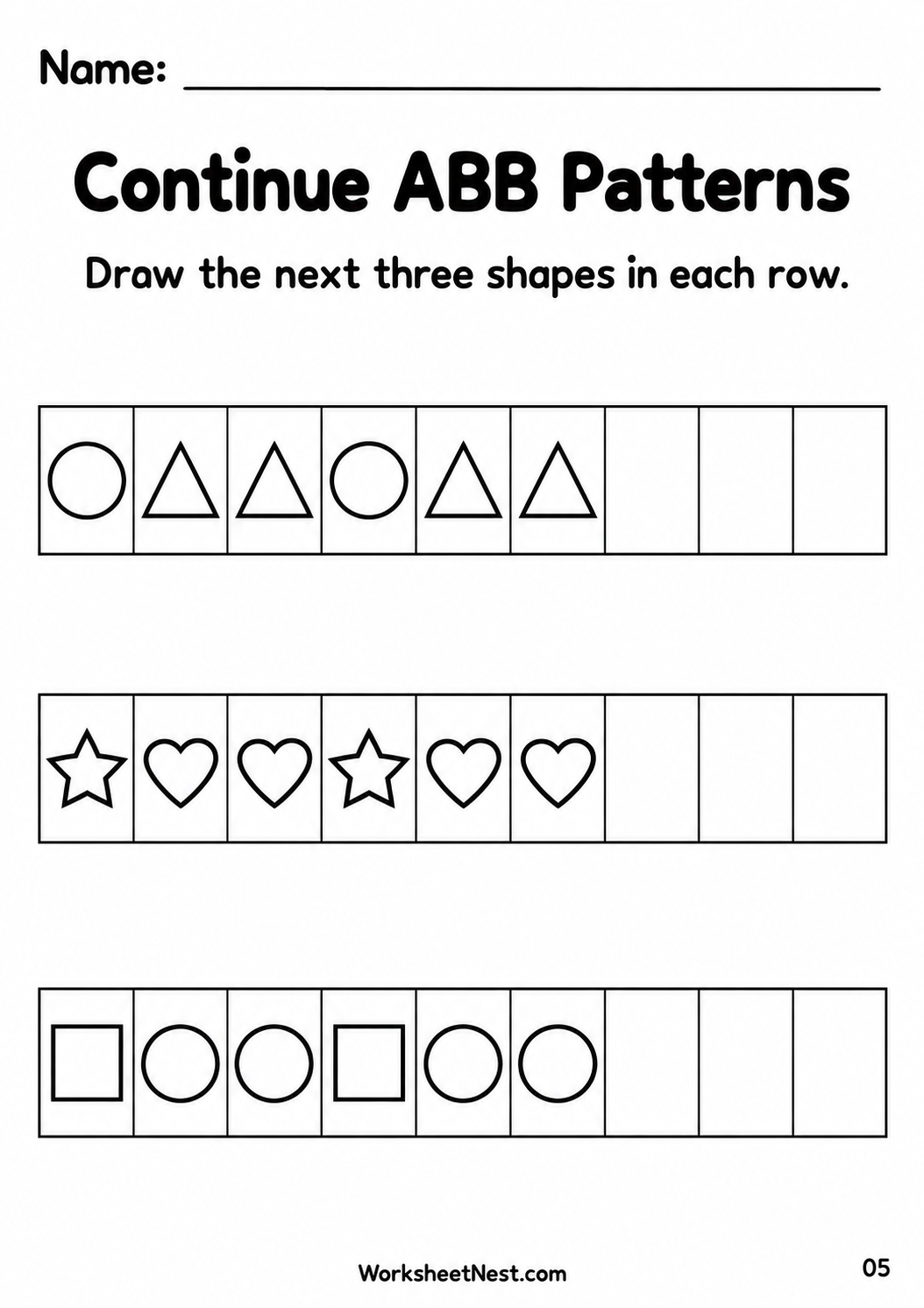
This page changes the grouping to one shape followed by two of another kind. Children continue each ABB row by drawing three more shapes. Compare a row with the earlier AAB page if needed, focusing on which shape appears twice. Reading the sequence in groups helps the learner hear the difference between these two structures.
06. Continue ABC Patterns
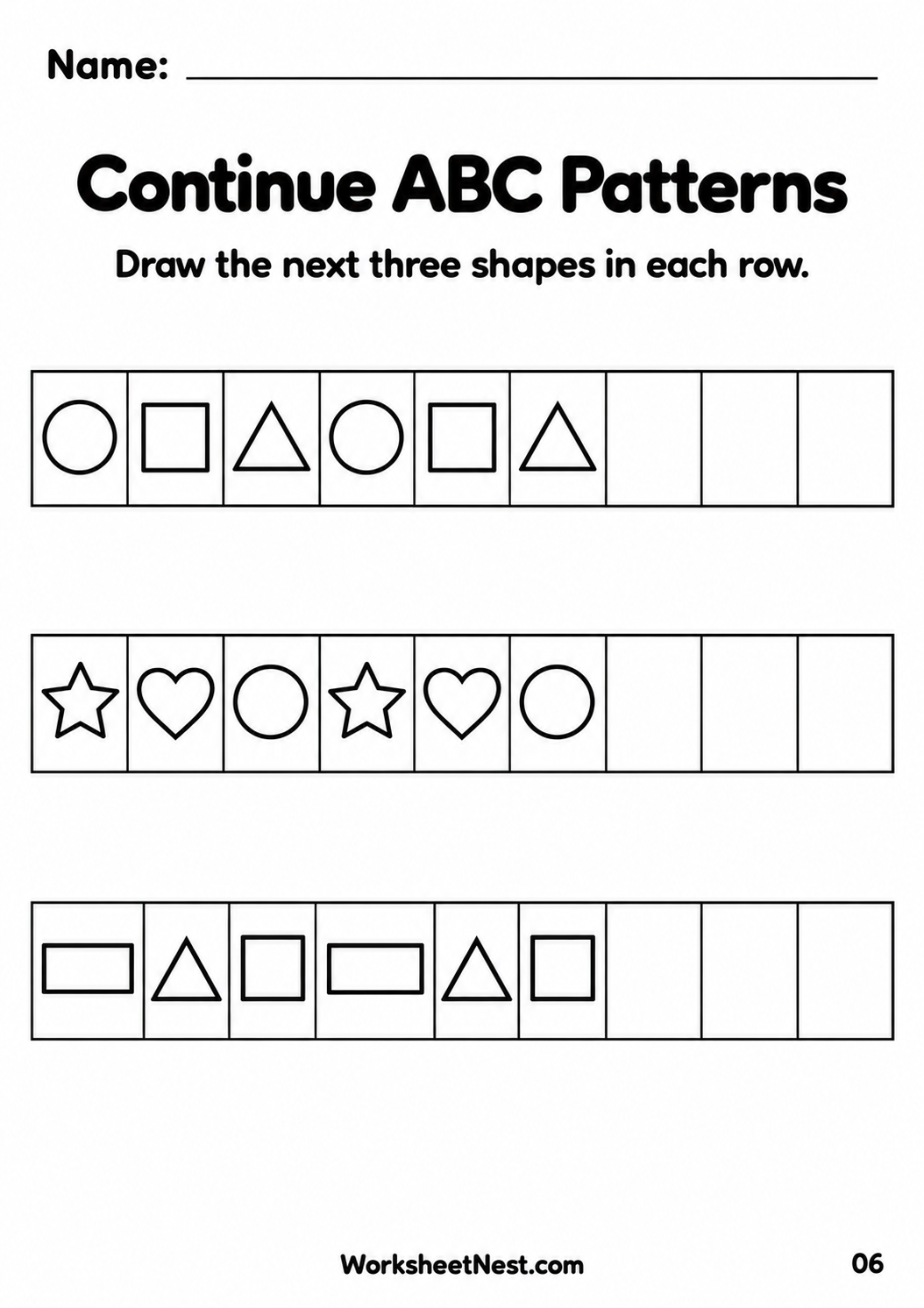
Three different shapes repeat in a fixed order. Children extend each row by adding the next three shapes, completing another copy of its repeating part. Encourage a steady left-to-right check through all three positions. The task uses outline differences, so learners do not need printed colors to distinguish the elements.
07. Choose the Next Shape
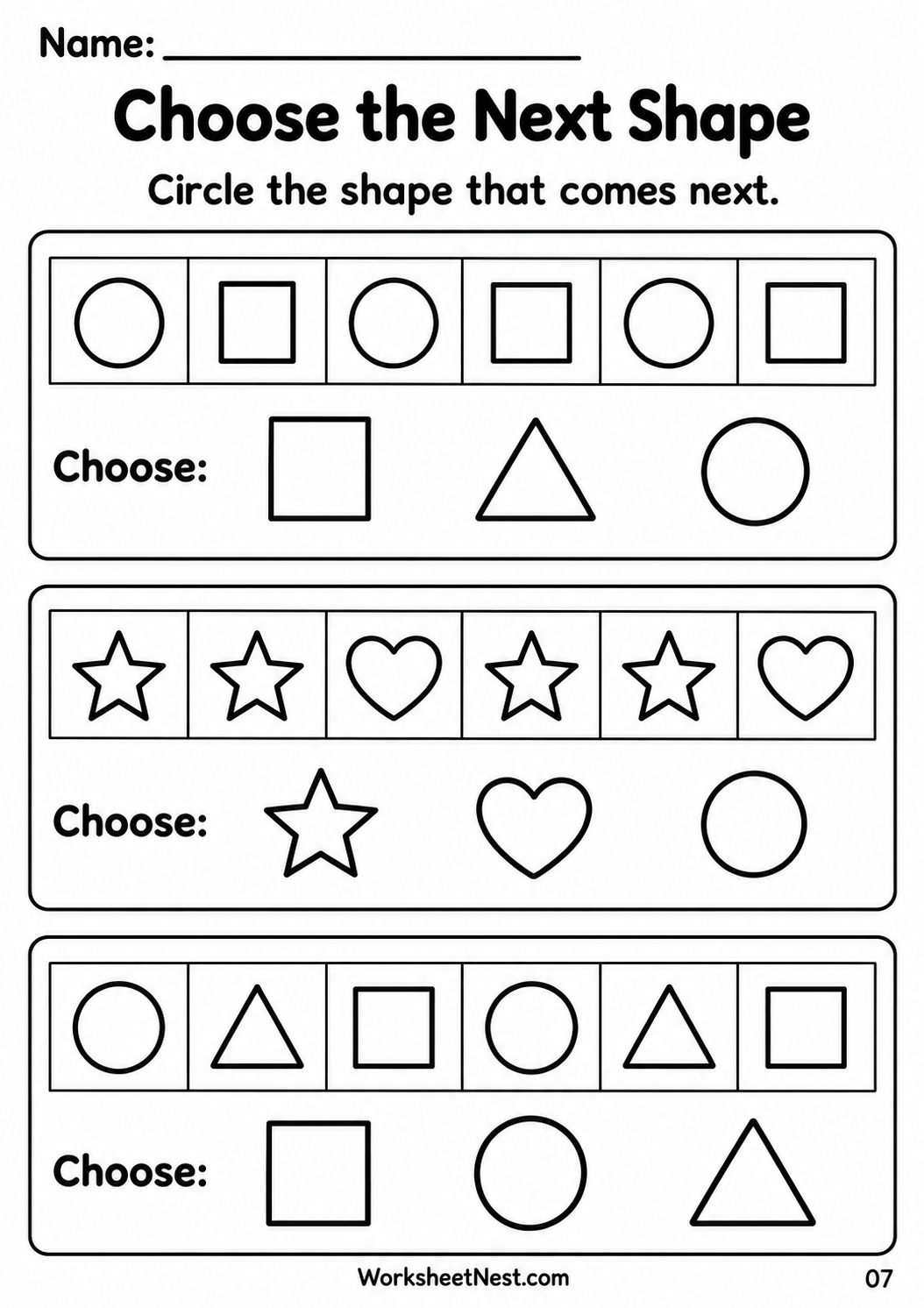
Three panels ask children to select the next shape from pictured choices. The models use AB, AAB, and ABC structures. This page provides a way to respond without drawing the missing shape. Ask the learner to predict what comes next aloud, then find that shape among the options and circle it.
08. Fix the Pattern Mistake
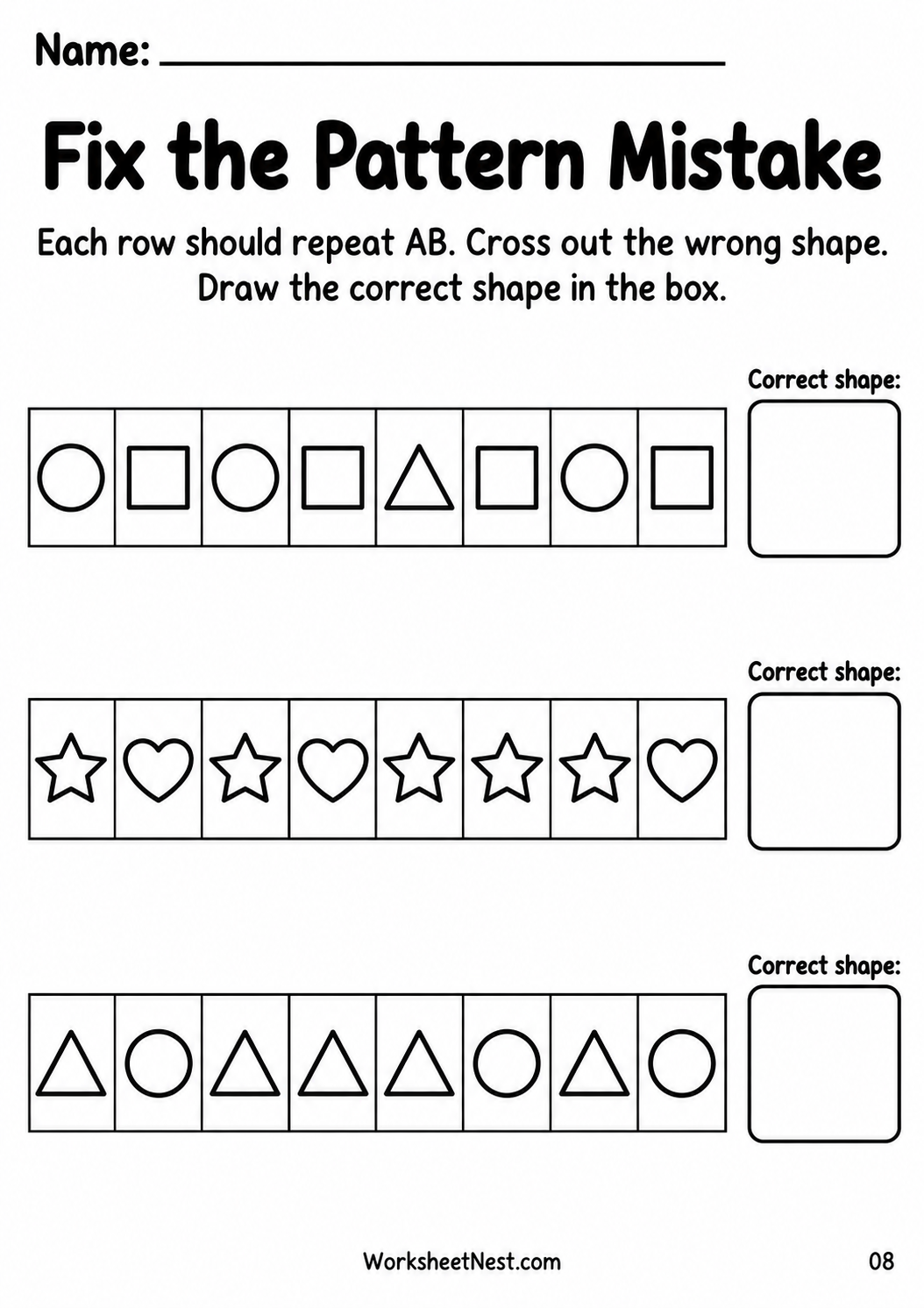
Each row is intended to follow an AB rule but includes one wrong shape. Children cross out the mistake and draw the correct replacement in the answer box. The mismatch is part of the exercise. Invite learners to check the proposed replacement by reading the repaired sequence from the beginning.
09. Make Your Own Pattern
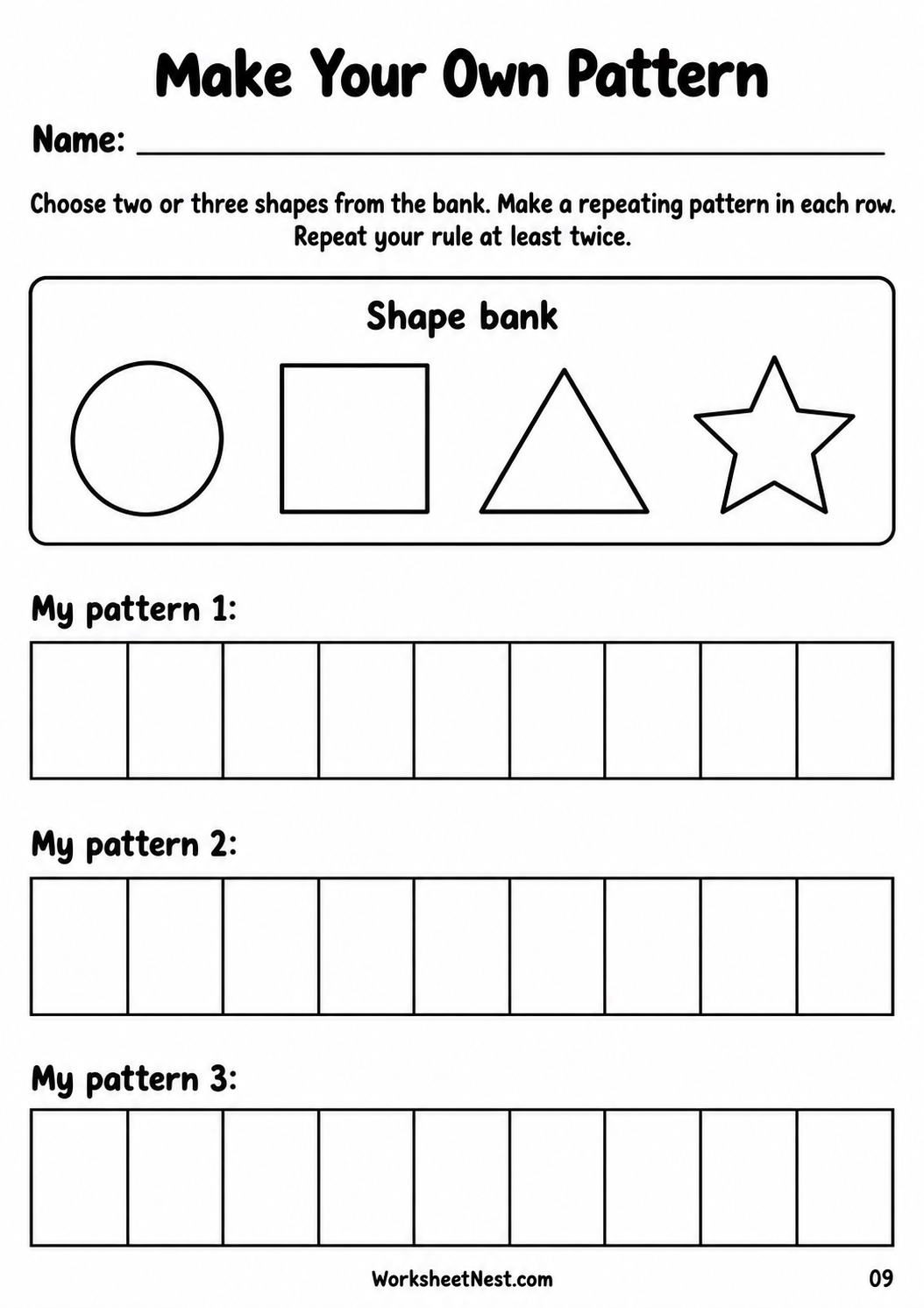
A bank offers a circle, square, triangle, and star. Children choose two or three shapes and create a repeating pattern in each empty row, following the instruction to repeat their rule at least twice. More than one response is valid. Ask the child to describe the chosen rule and show where it begins again.
10. Pattern Review
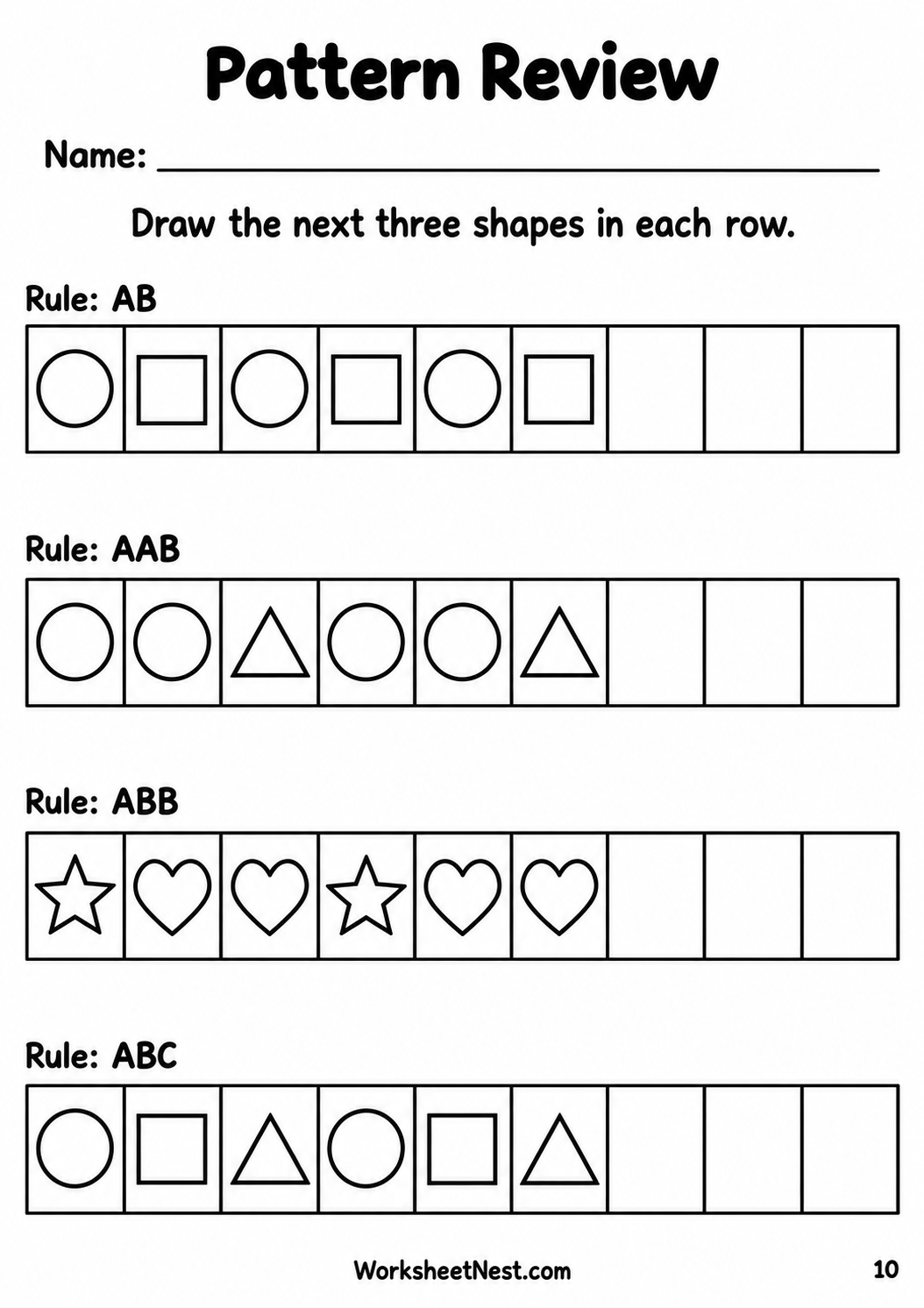
The final page brings AB, AAB, ABB, and ABC rows together. Each rule is labeled, and learners draw the next shapes in the empty boxes. Use the labels as adult prompts when needed; children can still explain the row with shape names. Revisit a focused page if a particular repeating structure needs more practice.
Download the Complete Repeating Patterns Worksheets
Use the complete workbook to keep the ten activities together. The 11-page PDF includes the colorful cover followed by worksheets 01–10 in order. Select an individual page for focused practice or use the sequence to revisit several repeating rules.
Download the Full Repeating Patterns PDF
Teaching Ideas
Build a short pattern with everyday objects before using a worksheet. Alternate two different objects, say their names in order, and invite the child to continue. Then show where the same small group begins again. Connect that spoken sequence to one printed row rather than introducing every pattern type at once.
Patterning activities are a staple of the kindergarten curriculum, as shown in the NCTM article on the mathematics of pattern in kindergarten.
An AB pattern repeats two different elements in turn. AAB repeats two of the first element and one of the second; ABB repeats one of the first and two of the second. ABC repeats three different elements. These letter codes describe positions in the repeating group. They are not letter-tracing or spelling tasks, and the child can use shape names to explain the same rule.
If a learner chooses an unexpected next shape, ask them to read the printed sequence aloud. Look for the repeated group together, then check whether the proposed continuation keeps the order. On the mistake page, replace only the shape that breaks the stated AB rule. On the create-your-own page, accept different valid choices and ask the child to demonstrate at least two complete repetitions.
Separate drawing difficulty from pattern understanding. A child may recognize the correct next element while finding a star difficult to draw. Let the learner identify the shape aloud or point to an example before attempting an outline. Keep practice short enough to allow explanation and checking rather than a hurried page of answers.
Learning Skills
These pages practice copying and extending repeating patterns, identifying a missing element, predicting the next shape, correcting an intentional mismatch, and creating a repeated rule. Shape and picture differences carry the information, so the activities work in black and white. This collection covers repeating units rather than growing sequences or arithmetic skip counting.
Using the Activity Pages
Read the direction for the selected page and have a pencil ready. Copying and drawing tasks need room for the learner’s own marks, while the choice page uses a circled response. There is no cutting or gluing task. The colorful cover introduces the collection; the ten activity images have white backgrounds and outline pictures.
Printing the Worksheets
The PDF pages use A4 portrait paper. Choose the pages you need in your PDF viewer, select A4 paper, and check the print preview before printing. Start with one activity page to check the outlines and writing space. Use black-and-white printing for the ten activity pages; print the colorful cover in color if desired. Printer margins vary, so use the fit option if your preview clips an edge. The artwork is raster-based and has not been verified as 300 DPI.
License and Terms of Use Free for personal, homeschool, and classroom use. Printing and link-sharing are allowed. Selling, re-uploading, or redistributing these worksheets is not permitted.
Explore More Learning Activities
Patterns WorksheetsMath Worksheets