Introduce addition as putting two groups together, with pictures children can count and compare with a number sentence. These picture addition within 5 worksheets offer ten different activities for kindergarten learners, from drawing a combined group to choosing an equation and solving short stories. Every sum stays at five or below.These picture addition within 5 worksheets use apples, fish, stars, flowers, balls and simple shapes. Some questions provide objects to count; others ask children to draw their own circles. A five-frame page gives the objects a shared structure, while the zero page includes truly empty groups. Choose one activity at a time and let children explain what the pictures show before they write an answer.
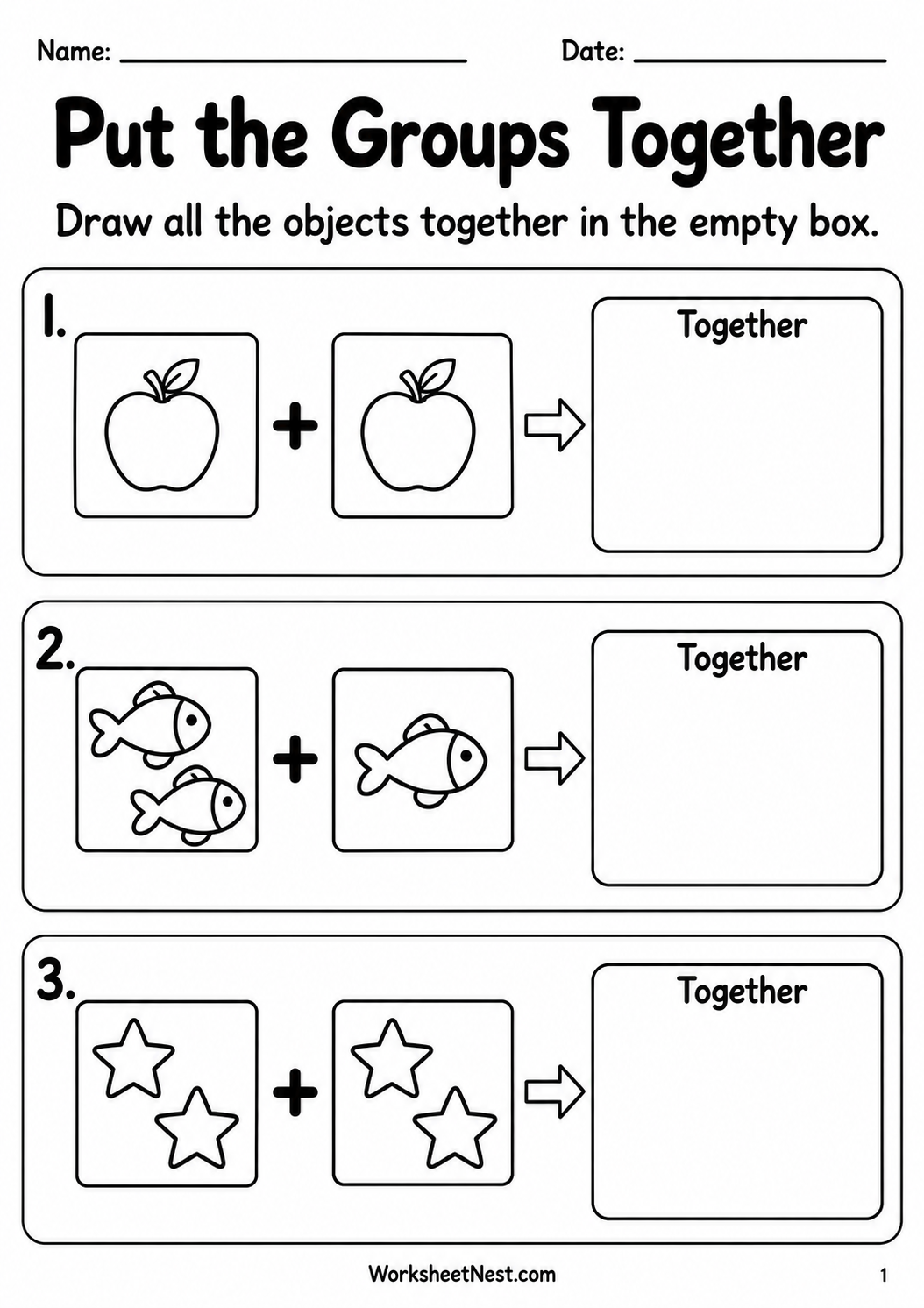
01. Put the Groups Together
Children draw all the objects from two separate groups in an empty box. The three rows use apples, fish and stars, with groups showing one and one, two and one, and two and two. Ask learners to count each starting group, then count the objects in their finished drawing. The drawing represents the combined quantity rather than copying only one side.
Download Worksheet 01 PDF
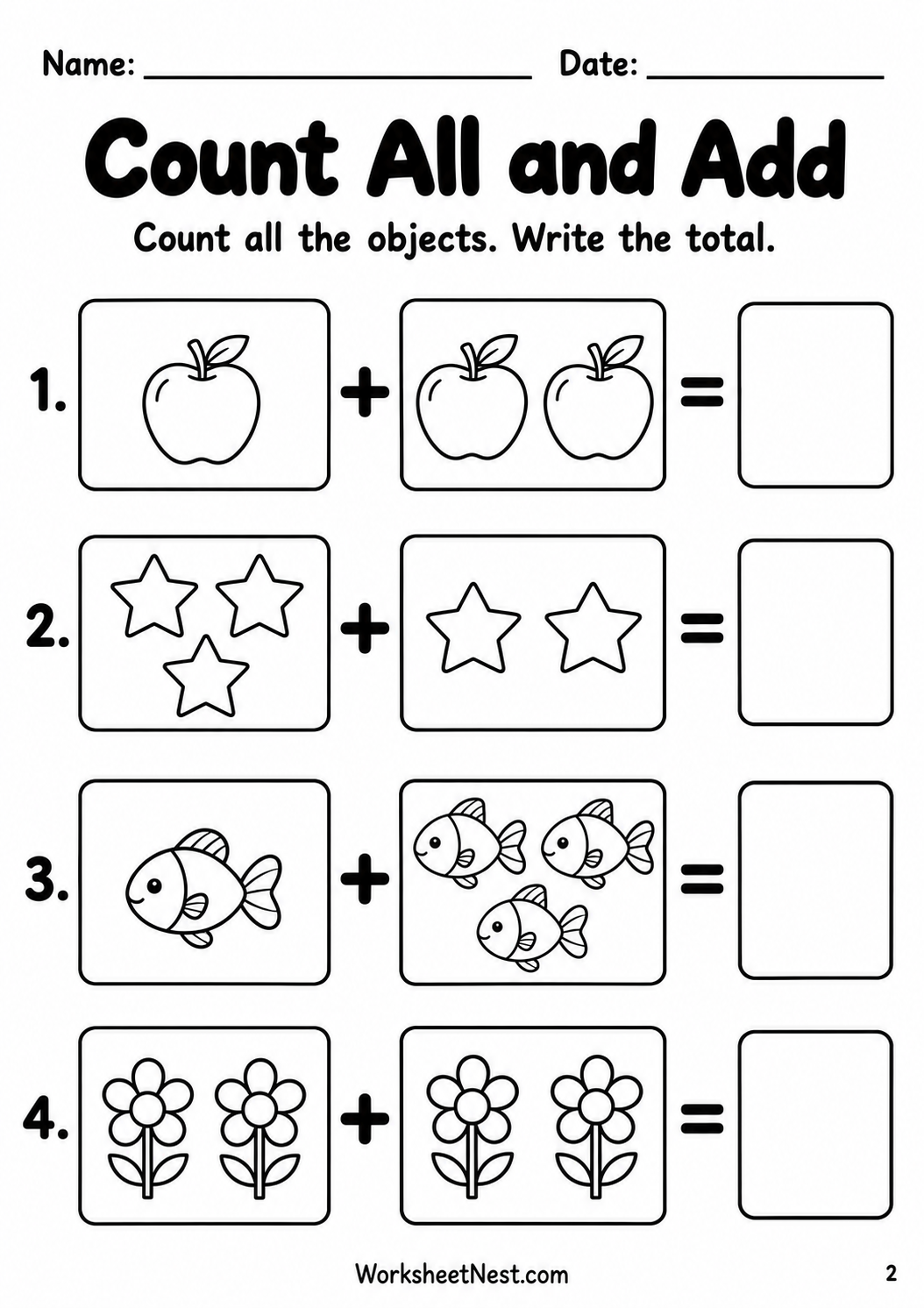
02. Count All and Add
Four pictured sums ask children to count both groups and write the total. The rows use apples, stars, fish and flowers. The plus sign sits between the groups, and the answer box follows the equals sign. Encourage a steady pointing route across both groups so that each object receives one number word, including when the pictures are arranged differently.
Download Worksheet 02 PDF
03. Match the Sum
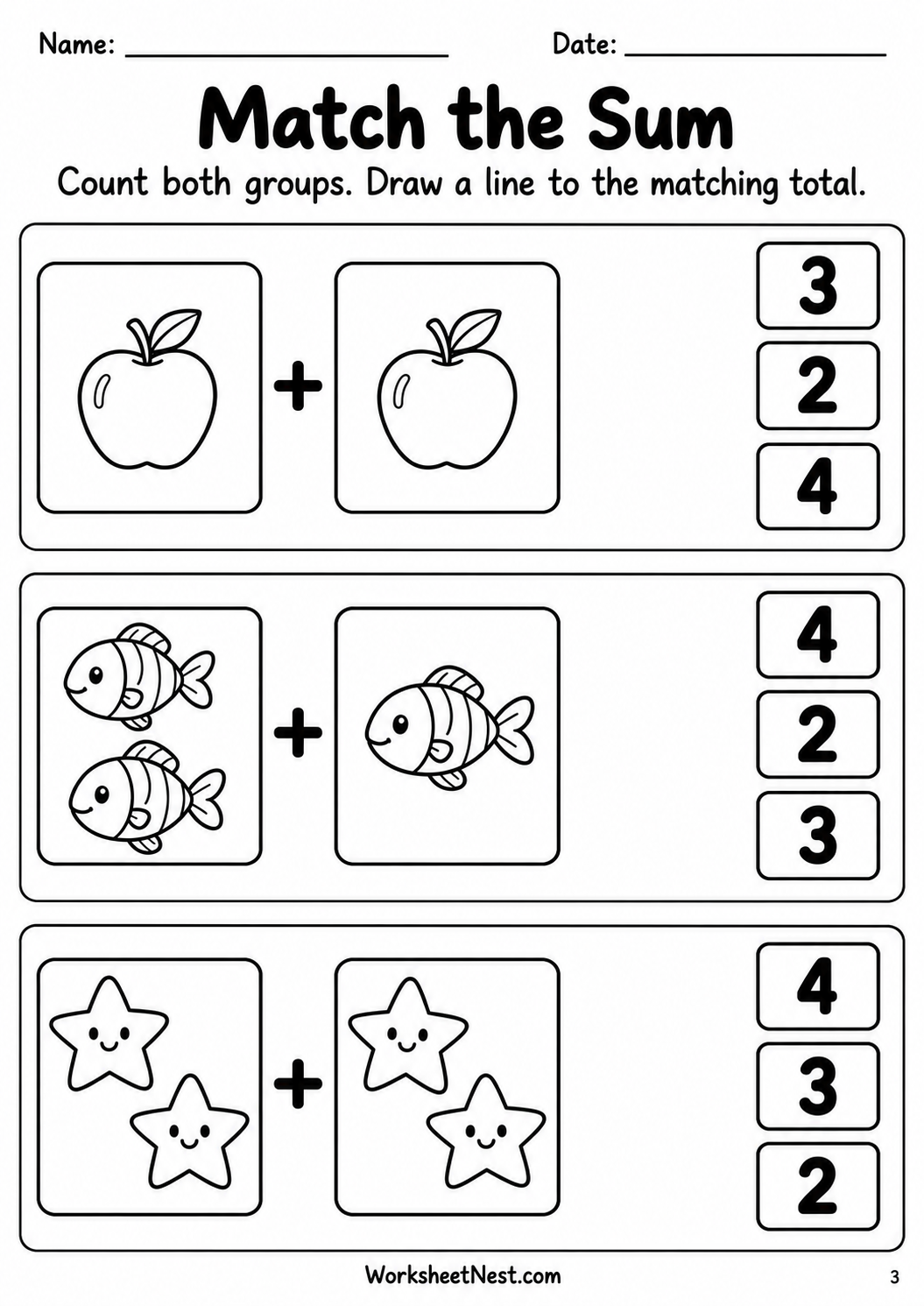
This page asks learners to connect each pair of picture groups to a matching total. Apples, fish and smiling stars provide three problems, with numeral options beside each row. Read the direction together: the child draws a line to the answer rather than copying a numeral. After matching, ask them to point to the two groups that their chosen number represents.
Download Worksheet 03 PDF
04. Complete the Addition
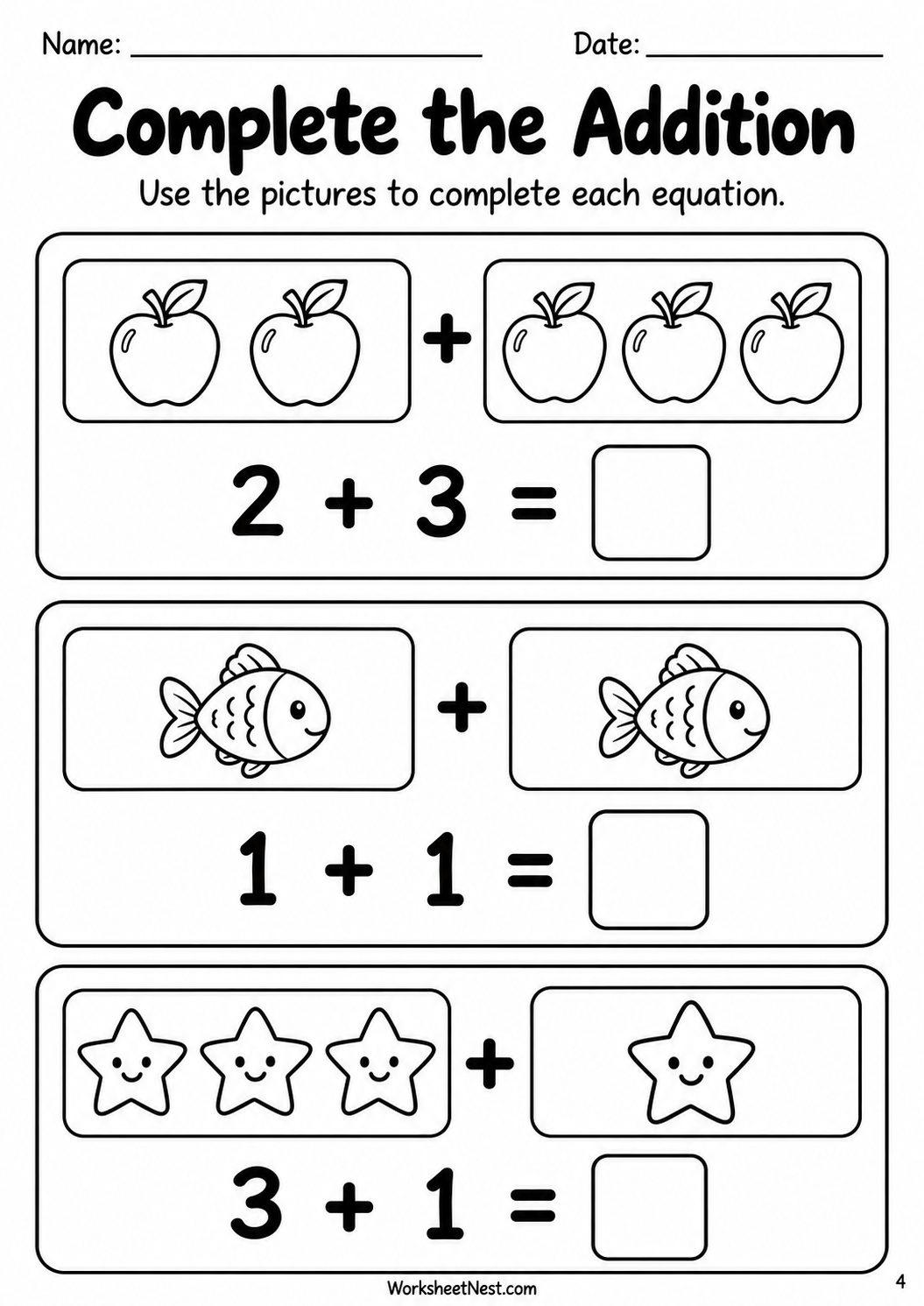
Pictures appear above a printed number sentence, helping children connect each addend with its group. The apple, fish and star problems show two plus three, one plus one, and three plus one. Children count the pictures and fill the answer box. Ask what each number in the equation describes, then check that the total includes objects on both sides of the plus sign.
Download Worksheet 04 PDF
05. Draw Pictures to Add
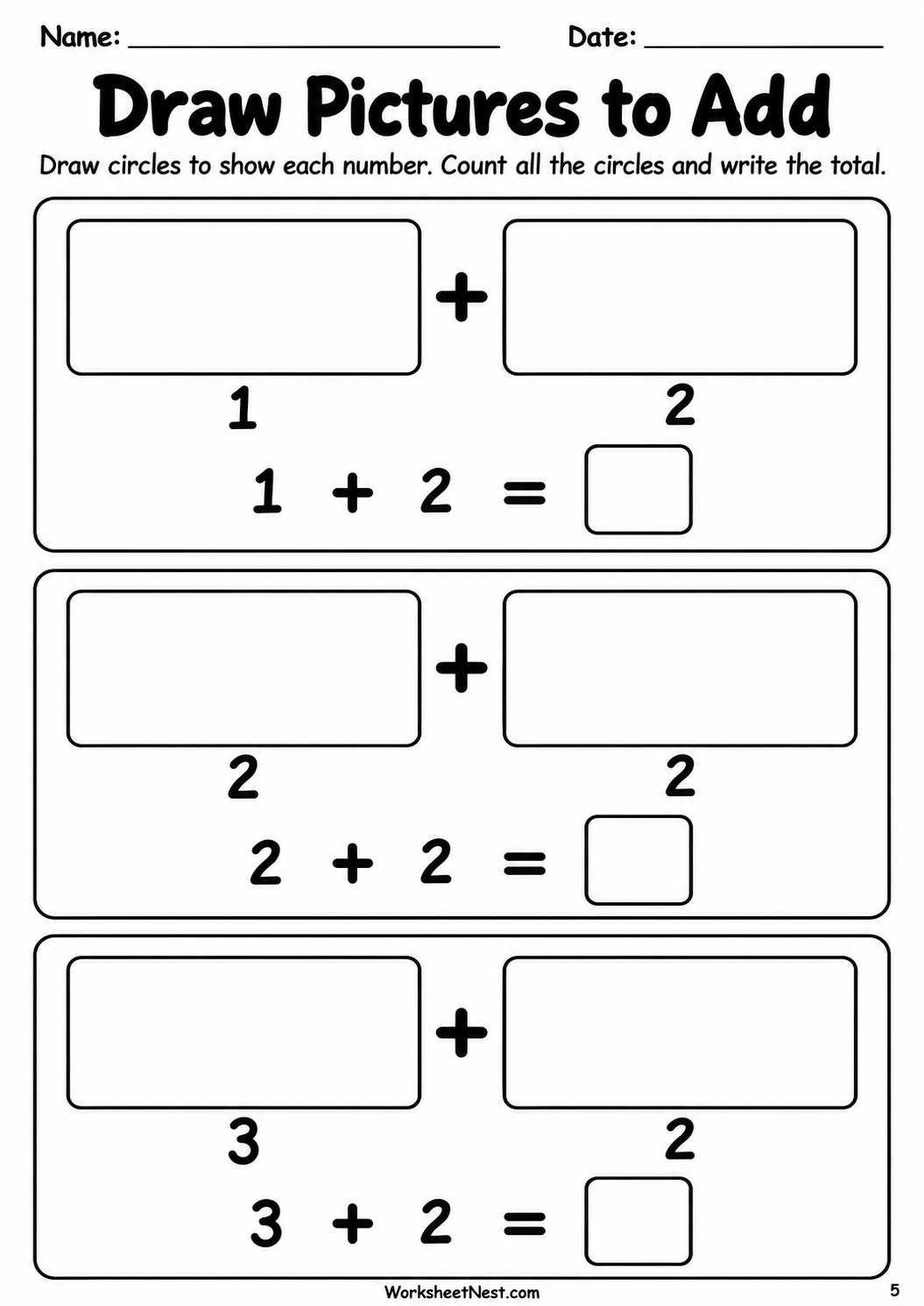
Here children make the picture support themselves. They draw circles in two boxes to show the given numbers, then count all their circles and write the total. The questions use one plus two, two plus two, and three plus two. Keep the drawings simple and countable; neat circles are enough. Check the quantity in each box before combining the groups.
Download Worksheet 05 PDF
06. Add with Five Frames
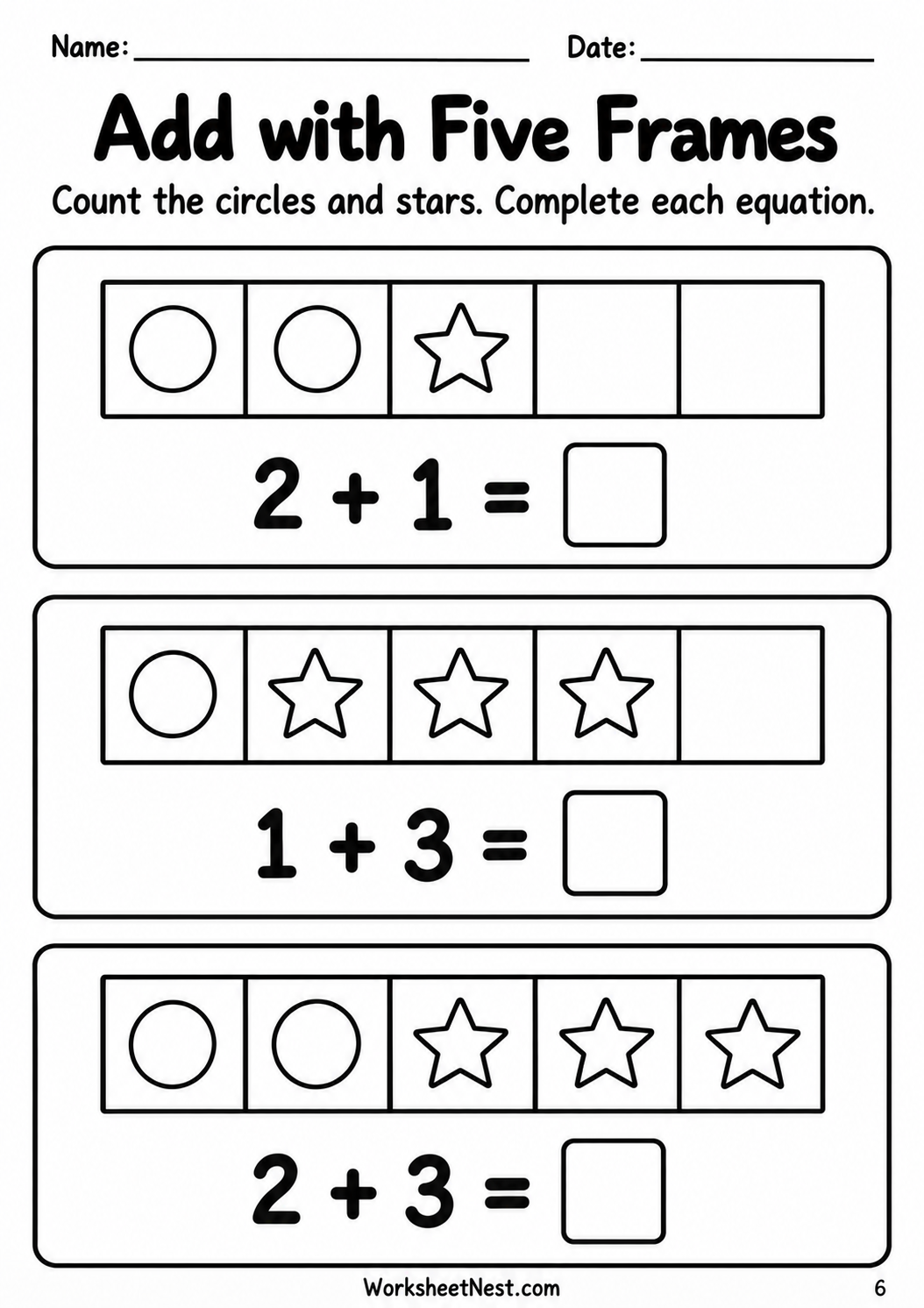
Each row uses a frame with five cells. Circles and stars show two parts of a total, and children complete the equation underneath. The examples are two plus one, one plus three, and two plus three. Ask which cells hold circles, which hold stars and which are empty. Count only the pictured shapes when finding the sum; empty cells do not add objects.
Download Worksheet 06 PDF
07. Adding Zero
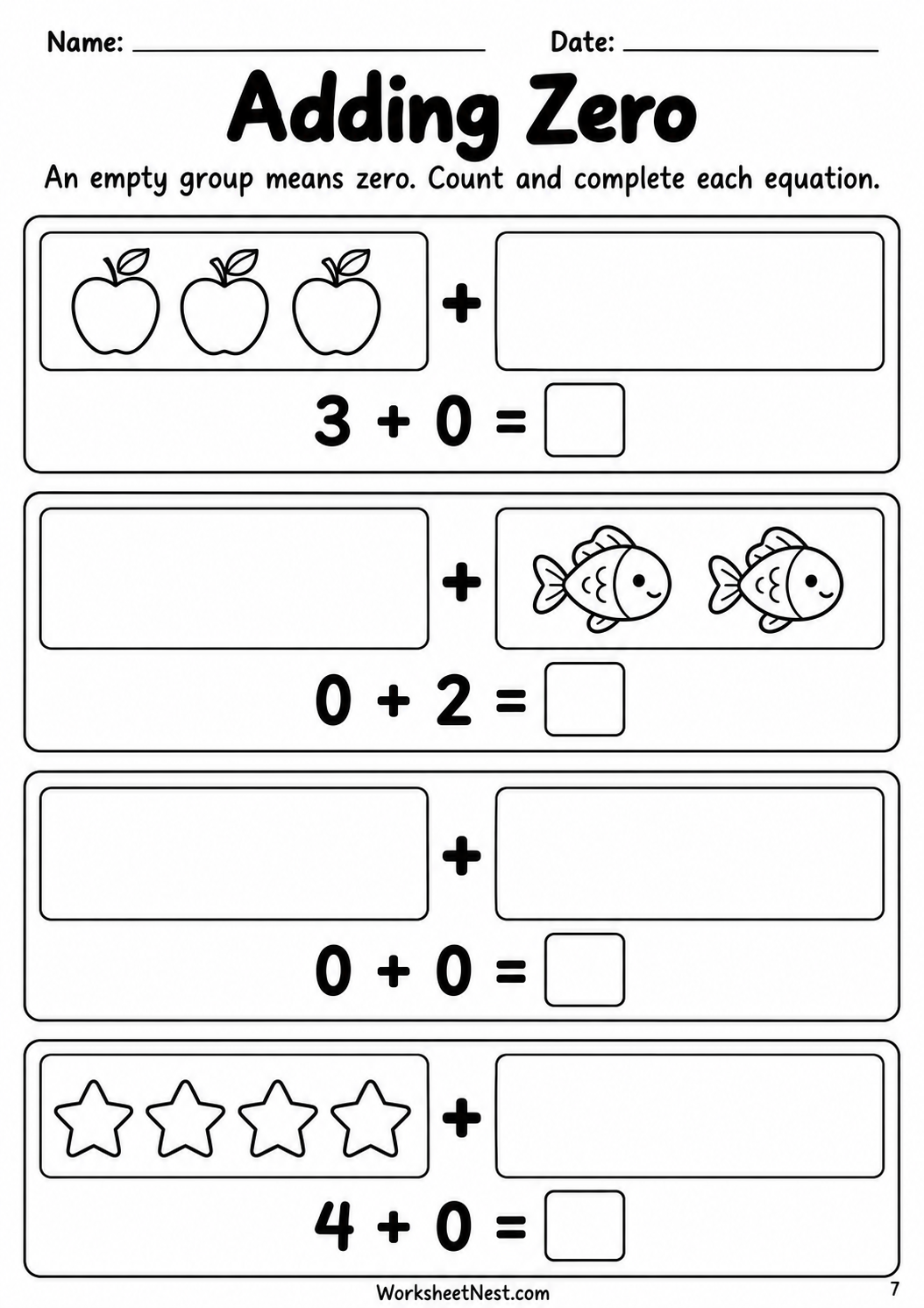
Empty boxes make zero visible as a group with no objects. Children complete three plus zero, zero plus two, zero plus zero, and four plus zero. Let them describe what is in each box before counting the total. For the row with two empty groups, pause to discuss why there is nothing to count and why zero is still a meaningful answer.
Download Worksheet 07 PDF
08. Choose the Matching Equation
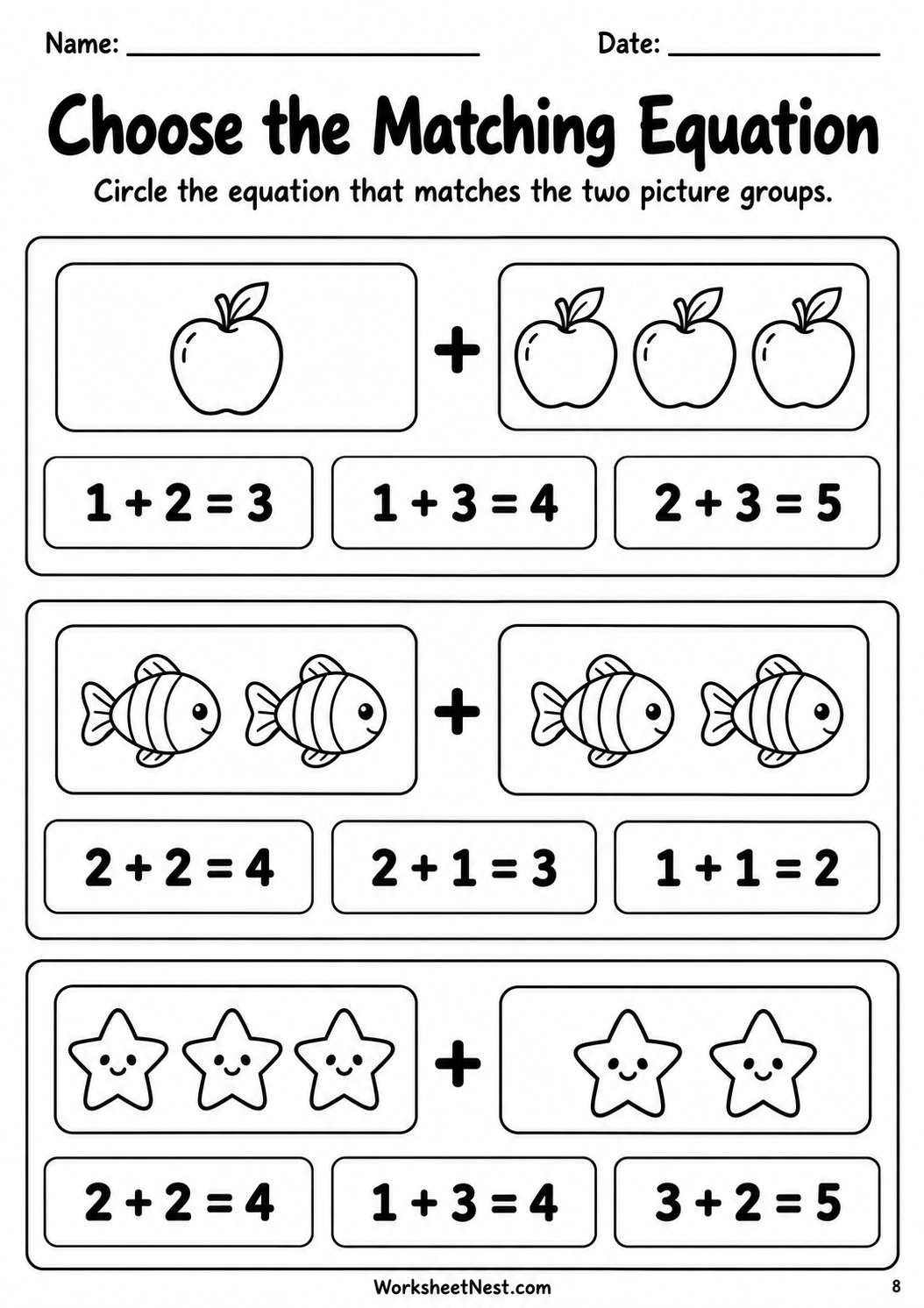
Children circle the equation that describes the two picture groups in each row. The apples, fish and stars show one plus three, two plus two, and three plus two. Each choice is an addition statement, so the task is to match the pictured quantities, not simply find any statement that is mathematically true. Ask children to check both addends as well as the total.
Download Worksheet 08 PDF
09. Picture Addition Stories
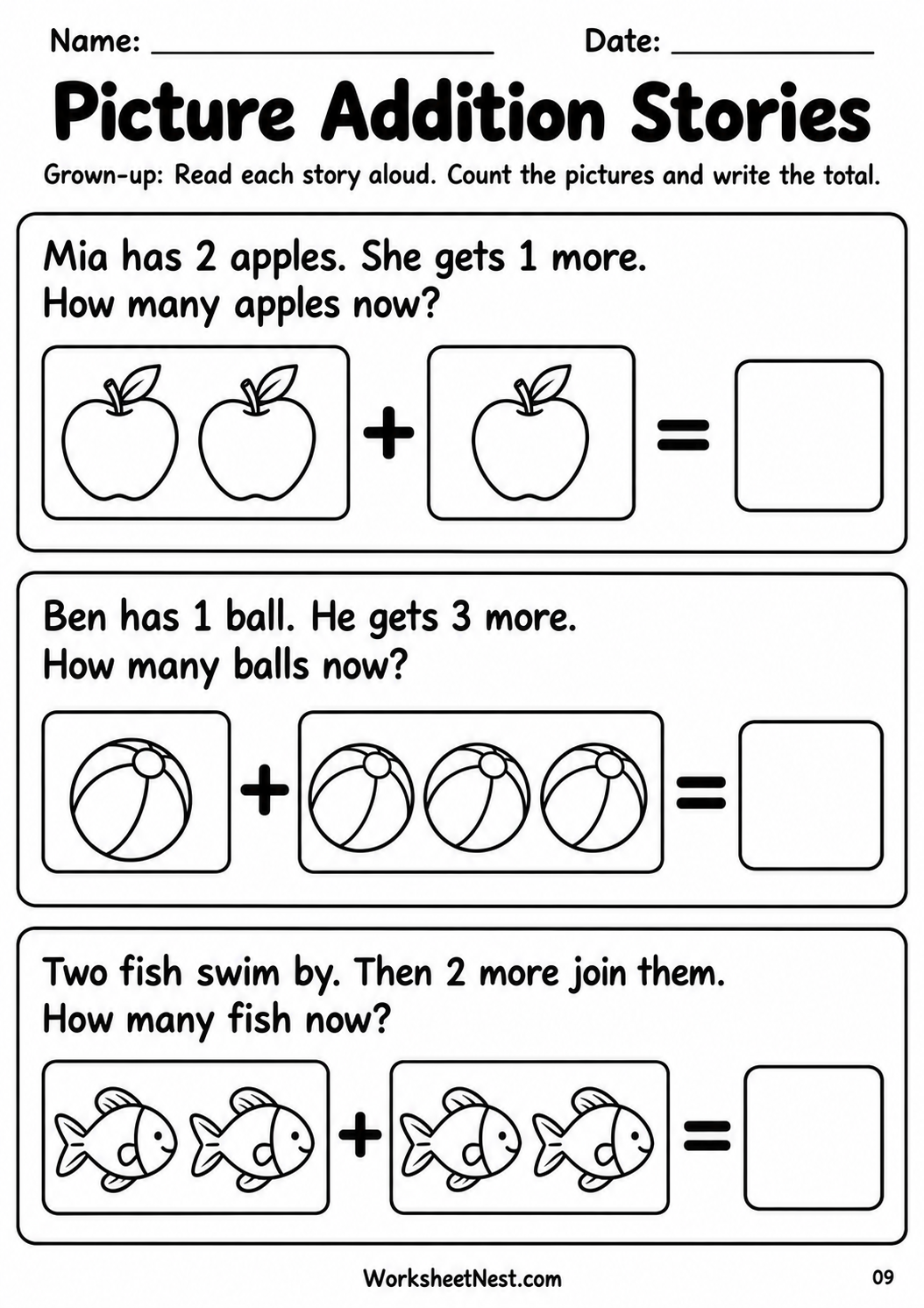
A grown-up reads each short story aloud, then the child uses the pictures to find the total. Mia gets another apple, Ben gets more balls, and more fish join a group. Read one story at a time and ask what is there at the start and what joins it. The pictures support the mathematics without making independent reading a requirement.
Download Worksheet 09 PDF
10. Addition Within 5 Review
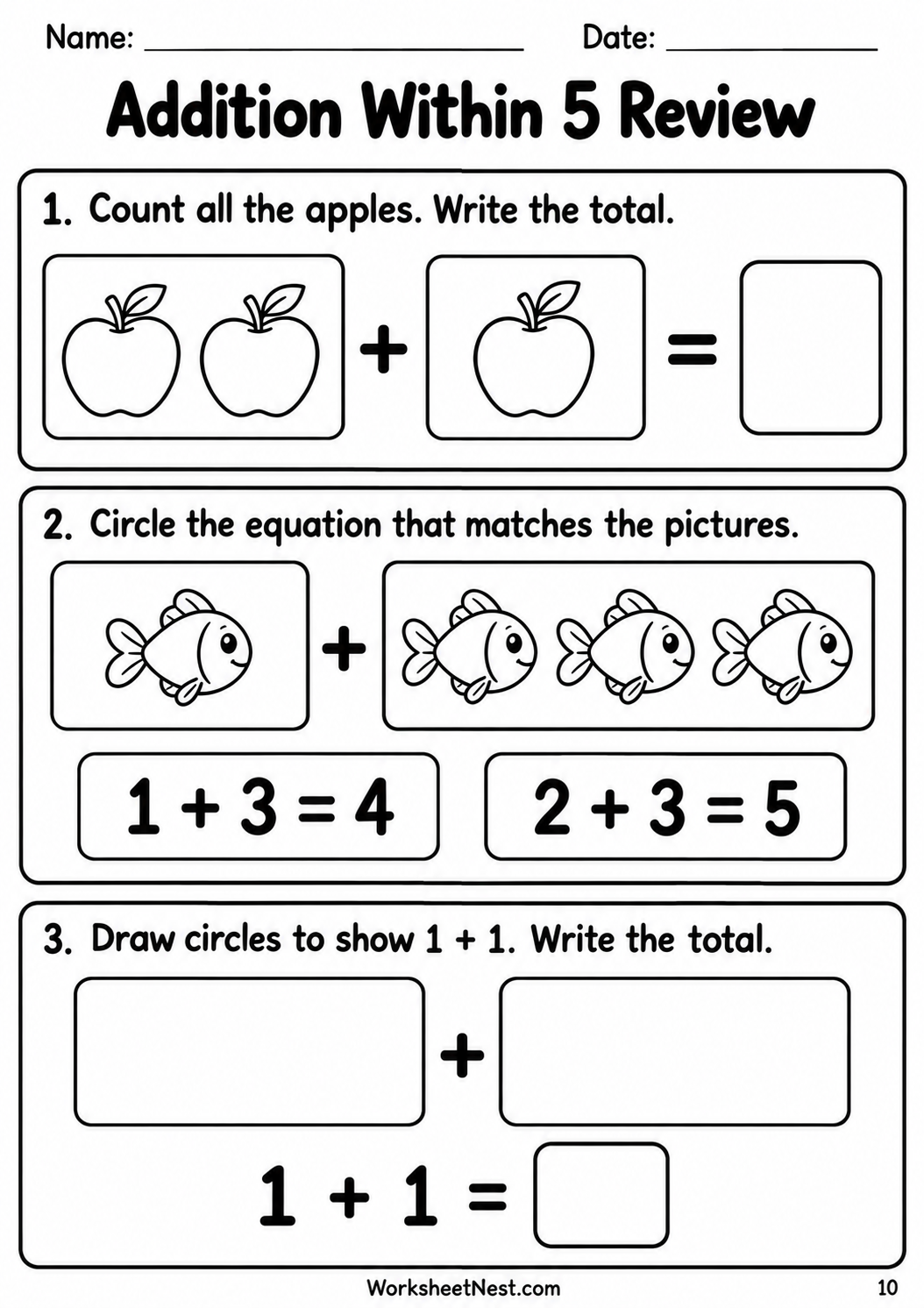
The final page changes response types across three questions. Children count apples and write the total, select the equation matching fish groups, and draw circles to show one plus one. Read each direction before beginning because the required action changes. Use a child’s explanation to check whether they understand combining groups, rather than judging understanding only from how quickly they finish.
Download Worksheet 10 PDF
Download the Complete Picture Addition Within 5 Worksheets Bundle
The eleven-page PDF brings the colorful cover and all ten picture addition within 5 worksheets together in order. Keep it for a sequence of short sessions, or select a single page for the skill your child is practicing. The review page combines counting, equation matching and drawing.
Download the Complete Picture Addition Within 5 PDF Bundle
Teaching and Learning Guidance
Start with small objects such as blocks or counters. Make two separate groups, describe each group and push them together. Then show how the same action appears in a picture and a number sentence. Children can count every object at first; they do not need to recall every sum from memory before using these picture addition within 5 worksheets.
Keeping both picture groups visible while children join them and count the whole reflects the Erikson Institute Early Math Collaborative’s Big Ideas of Operations, which describes addition as joining sets.
Connect Pictures and Symbols
Point to the first group as you read the first addend, then the second group as you read the next. Read the equals sign as showing the same amount on both sides. Ask a learner to explain one completed question in their own words. If a written numeral is difficult, let them say the answer before practicing how to record it.
Choose the Right Support
Use matching and equation choices when you want to reduce the writing demand. Try the drawing pages when a learner is ready to build the groups independently. On the zero page, leave the empty groups empty and talk about what that means. For stories, read aloud and allow children to act out the situation with counters before returning to the pictures.
Printing Your Worksheets
The PDF pages use A4 portrait paper. Check the print preview and start with one test page. Use your printer’s fit-to-printable-area option if needed to preserve the edges. The activity pages are black and white, while the cover is in color. A pencil is suitable for drawing, matching and writing answers.
Common Core Connections
These worksheets give partial practice with two Common Core State Standards (Kindergarten) expectations, not full alignment with either standard.
K.OA.A.1: pages 01 through 08 and page 10 give partial practice representing addition with pictures, drawings and equations, as children add pictured groups, draw combined groups, complete equations and choose the equation that matches a picture.
K.OA.A.2: page 09 gives partial practice solving addition word problems, because a grown-up reads each short addition story aloud and the child uses the pictures to find the total.
Counting is used throughout as a way to add, so no counting standard is claimed here. The other pages are pictured addition, not word problems, so the word-problem practice rests on the story page only.
License and Terms of Use Free for personal, homeschool, and classroom use. Printing and link-sharing are allowed. Selling, re-uploading, or redistributing these worksheets is not permitted.