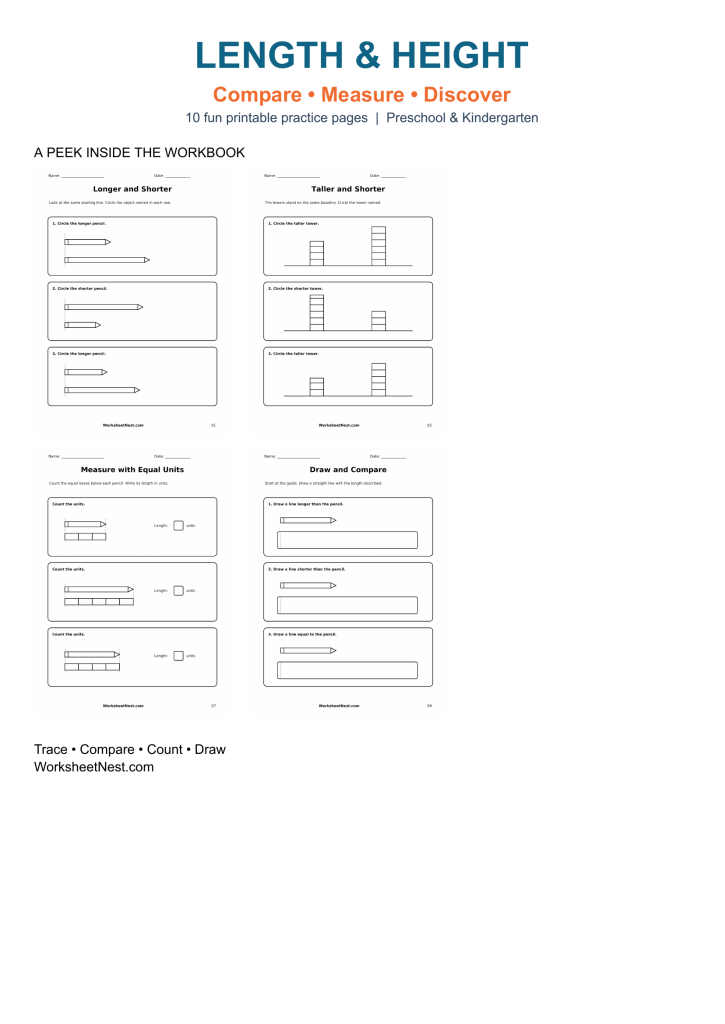
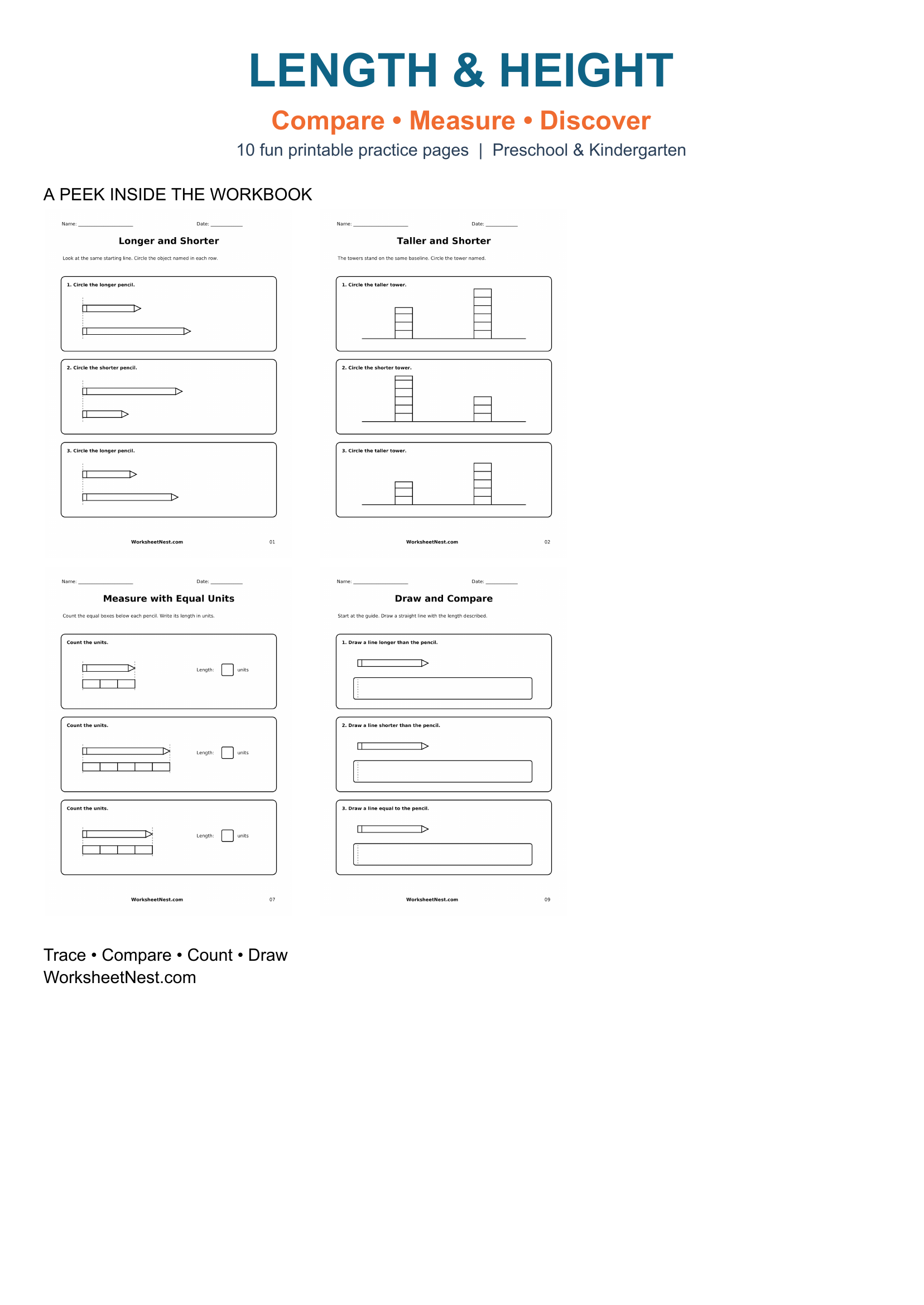
Comparing length and height worksheets help children notice how far an object reaches and describe what they see. This collection uses clear pencil drawings, block towers, shared starting guides and equal unit boxes to build early measurement language. The ten black-and-white activity pages move from choosing between two objects to ordering three objects, counting units and drawing a line to match a comparison.
Use the pages with preschool or kindergarten learners who are ready for simple visual comparisons. Some later tasks also require recognizing A, B and C or writing small numbers. An adult can read directions and accept pointing or spoken answers when handwriting is still developing. Start with real pencils or building blocks, then move to the printed models.
1. Longer and Shorter
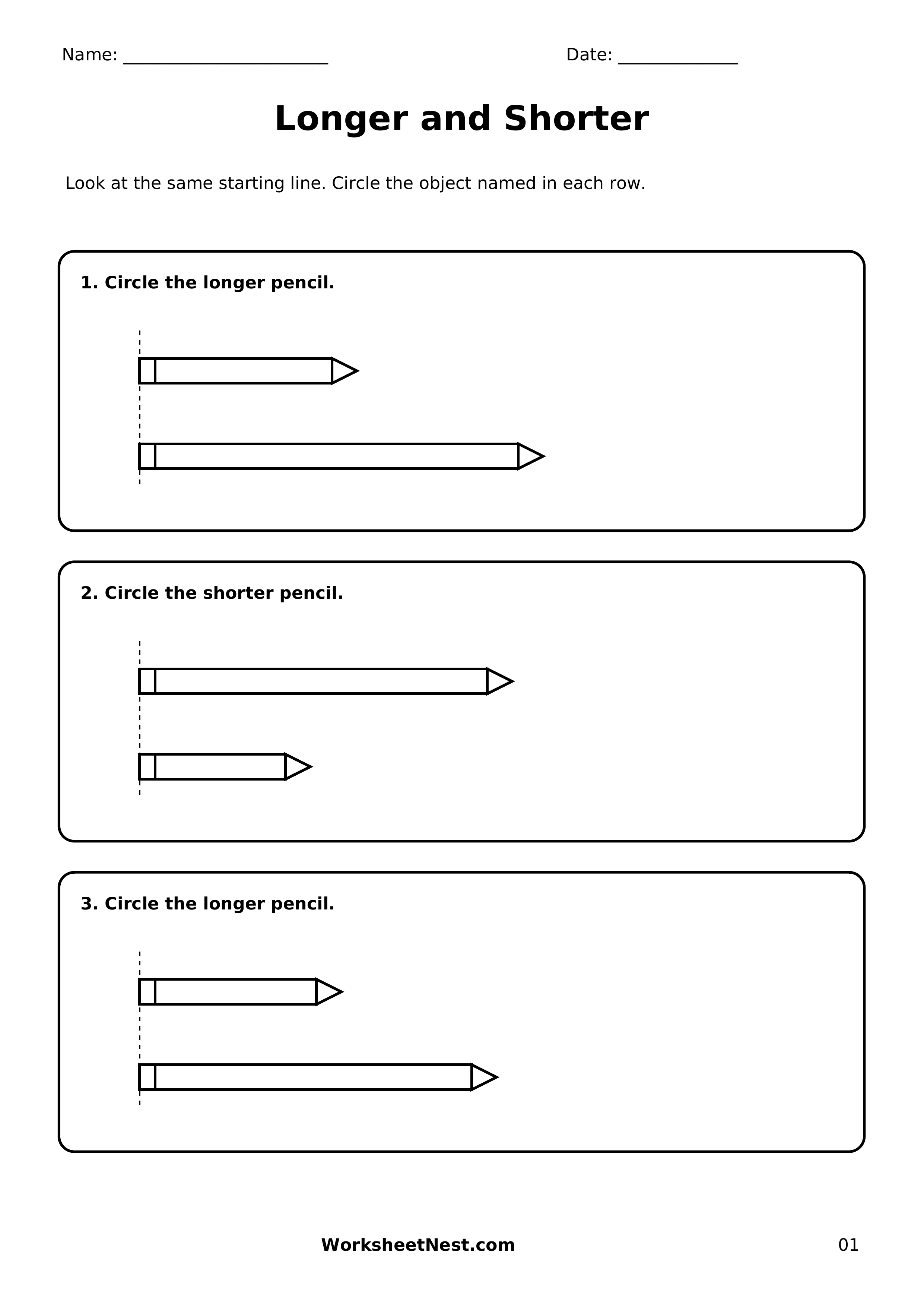
Children circle the longer or shorter pencil in three framed comparisons. The pencils begin at a shared starting guide, so learners can compare the tips rather than guessing from position. Ask your child to point to the starting line first, then explain which pencil reaches farther.
Download Worksheet 01 PDF
2. Taller and Shorter
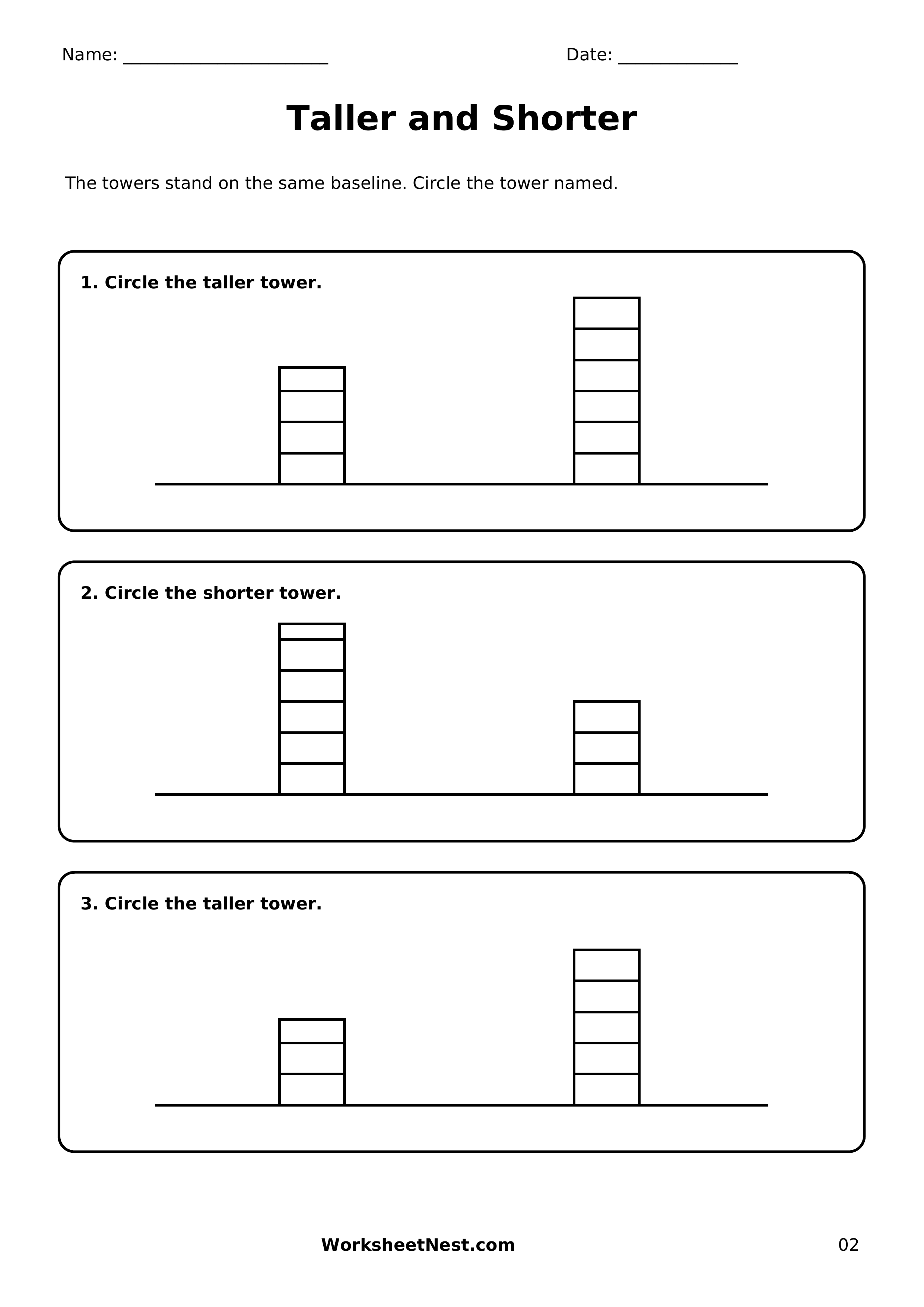
Three pairs of block towers stand on common ground lines. Children circle the taller or shorter tower as directed. Keep attention on height: a tower is taller when its top reaches farther above the same baseline. Read each instruction aloud, because the requested comparison changes.
Download Worksheet 02 PDF
3. Match Equal Lengths
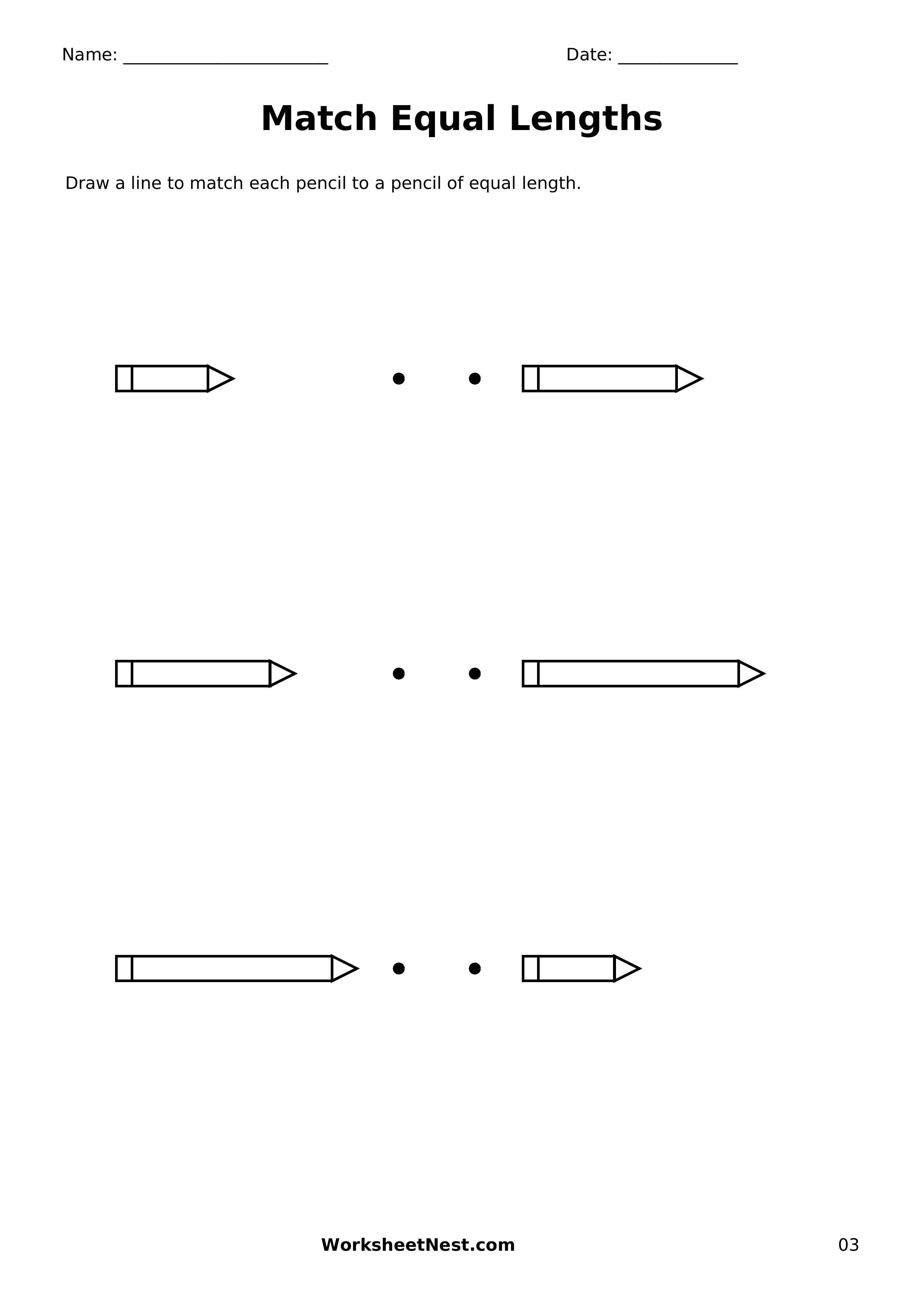
Children draw lines between pencils of equal length in two columns. The matching pencil may be at a different height on the page. Encourage learners to compare the distance between the two ends, rather than choosing the pencil nearest to the first one.
Download Worksheet 03 PDF
4. Order by Length
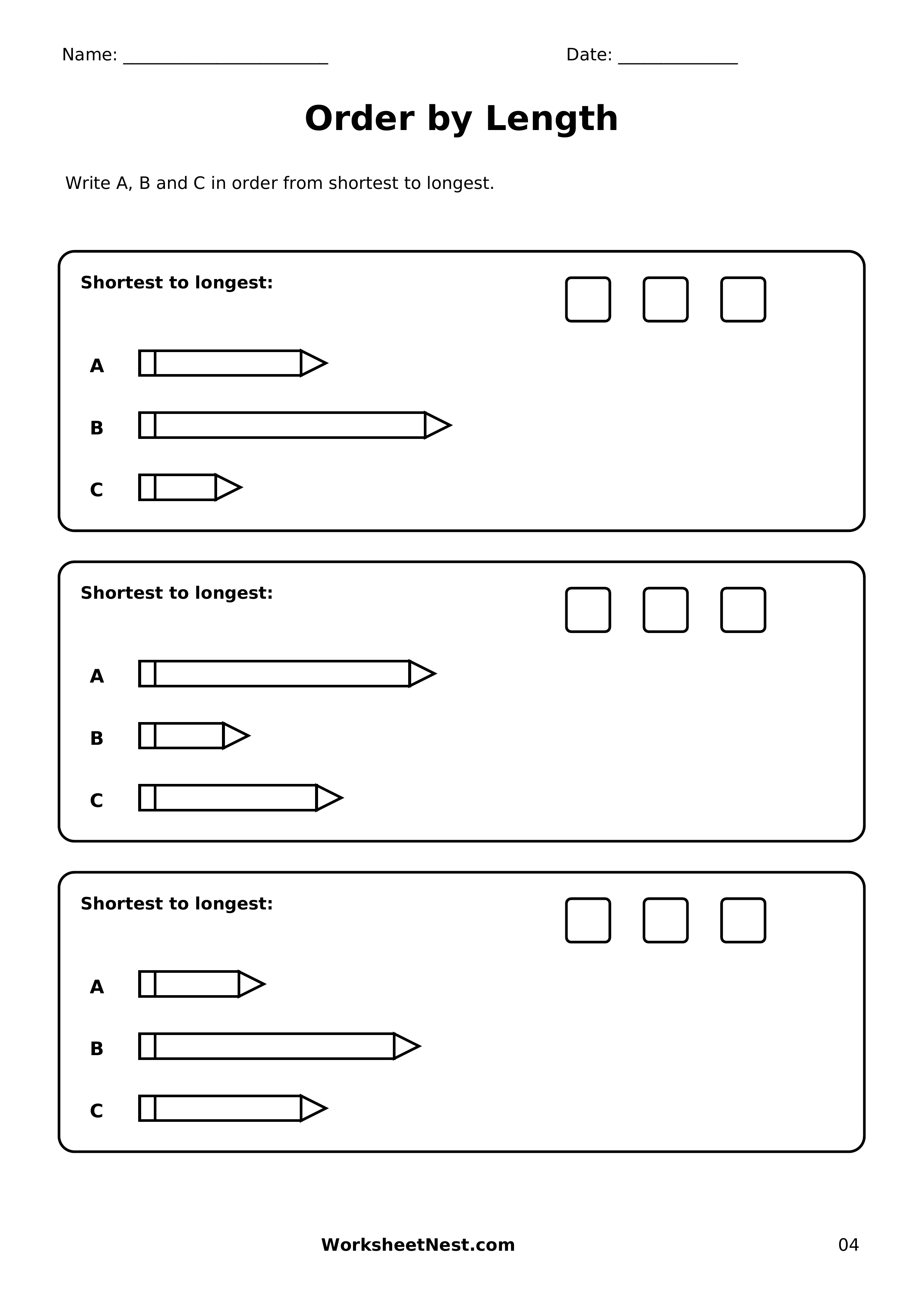
Each of three groups contains pencils labeled A, B and C. Children write those letters in boxes from shortest to longest. Before writing, ask them to identify the shortest and longest pencils, then place the remaining pencil between them. The letters identify objects; they are not measurements.
Download Worksheet 04 PDF
5. Order by Height
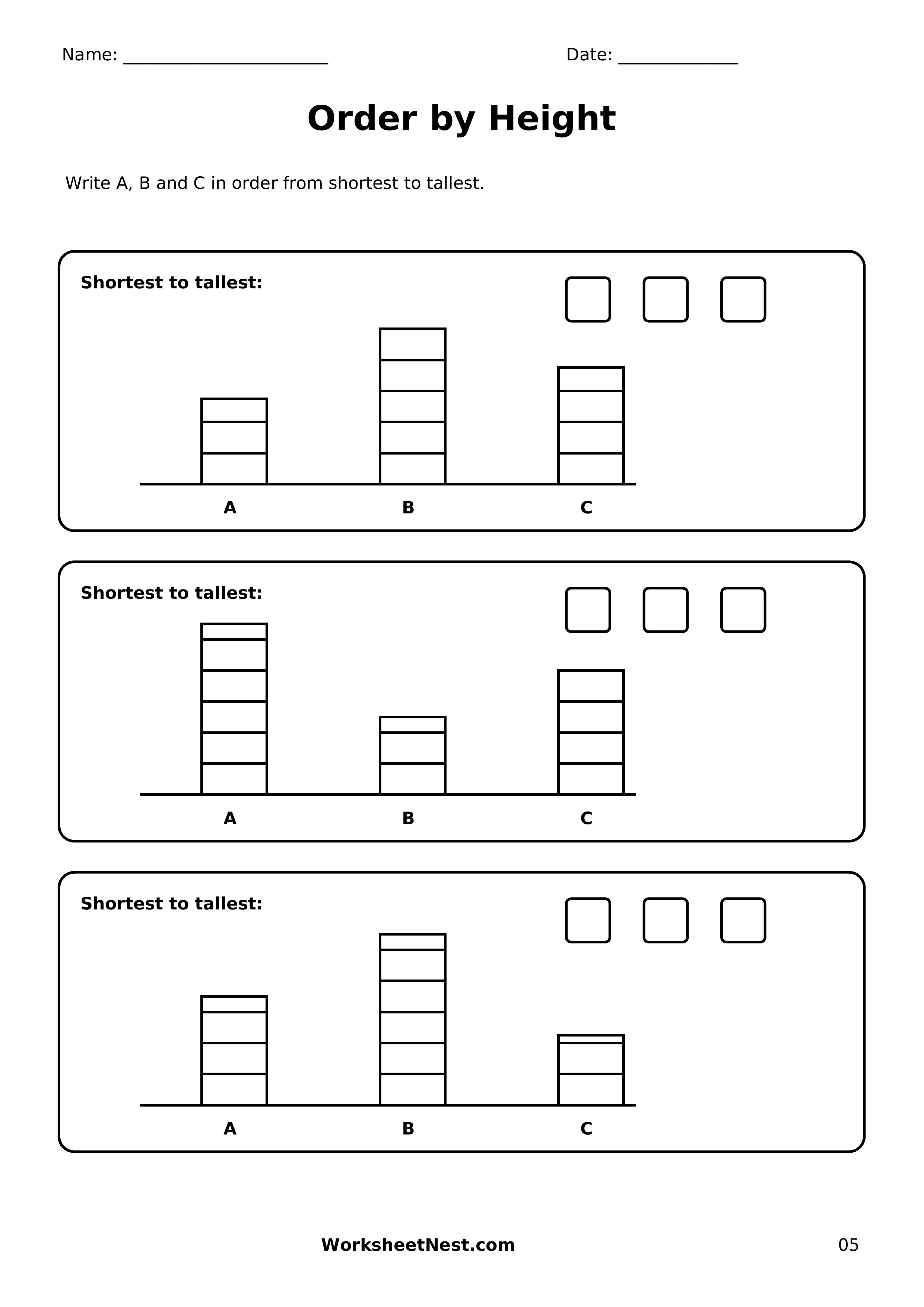
Children order three labeled towers from shortest to tallest in each group. All towers in a group share a ground line. Invite children to say their order aloud before recording A, B and C in the boxes. Compare tops while keeping the bottoms aligned.
Download Worksheet 05 PDF
6. Compare with Guides
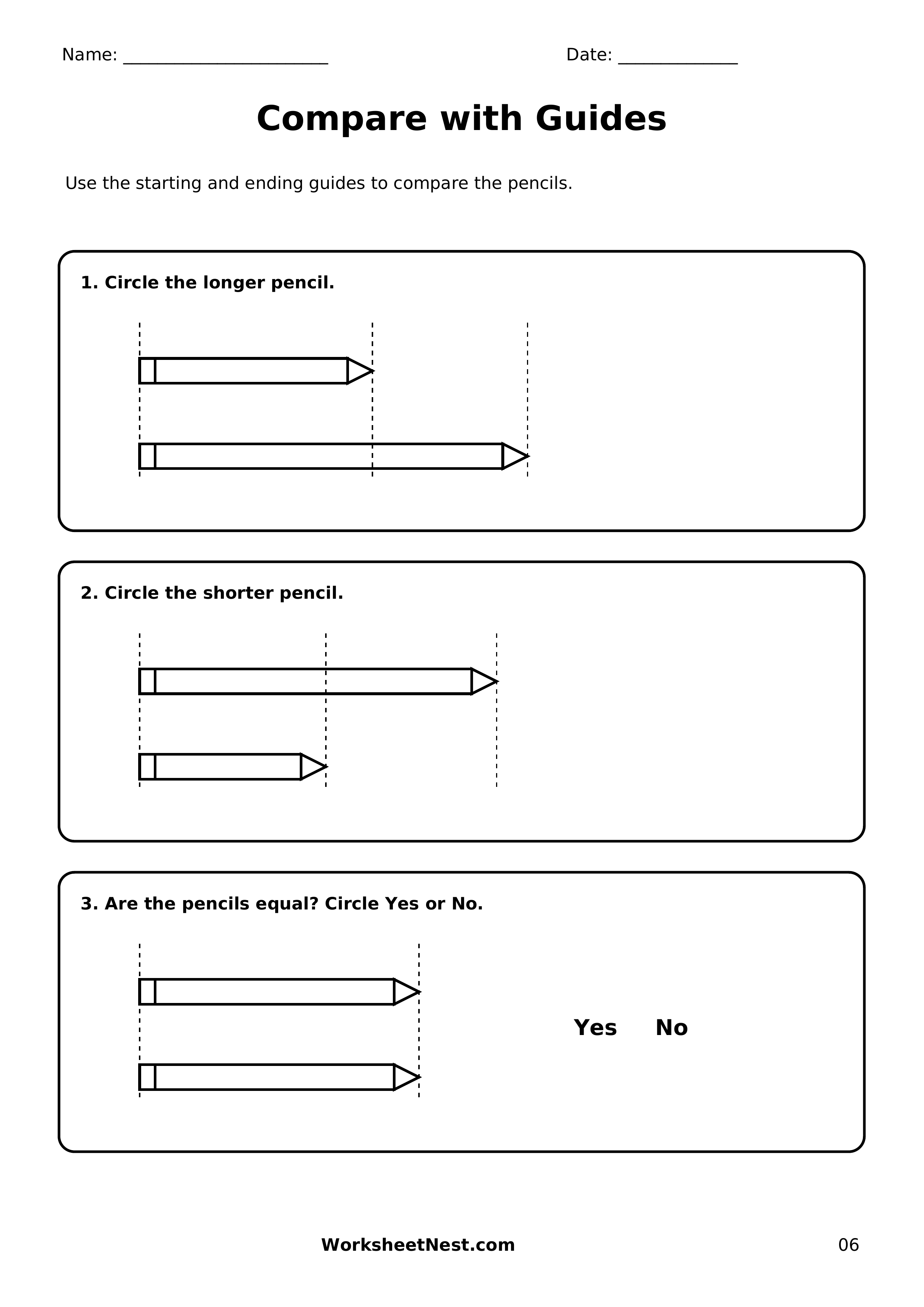
Starting and ending guides make the comparison method visible. Children select a longer pencil, select a shorter pencil and decide whether a pair is equal. Trace the shared start with a finger, then follow each pencil to its endpoint. Equal means the lengths match, even when the drawings occupy different rows.
Download Worksheet 06 PDF
7. Measure with Equal Units
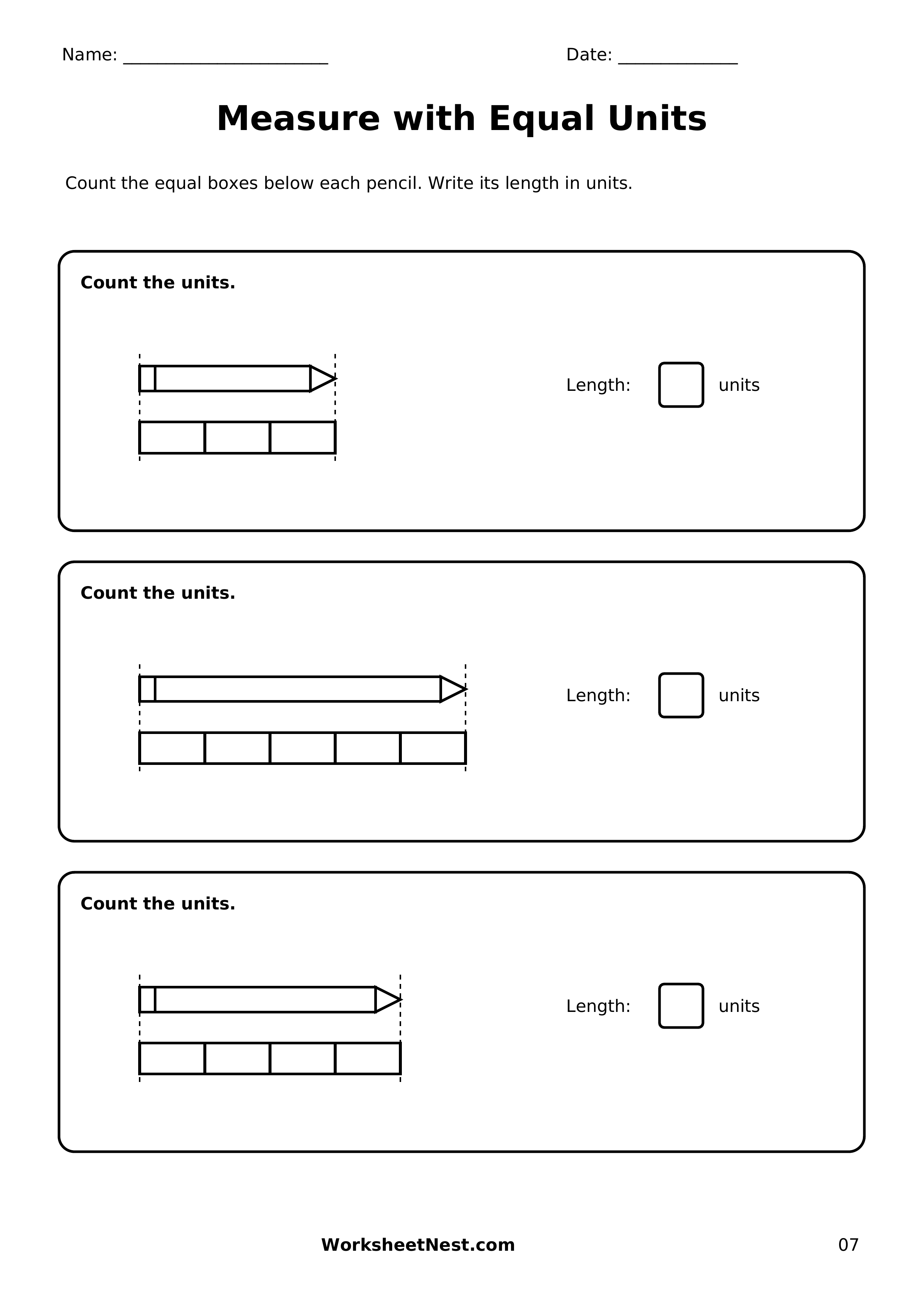
Children count the equal boxes beneath each pencil and write its length in units. These are nonstandard units, not inches or centimeters. Count each box once, and check that the units cover the pencil’s span without gaps. Say the number together with the word units.
Download Worksheet 07 PDF
8. Count Units and Compare
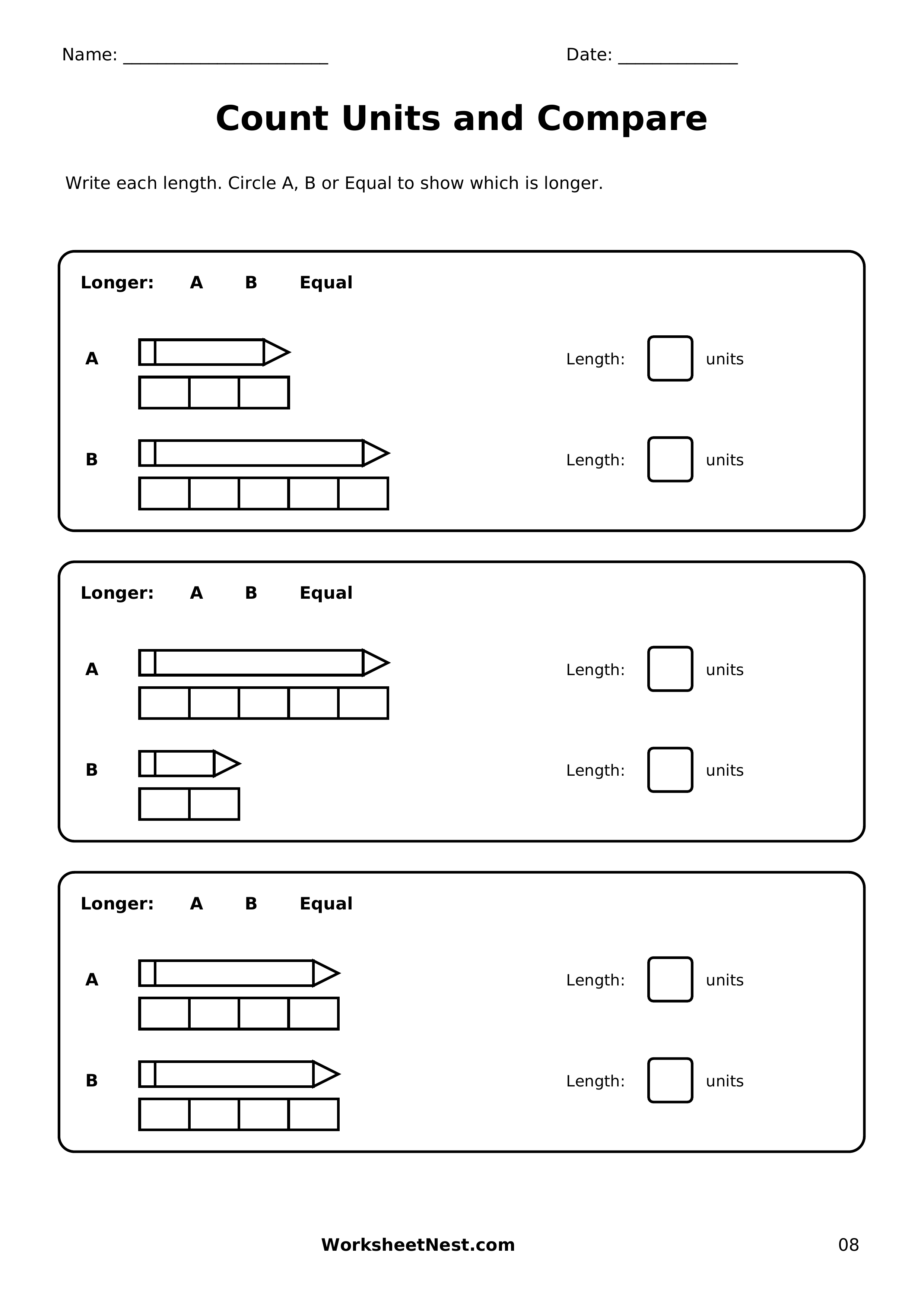
Each comparison contains pencils A and B with unit boxes beneath them. Children record both lengths, then circle A, B or Equal to show which is longer. This connects counting to comparison: when the unit size is the same, the larger count identifies the longer span.
Download Worksheet 08 PDF
9. Draw and Compare
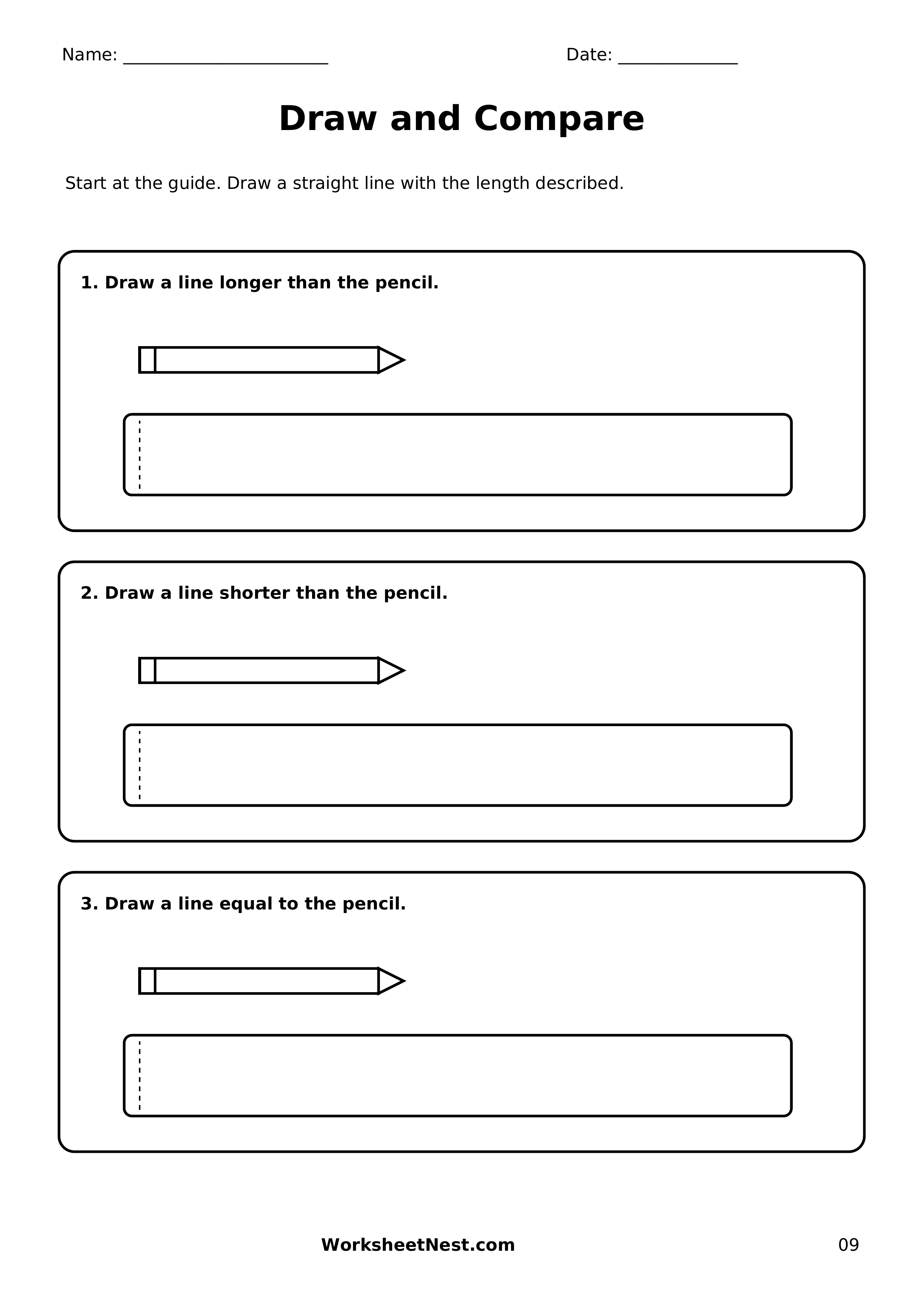
Children draw straight lines that are longer than, shorter than or equal to a model pencil. Each response box includes a starting guide. More than one drawing can satisfy a longer or shorter instruction. Ask children to explain their choice by comparing endpoints from the same start.
Download Worksheet 09 PDF
10. Length and Height Review
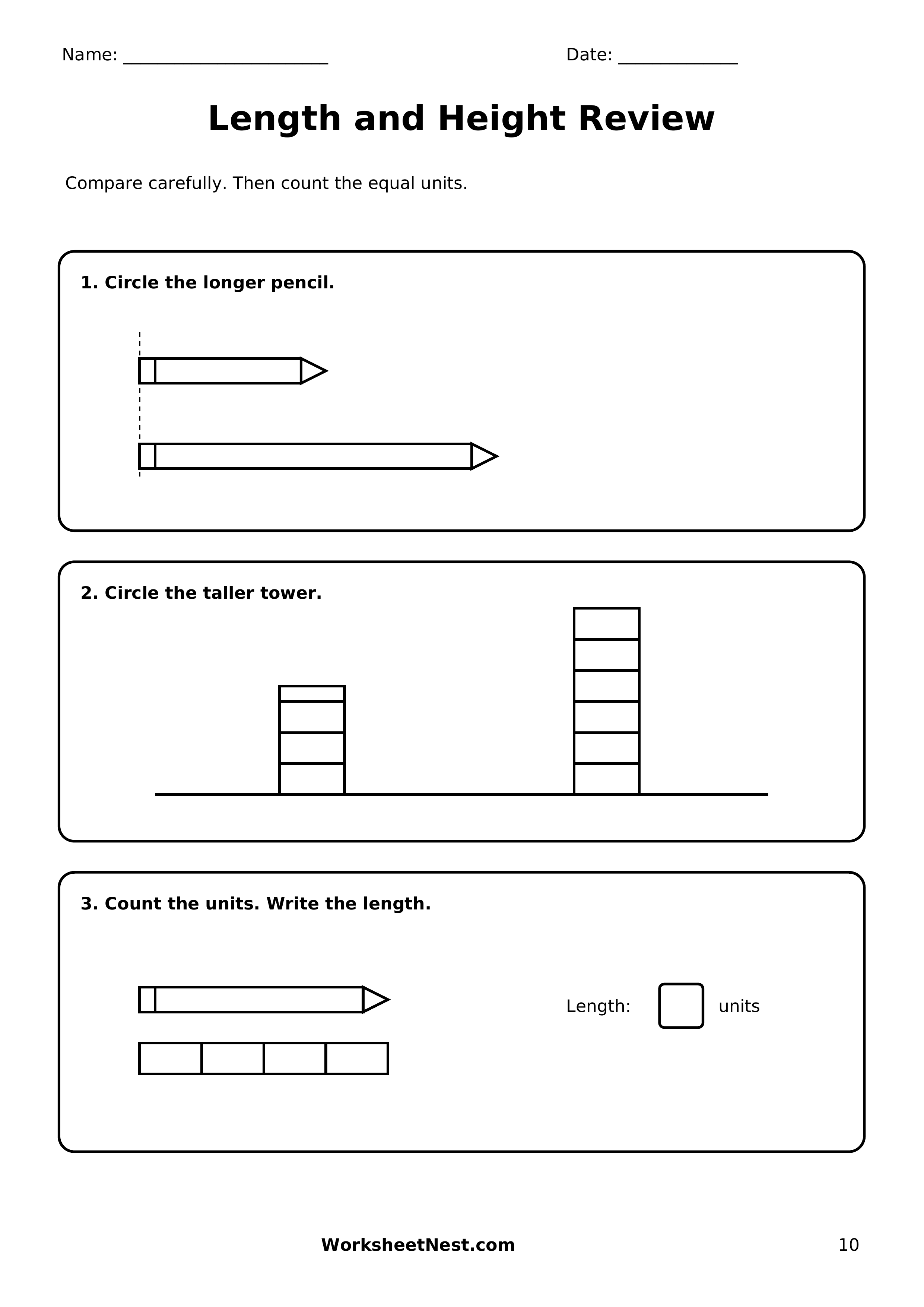
The final page combines three familiar tasks: circling a longer pencil, circling a taller tower and counting units beneath a pencil. Use this page after practice rather than as a speed test. A child who needs help can point or explain orally before making a written response.
Download Worksheet 10 PDF
Download the Comparing Length and Height Worksheets Bundle
The bundle brings the color cover and ten activity pages together in sequence. Choose individual pages for a short practice session or use the collection over several lessons. There is no need to complete every page at once.
Download the complete PDF bundle
Teaching Ideas
Begin with two real objects. Place their ends together when comparing length, or stand them on the same surface when comparing height. Ask children to describe one attribute at a time using longer, shorter, taller or equal. Avoid using bigger as a substitute when the task specifically concerns length.
For unit activities, use identical blocks placed end to end. A longer object needs more units only when the units are the same size. If counting is difficult, touch each box while saying one number. For ordering tasks, let children explain the sequence before writing the letters. Drawing tasks allow several valid responses; judge whether the requested relationship is shown rather than expecting one exact line.
Printing and Use
Print the PDF on A4 paper and review a sample before making a class set. Use a consistent scale for all pages and avoid stretching a page in one direction. The unit boxes represent relative lengths; the activities do not require a ruler calibrated in centimeters or inches. Ordinary pencils work for circling, matching and drawing.
Explore More Learning Activities
Measurement WorksheetsMath Worksheets