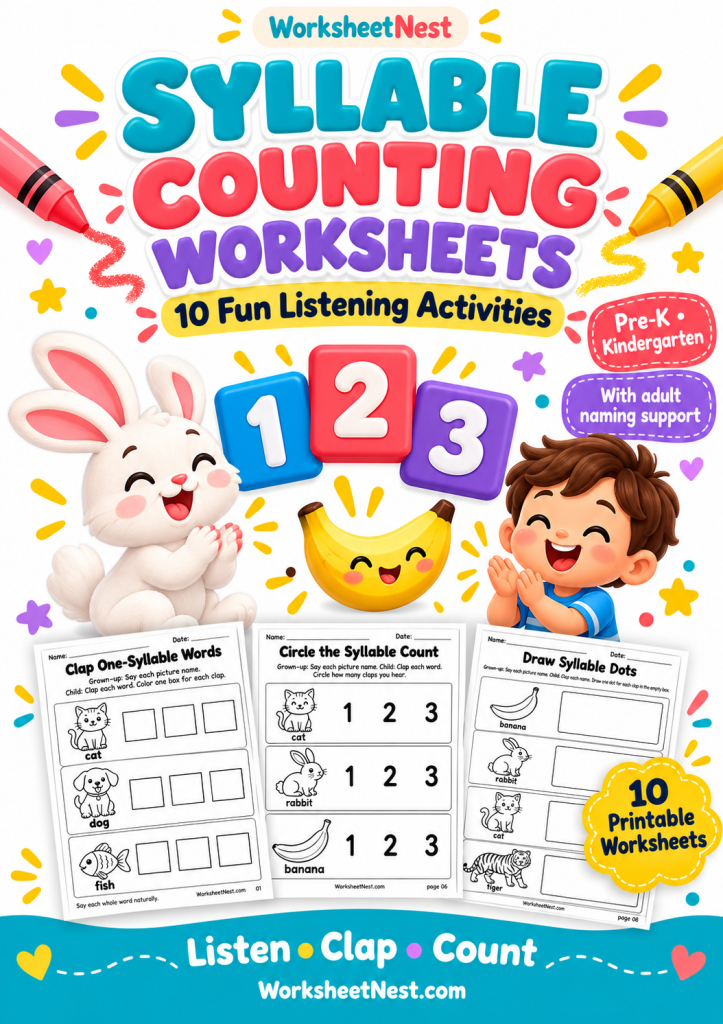
These syllable counting worksheets help children listen for the spoken beats in familiar picture names. Across ten activities, learners clap, mark boxes, sort pictures, circle counts, match equal counts and draw dots. A grown-up supplies the picture names and reads the directions, so independent reading is not required.Begin with a familiar short word and clap it together. Then try a longer name and listen for its parts. The printed labels help adults use consistent words throughout the collection; they are naming cues, rather than a spelling assignment for the child.
01 — Clap One-Syllable Words
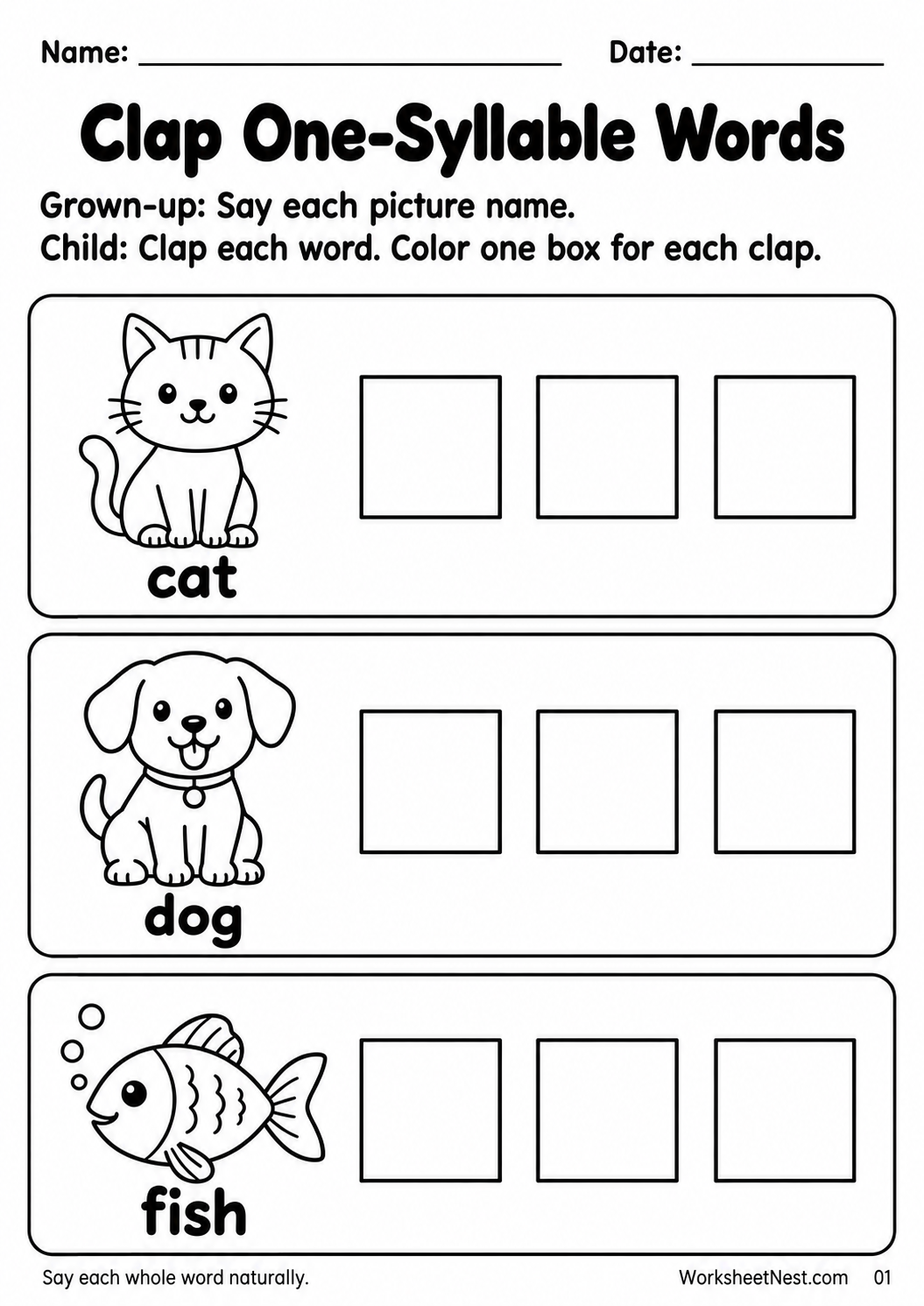
Cat, dog and fish introduce words with one spoken beat. An adult names each picture, then the child claps the word and colors one box for each clap. Although three boxes are printed beside each picture, the child marks only the number needed. Say each whole word naturally rather than separating its individual sounds.
02 — Clap Two-Syllable Words
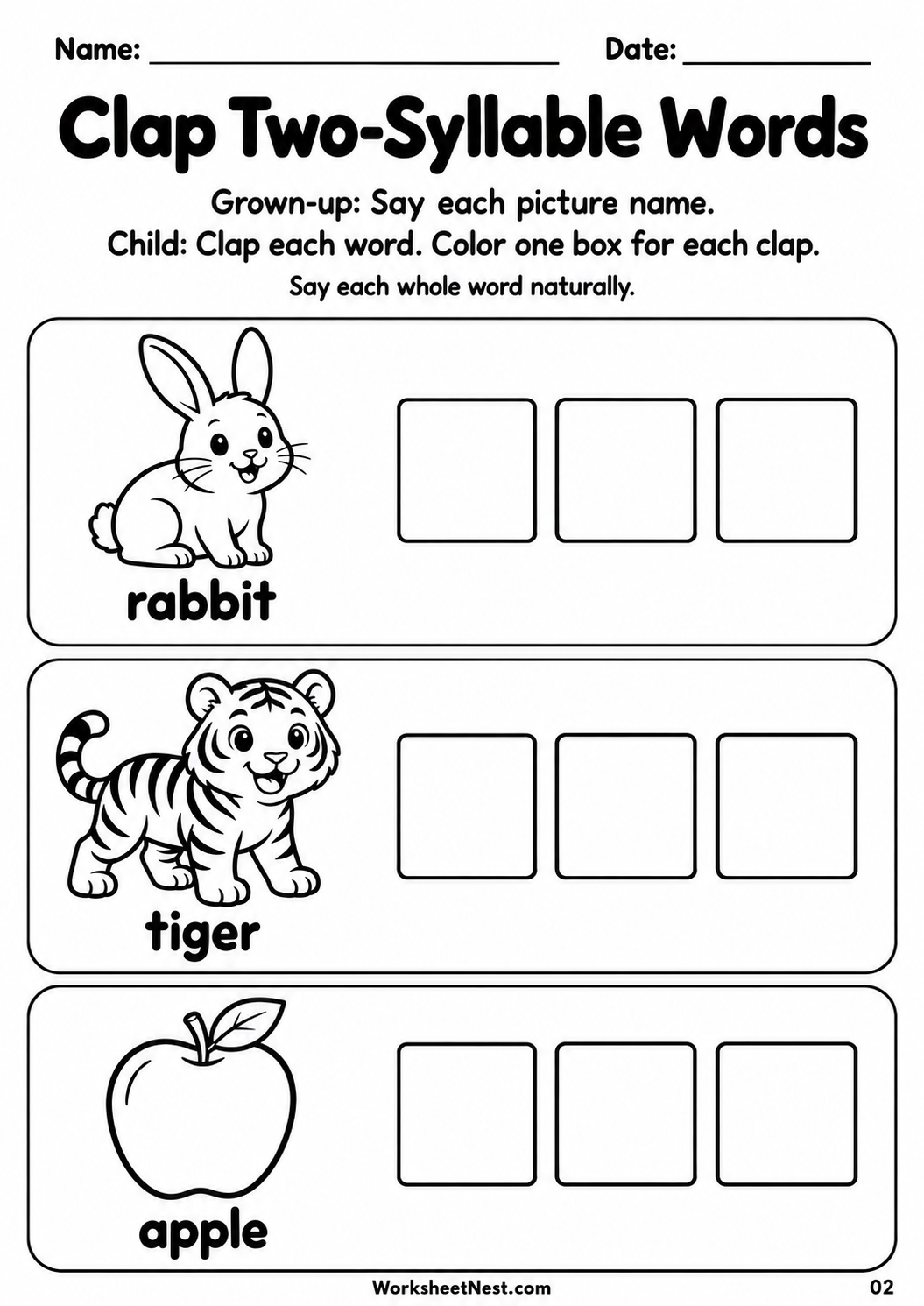
Rabbit, tiger and apple give children practice hearing two beats. Name each picture, clap its spoken parts and color a box for each clap. The repeated layout keeps the response familiar while the words change. If your child makes extra claps, model the whole word again and try it together before marking the boxes.
03 — Clap Three-Syllable Words
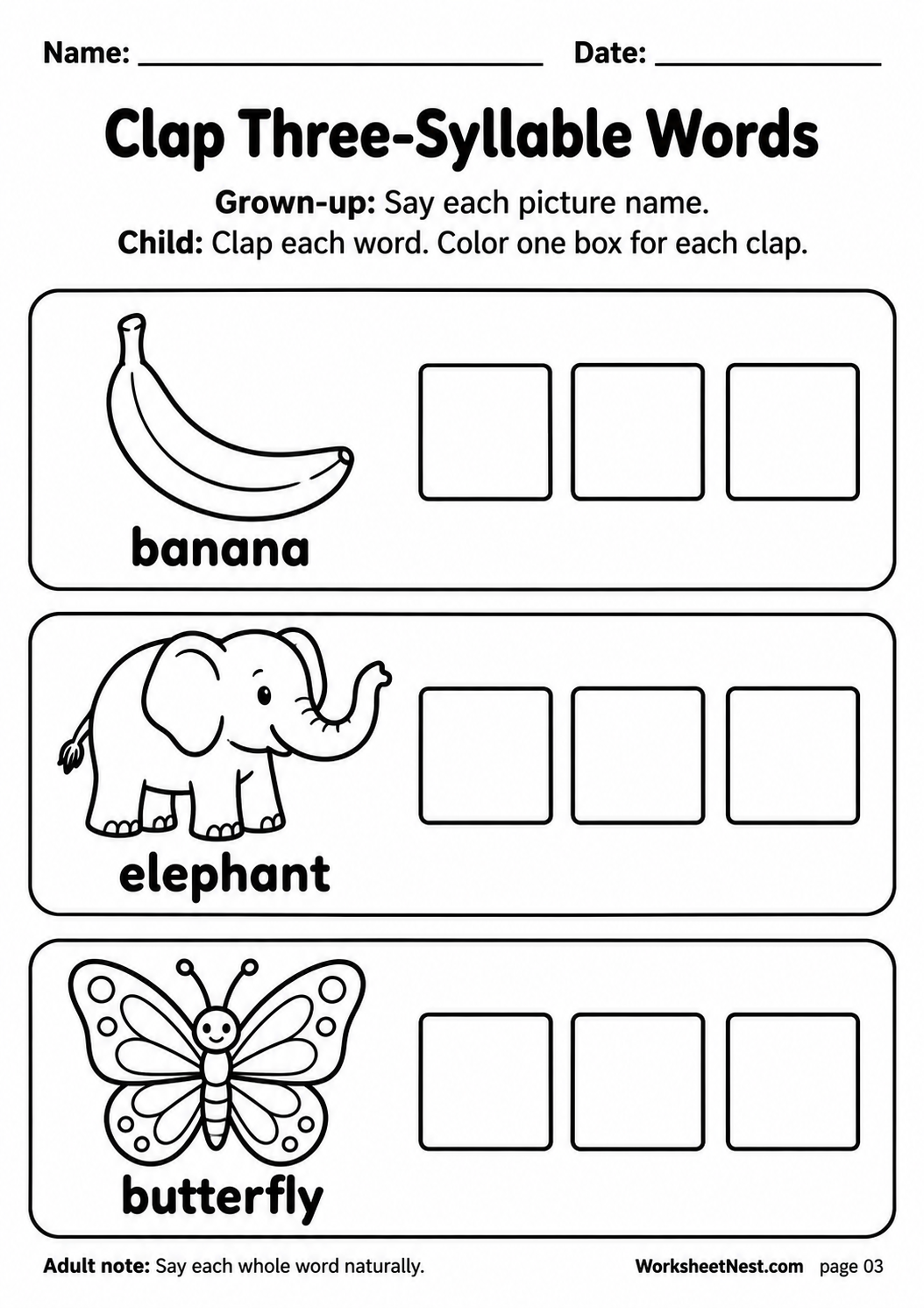
Banana, elephant and butterfly extend the listening task to three beats. Children clap each adult-named word and color one box for each clap. Give learners time to finish saying the word before asking for a total. The pictures and adult naming cues keep the activity accessible without requiring children to read the printed labels.
04 — Sort One and Two Syllables
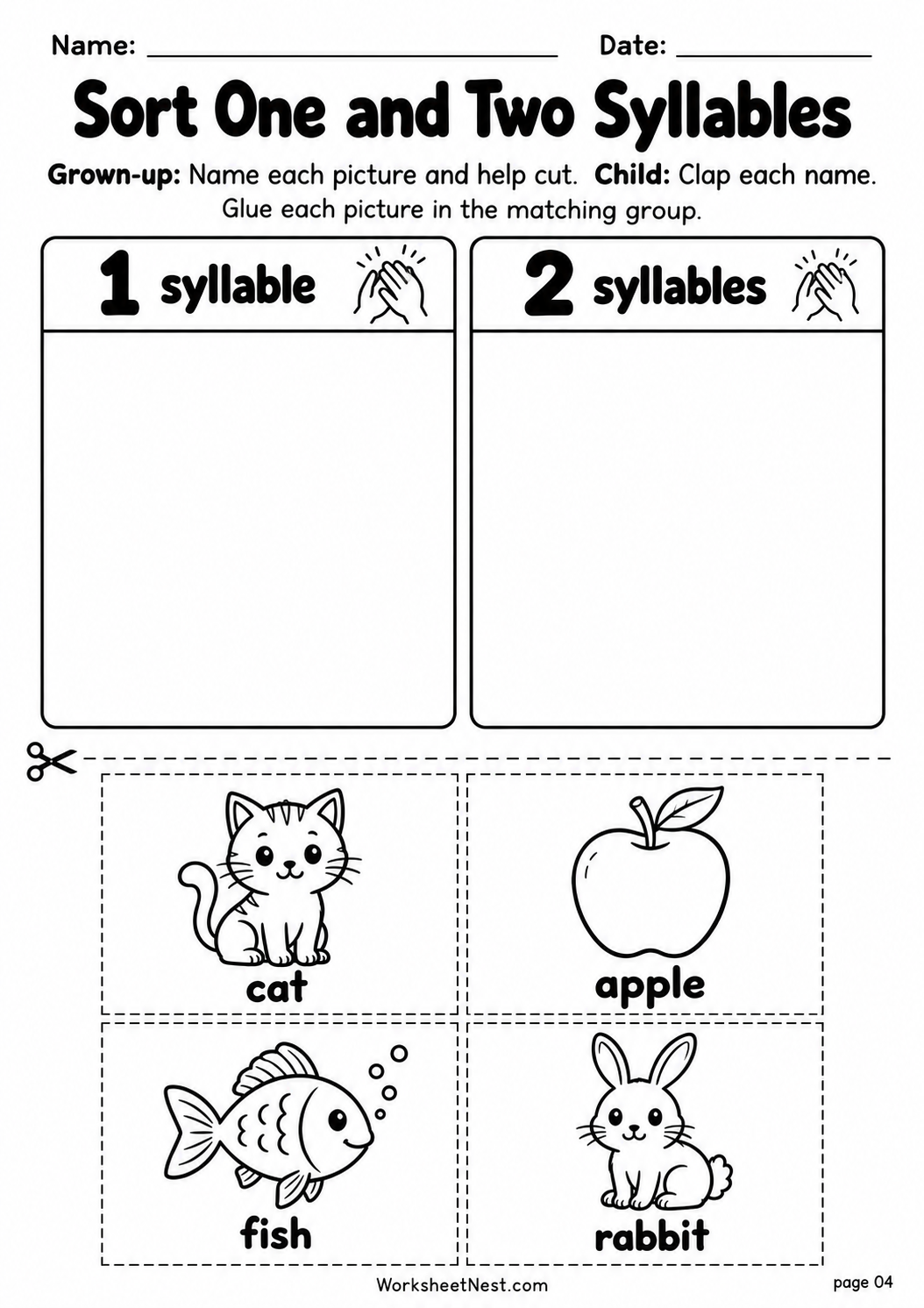
Two columns organize pictures by one or two syllables. With adult cutting help, children sort cat, apple, fish and rabbit, then glue them into the matching group. Name and clap each word before placing it. If cutting takes too much attention, let the child point to the correct column while an adult handles the picture pieces.
05 — Sort Two and Three Syllables
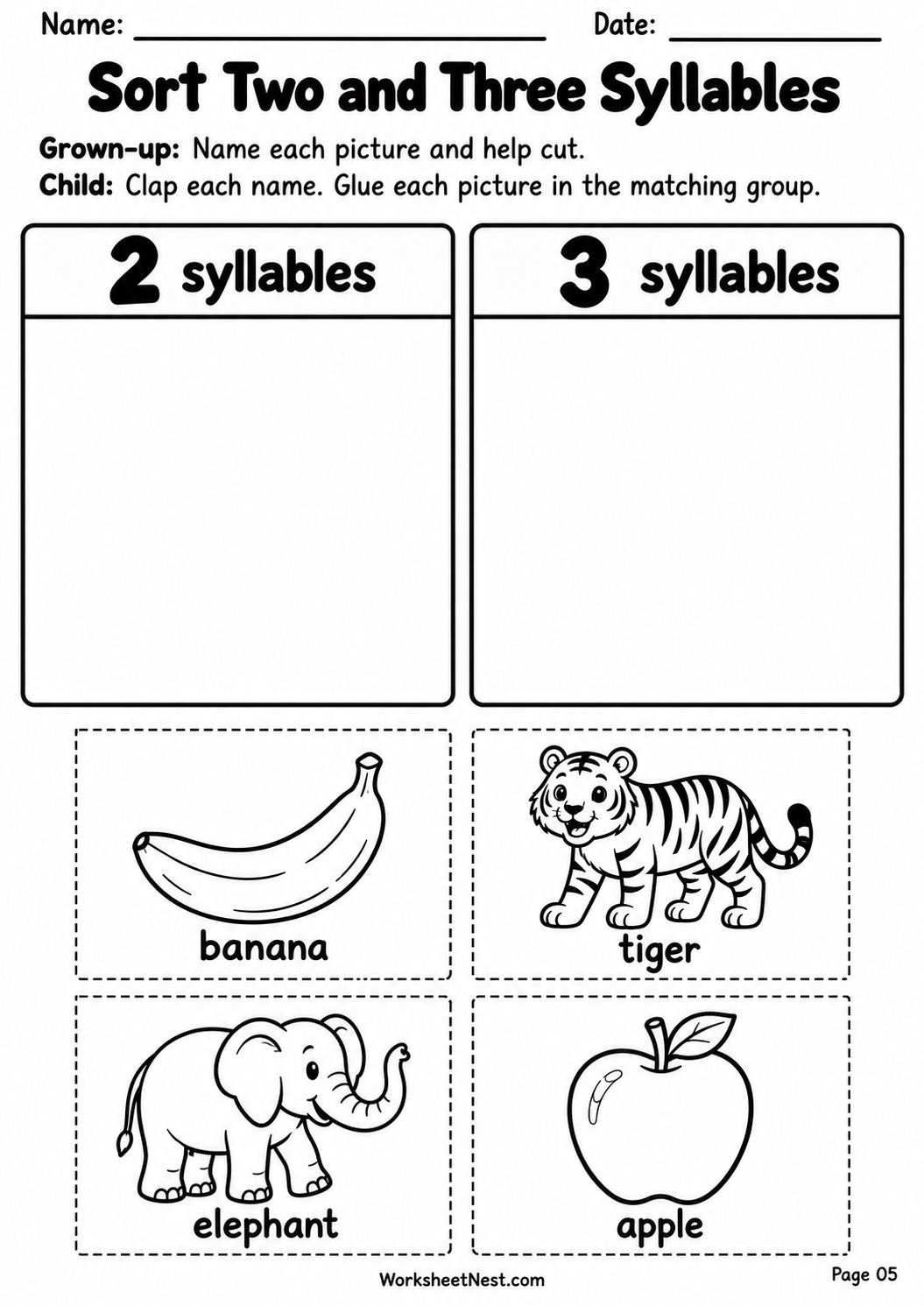
The next sorting page compares two- and three-syllable words. Children sort banana, tiger, elephant and apple into the two labeled columns with adult cutting assistance. Recheck a choice by saying and clapping the word, rather than judging the size of the picture. A large animal can have the same number of beats as a small fruit.
06 — Circle the Syllable Count
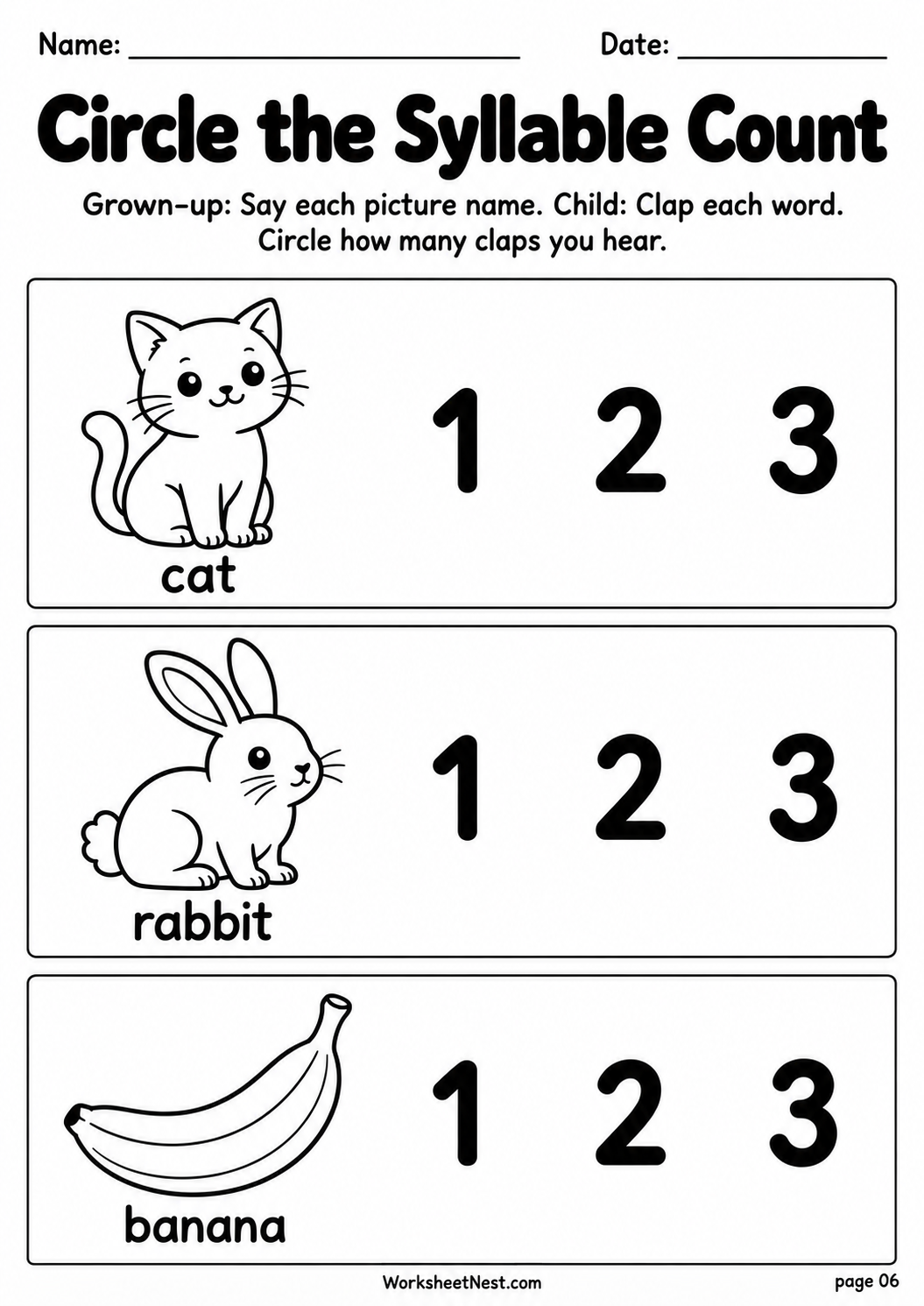
Cat, rabbit and banana each appear beside the choices 1, 2 and 3. After an adult names the picture, children clap the word and circle how many claps they hear. This page changes the response from coloring boxes to selecting a numeral. Pointing to a choice first can help learners separate listening from pencil control.
07 — Match the Same Syllable Count
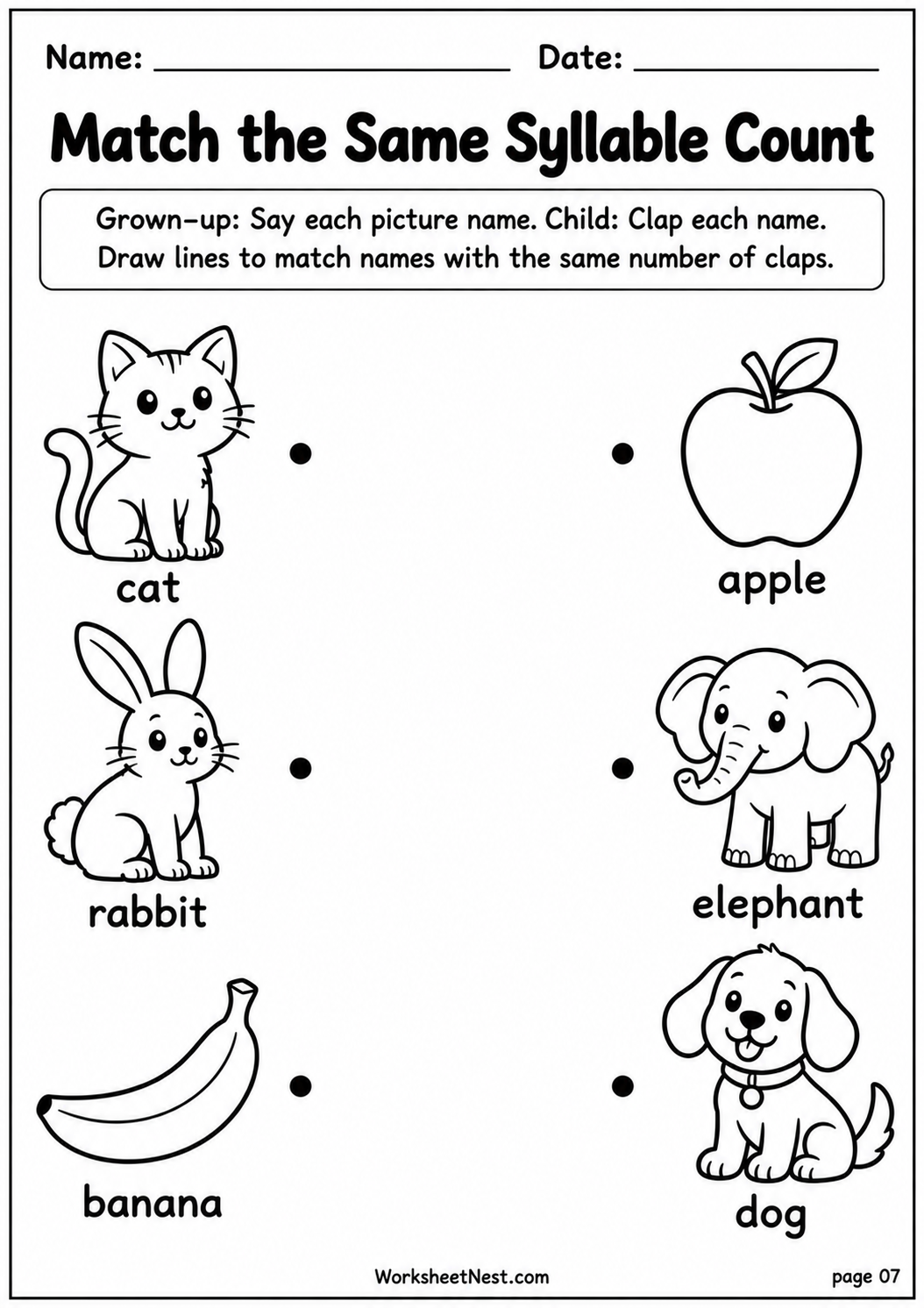
Children connect pictures whose spoken names have the same syllable count. The pairs are cat and dog, rabbit and apple, and banana and elephant. Say both names and clap them before drawing a line. Matching equal counts is different from finding rhymes: two words can have the same number of beats without sharing their ending sounds.
08 — Draw Syllable Dots
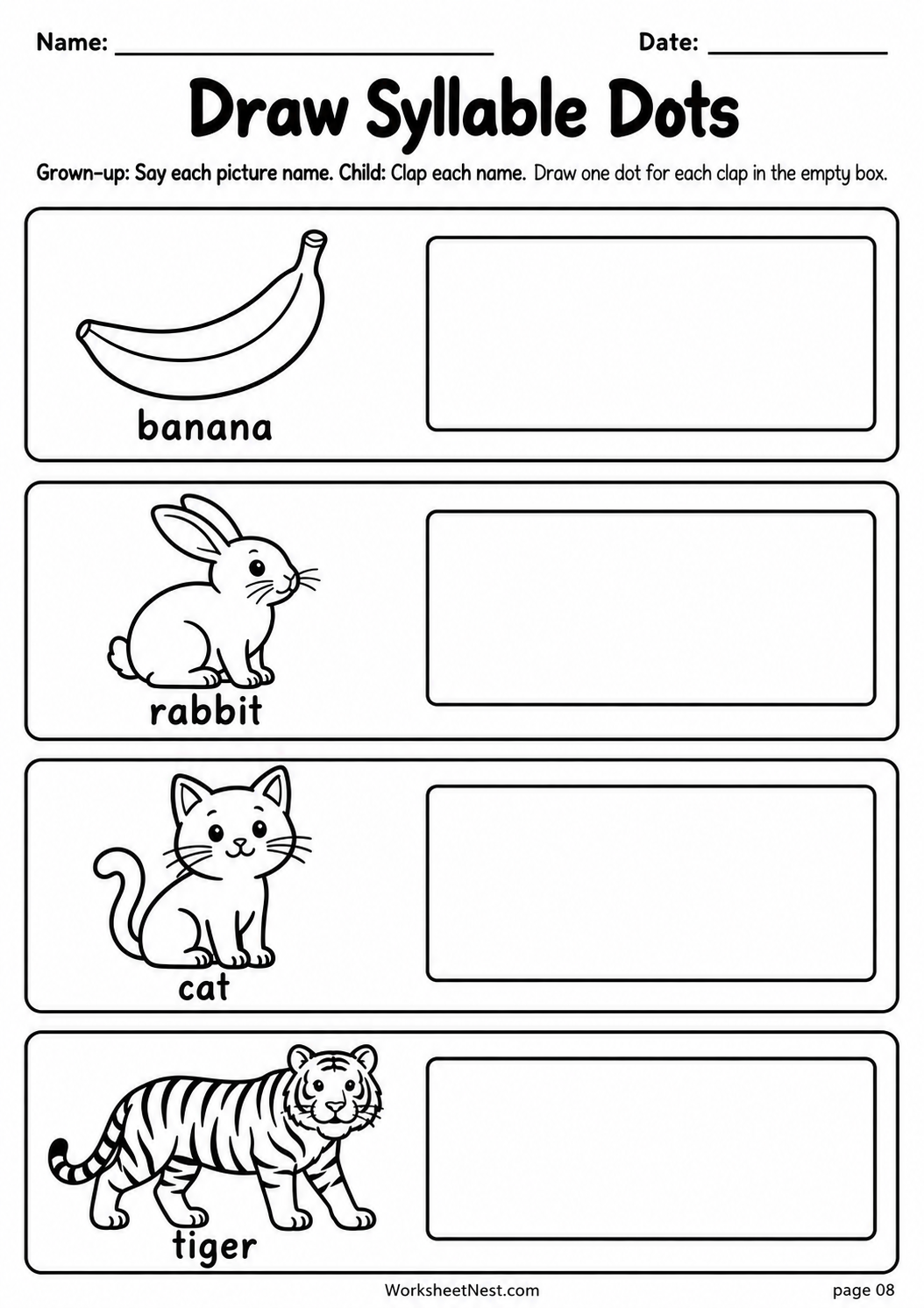
Banana, rabbit, cat and tiger each have an empty response box. Children draw one dot for every syllable they hear after the grown-up names the picture. Keep the dots simple and separate. Learners can tap a finger for each beat before recording the total, using the dots to show their listening rather than copying a numeral.
09 — Which Count Is Different?
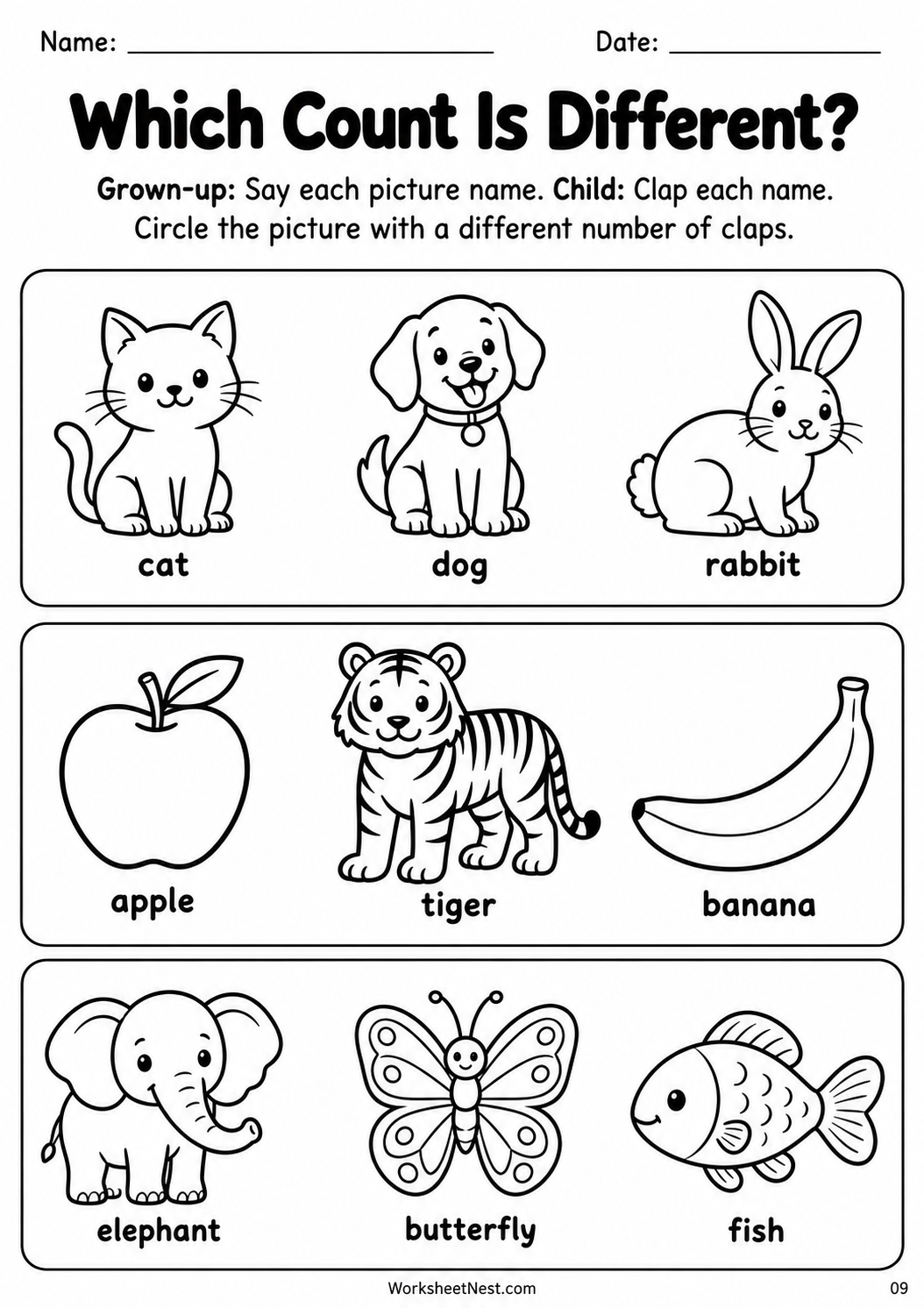
Each row contains three pictures, with one name that has a different count. Children compare cat, dog and rabbit; apple, tiger and banana; then elephant, butterfly and fish. Clap all three names before circling a choice. Ask which two have equal counts, then identify the picture left over, without turning the activity into a speed challenge.
10 — Syllable Counting Review
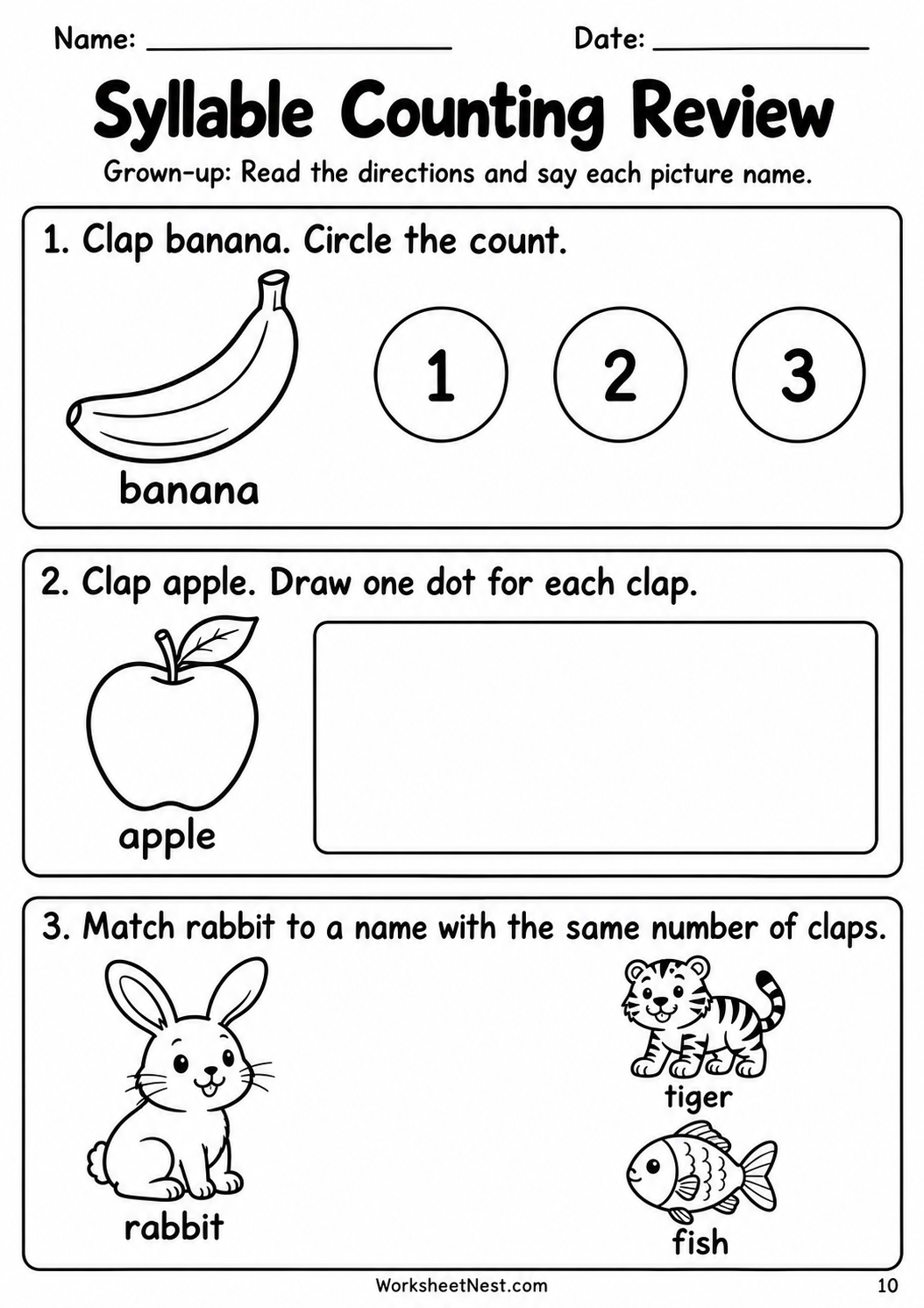
The review combines three familiar response types. Children circle the syllable count for banana, draw dots for apple and connect rabbit to a picture name with the same number of claps. An adult reads the directions and names every picture. Use the child’s responses to choose an earlier page to revisit, rather than treating the review as a reading test.
Full Syllable Counting Worksheets Bundle
The supplied set contains 11 pages: one colorful cover and ten black-and-white activity pages. The bundle follows the activity order above, beginning with separate one-, two- and three-syllable practice before mixing counts and response types. Select individual pages for a short listening session or keep the set together for repeated practice.
Download the Full Syllable Counting Bundle
Teaching Ideas
Agree on the picture name before counting. A child who says bunny instead of rabbit is practicing a different spoken word, even when both happen to have two beats. Use the page’s adult naming cue, say the whole word naturally and clap together. Repeat the word when needed, giving the child a chance to listen again before marking an answer.
Keep syllable beats separate from individual speech sounds. Cat takes one clap in this activity; it is not a request to segment each sound or count printed letters. Let learners point, clap or tap before drawing a line or coloring a box. Adult support with cutting on the sorting pages keeps the listening task manageable. Work on a small section at a time and return to easier words if the child loses track.
The University of Michigan’s DyslexiaHelp guide to teaching phonological awareness lists counting syllables among the early developing skills that support spoken-word listening.
Printing
The supplied PDFs use A4 portrait pages. Preview the chosen file before printing and preserve the full page when selecting print settings. Check automatic scaling when using US Letter paper. Interior activities are black and white; print the colorful cover separately if useful. A test page helps you check that picture labels, answer boxes and cutting guides remain clear.
Common Core Connections
This set gives partial practice toward RF.K.2.b, a kindergarten standard that asks children to count, pronounce, blend and segment syllables in spoken words. It focuses on the counting part only, not the whole standard.
Pages 01 to 03 ask children to clap and count one-, two- and three-syllable words, such as cat, rabbit and banana.
Pages 04 and 05 sort pictures after counting each name, while page 06 asks children to circle the count they hear.
Pages 07 to 09 match equal counts, draw one dot per syllable and compare counts to find the different one.
Page 10 reviews the same counting responses: circling a count, drawing dots and matching equal counts.
RF.K.2.b also covers pronouncing, blending and segmenting syllables, so this set is partial practice toward its counting part only, not full alignment. See the Common Core State Standards (Kindergarten) page for RF.K.2.b.
Explore More Learning Activities
Reading Worksheets English Worksheets