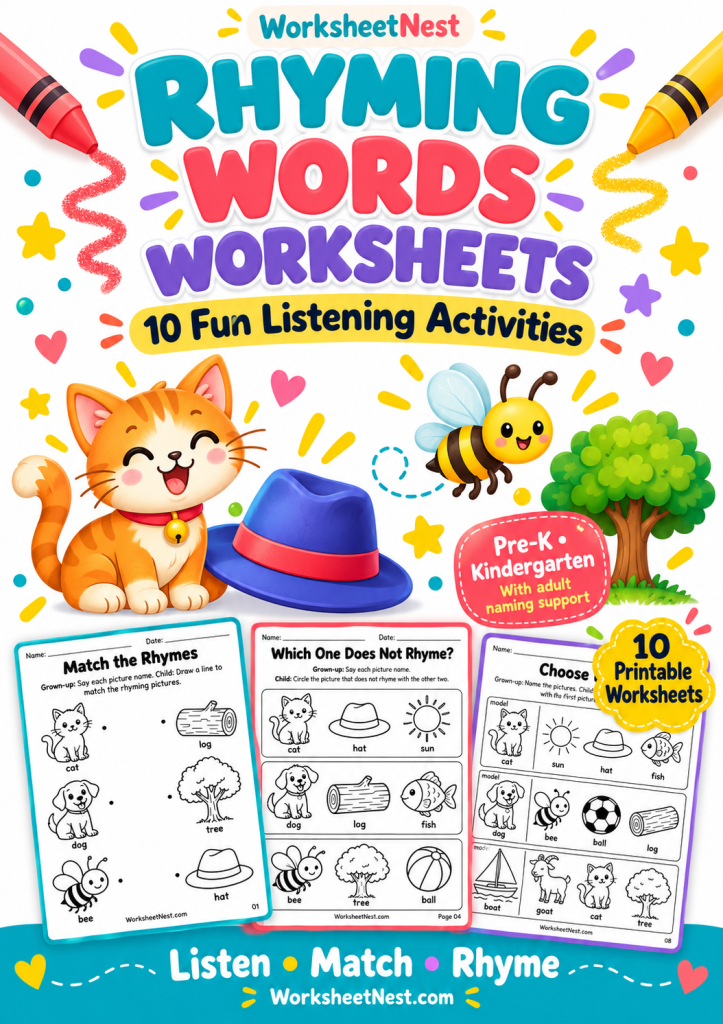
These rhyming words worksheets turn familiar pictures into listening activities. Children match, circle, sort and create rhymes while a grown-up names the pictures and reads the directions. Printed labels help adults use consistent names; children do not need to read them independently.Begin by saying two familiar words together, such as cat and hat. Invite your child to listen to how the words end. Work through one short activity at a time, choosing the response that suits your learner: pointing, drawing a line, circling, sorting or saying a word aloud.
01 — Match the Rhymes
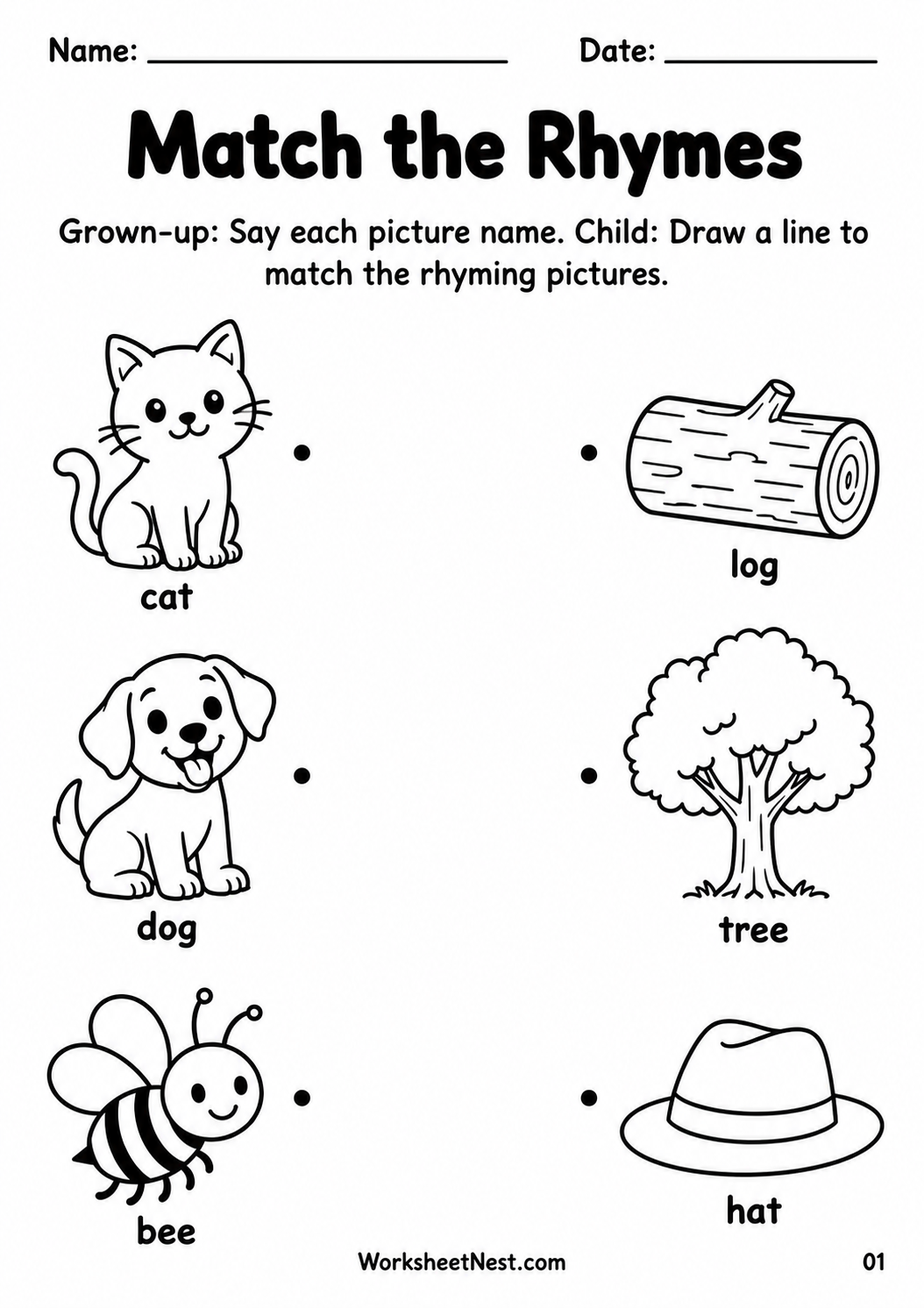
An adult names the cat, dog, bee, log, tree and hat. Children draw lines between pictures whose names rhyme. The pairs are cat and hat, dog and log, and bee and tree. Say each possible pair aloud before joining it, giving the child time to hear the shared ending rather than choose by the pictures’ positions.Download Match the Rhymes PDF
02 — Circle the Rhyme
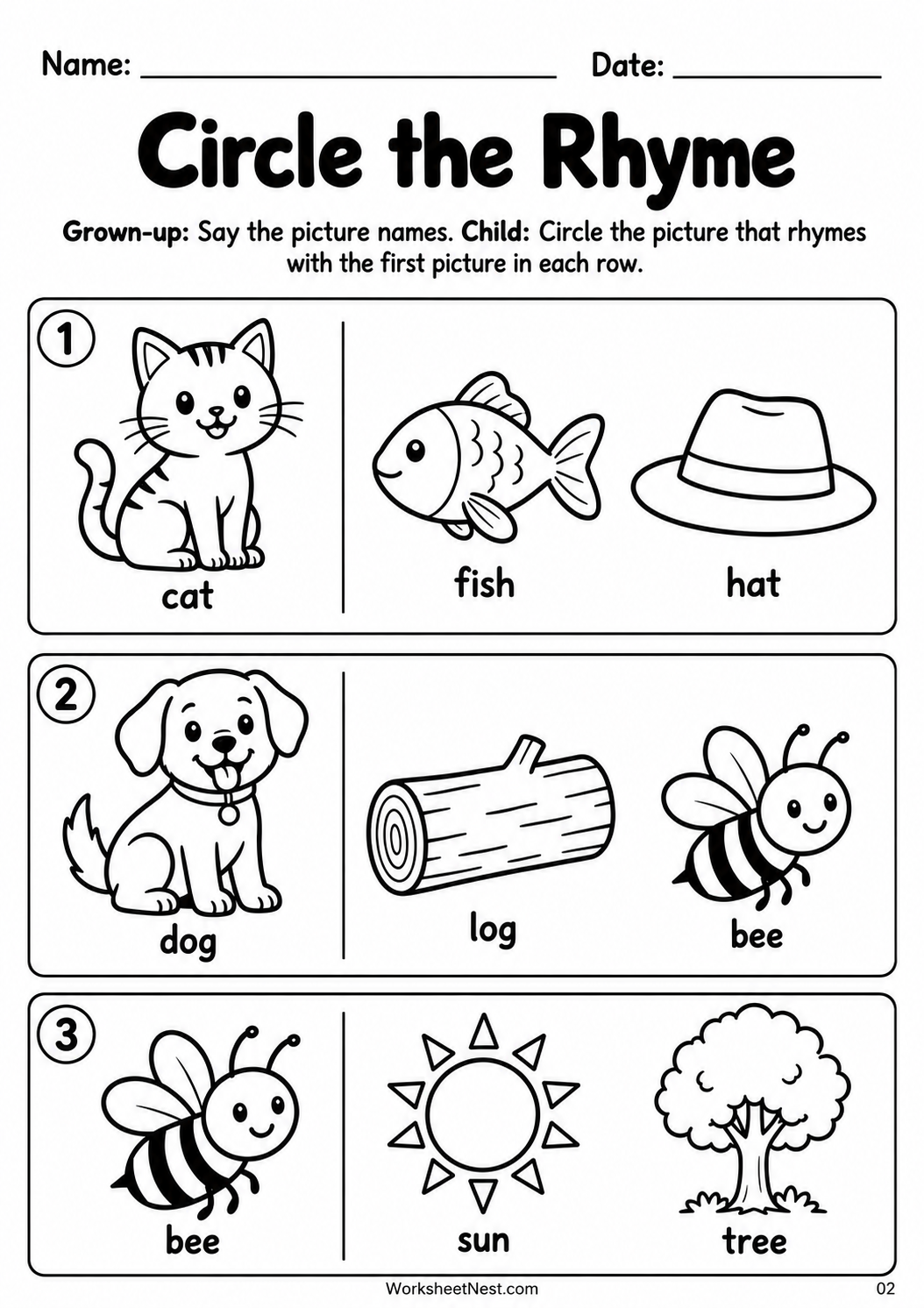
Each row begins with a picture and offers two possible matches. Children choose a rhyme for cat, dog and bee, circling the matching hat, log or tree. Name both choices in a calm, even voice. If your child is unsure, repeat the model word beside each option without changing the instruction into a reading exercise.Download Circle the Rhyme PDF
03 — Find Two Rhyming Pairs
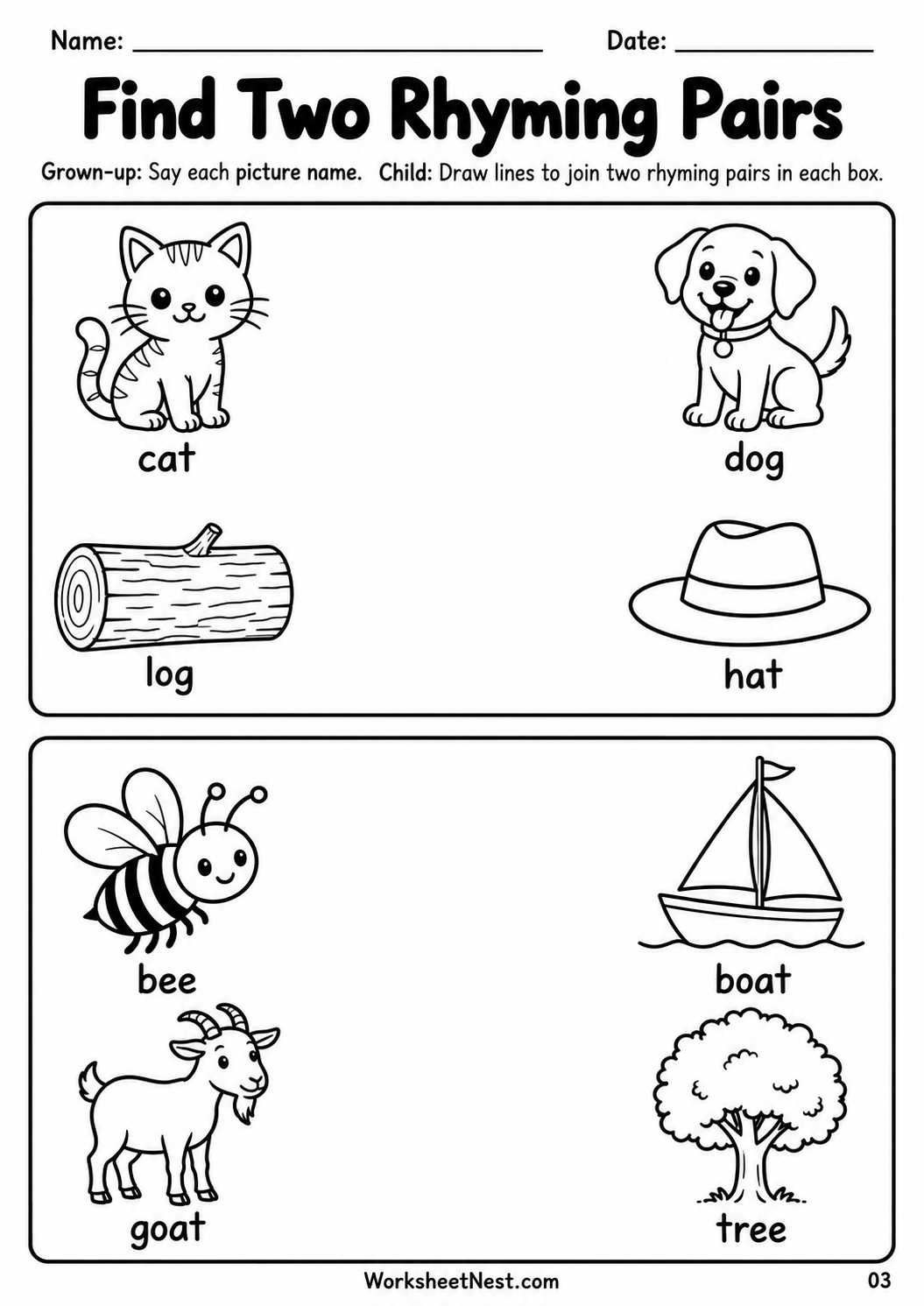
Two separate panels each contain four pictures. Children find two rhyming pairs in each panel: cat with hat and dog with log, then bee with tree and goat with boat. Work on one panel at a time. Ask learners to say both names before drawing a connecting line, so their attention stays on the sounds.Download Find Two Rhyming Pairs PDF
04 — Which One Does Not Rhyme?
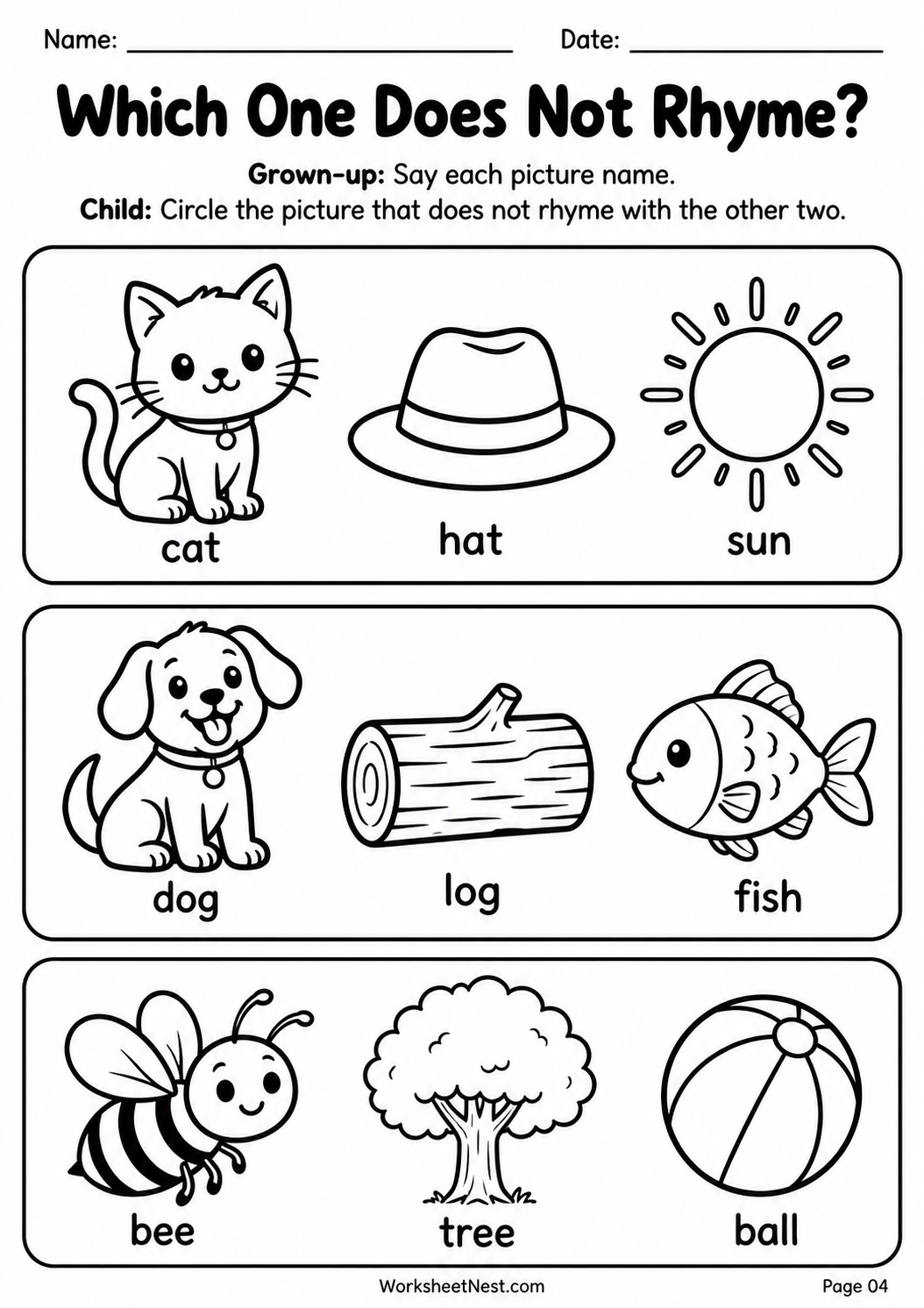
Three pictures appear in each row, but only two names rhyme. Children circle the picture that does not belong with the pair. The rows use cat, hat and sun; dog, log and fish; and bee, tree and ball. This reverses the earlier matching task, so model the meaning of “does not rhyme” aloud before starting.Download Which One Does Not Rhyme? PDF
05 — Sort the Rhymes
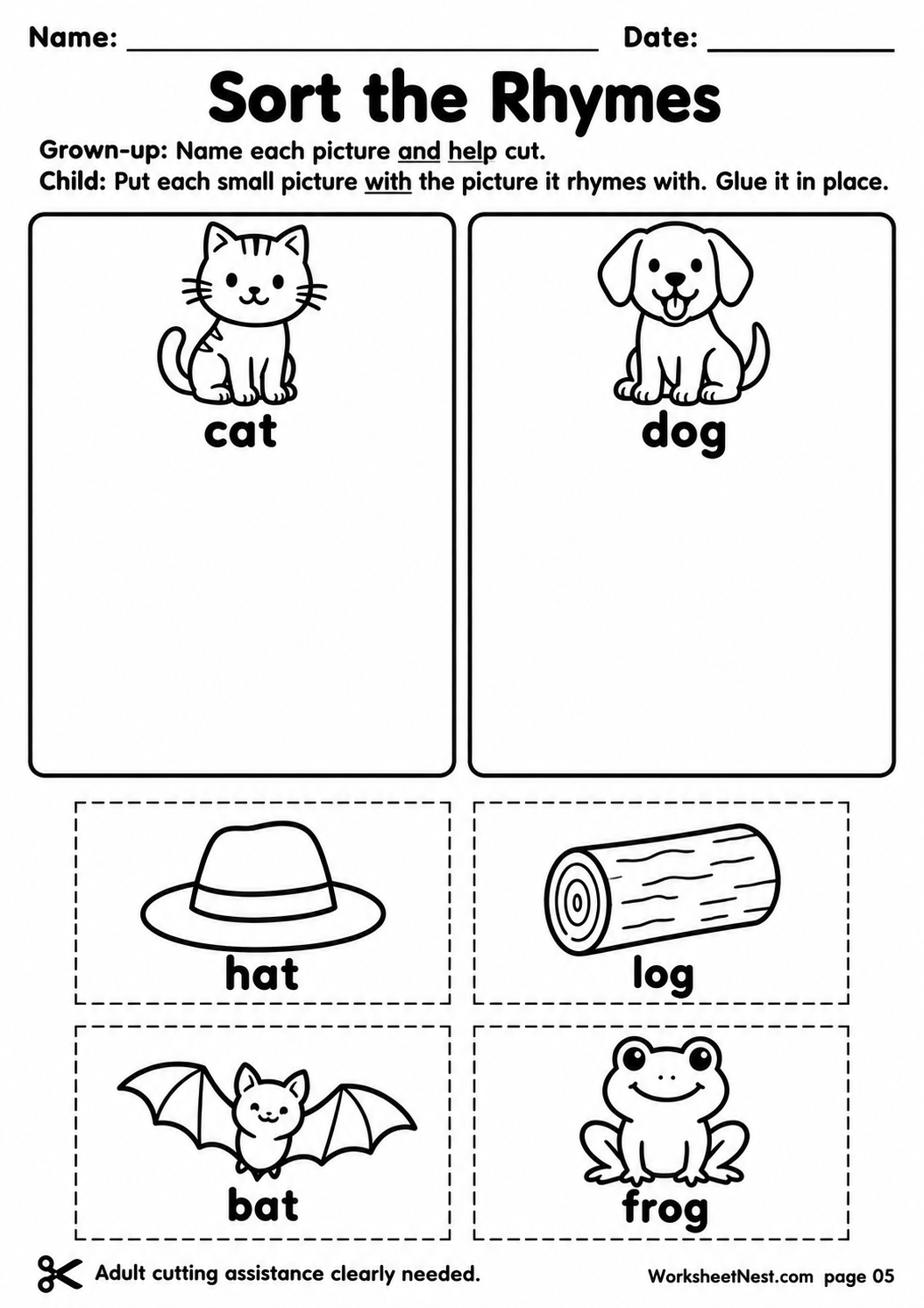
The cat and dog columns provide two rhyme groups. With adult cutting help, children place hat and bat with cat, and log and frog with dog, then glue the pictures in place. Say the names before sorting. Children can first point to a column if cutting or gluing makes it harder to concentrate on listening.Download Sort the Rhymes PDF
06 — Finish the Rhyme
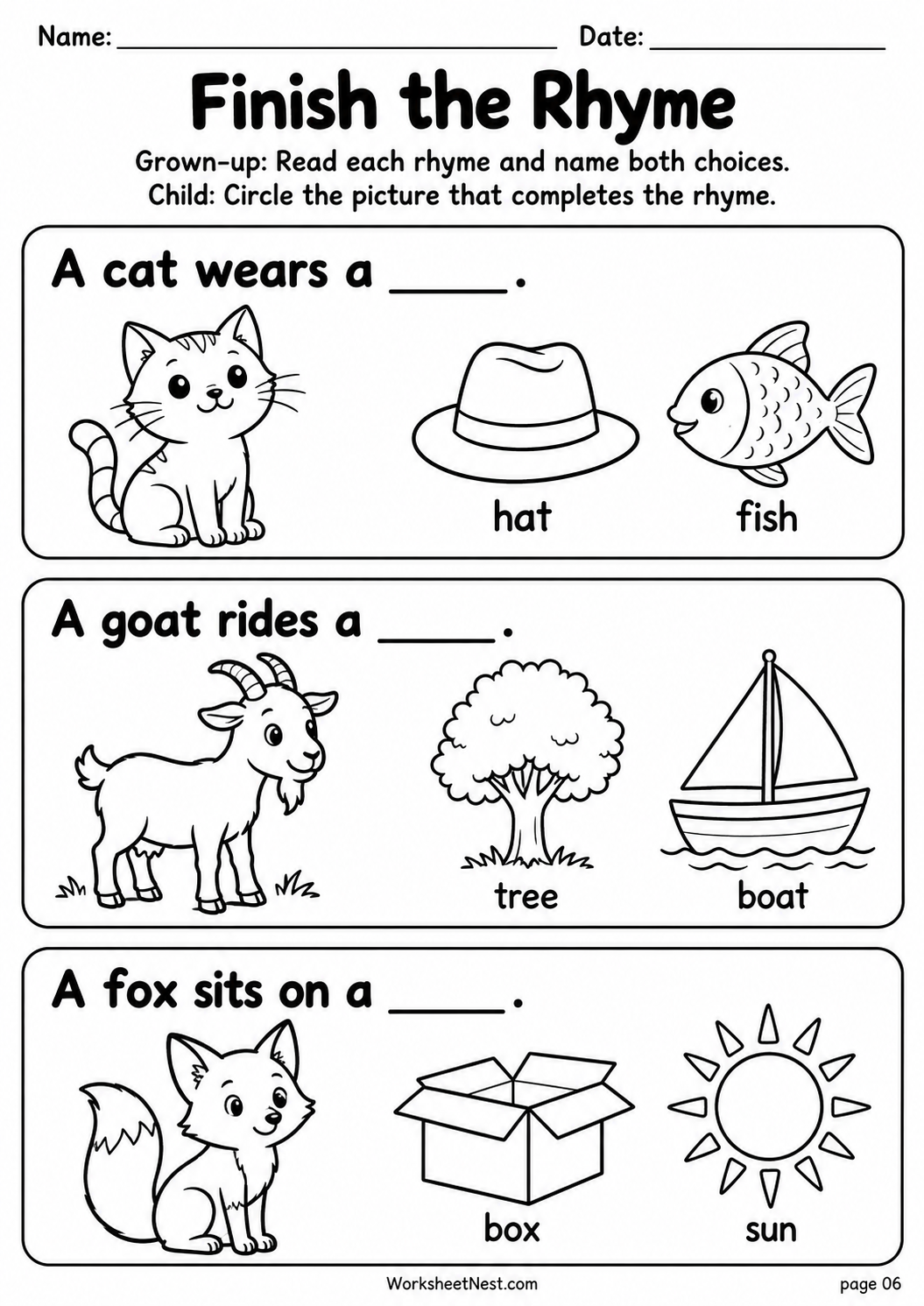
An adult reads each short sentence and names both picture choices. Children select the picture that completes a rhyme: a cat wears a hat, a goat rides a boat, and a fox sits on a box. Keep the activity playful. The child can hear and select the ending without having to decode the printed sentence.Download Finish the Rhyme PDF
07 — Find the Rhyming Pairs
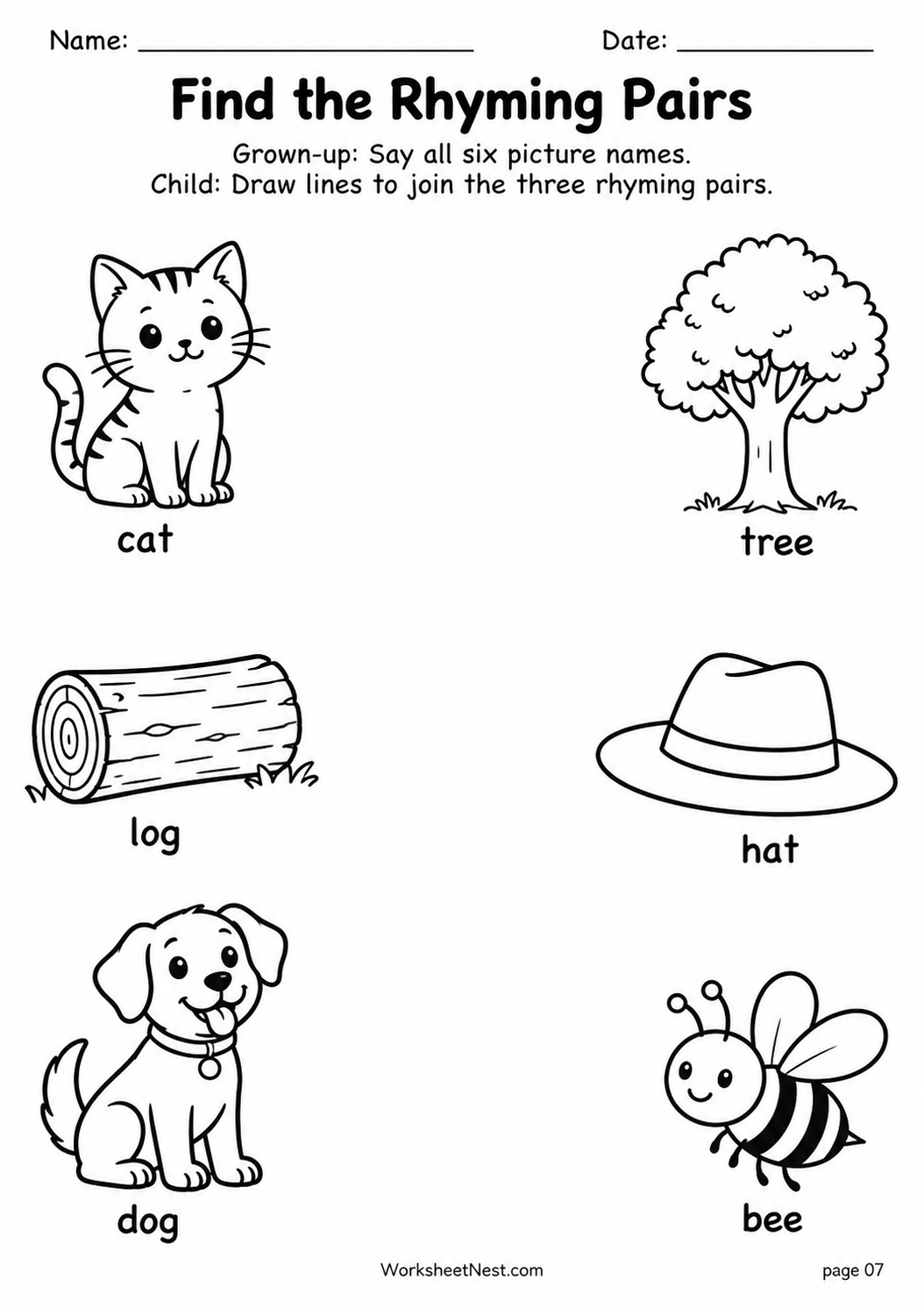
Six pictures are mixed across the page. Children draw lines to find three pairs: cat and hat, dog and log, and bee and tree. Unlike the two-panel page, this activity requires searching a larger field. Name all six pictures first, then let learners choose where to begin and check each pair by saying it aloud.Download Find the Rhyming Pairs PDF
08 — Choose a Rhyme
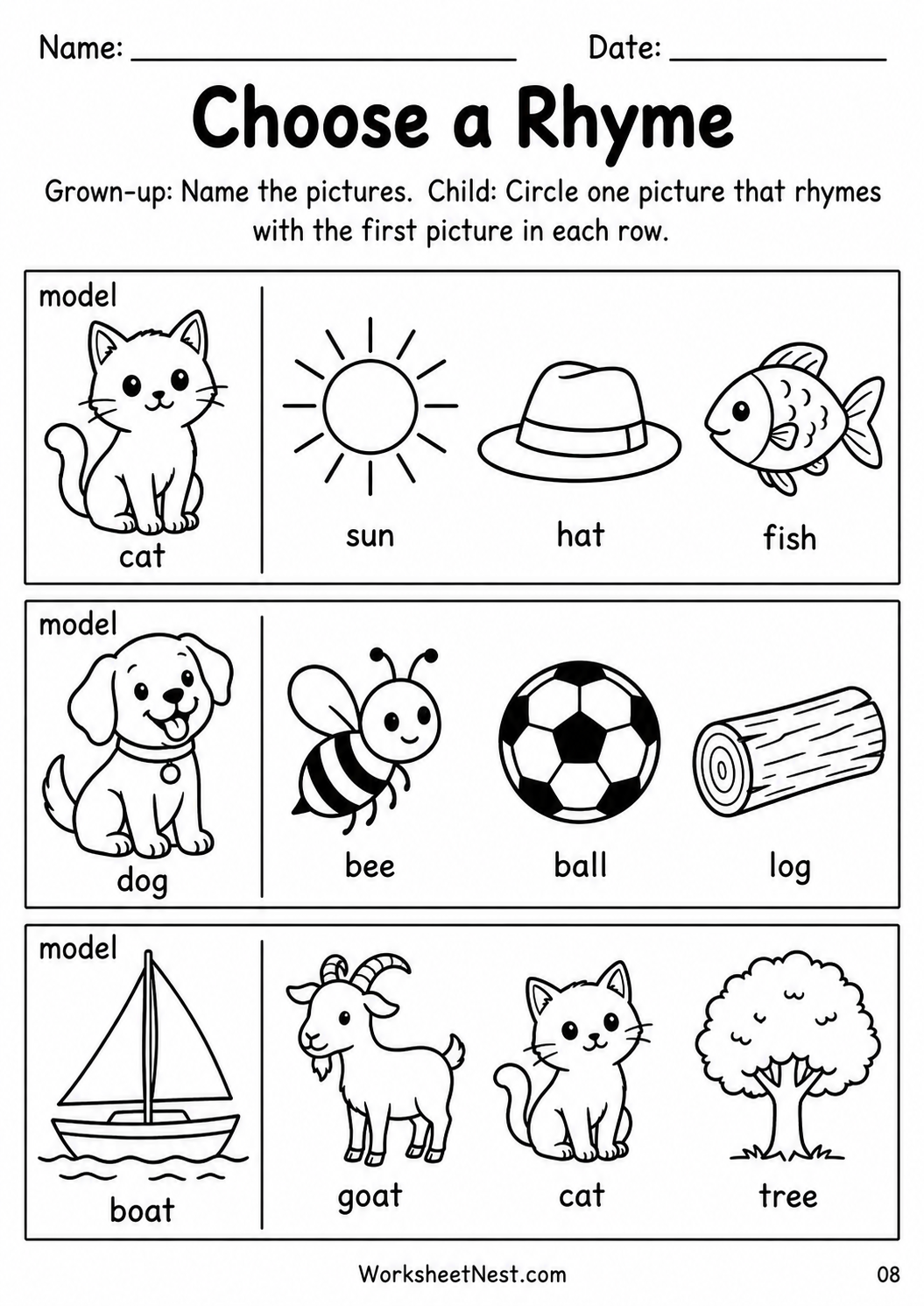
Each model picture has three possible matches. Children choose a rhyme for cat, dog and boat from the pictures in that row. The intended matches are hat, log and goat. Read the picture names without emphasizing the answer. If three choices feel difficult, return to the two-choice page and revisit this one later.Download Choose a Rhyme PDF
09 — Draw a Rhyme
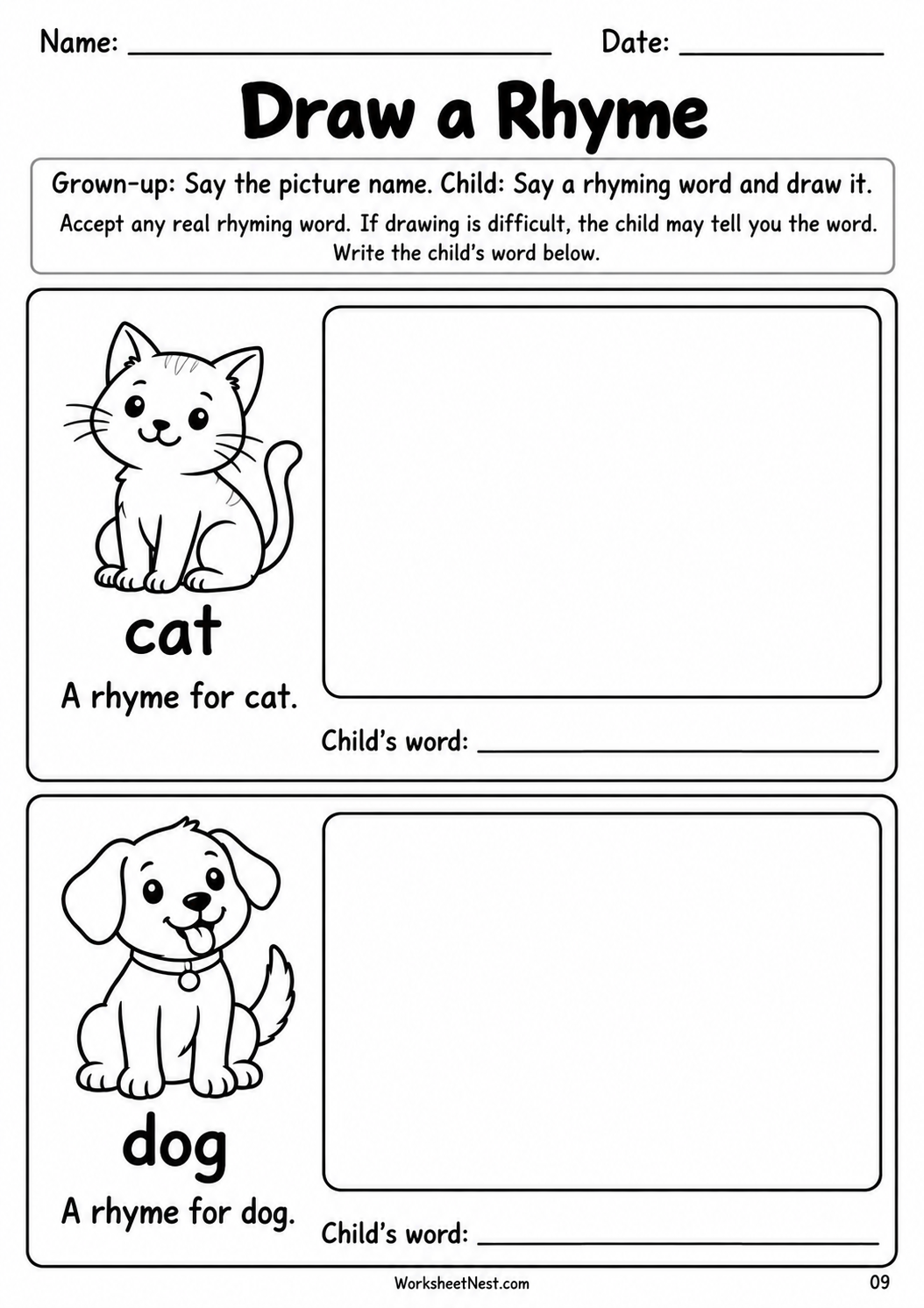
Cat and dog each have a large blank drawing box. Children say a real rhyming word and draw it; an adult can record the child’s word. Accept any valid rhyme, rather than expecting only a picture from earlier pages. If drawing is difficult, let the child tell you the word so the response still shows their listening.Download Draw a Rhyme PDF
10 — Rhyming Words Review
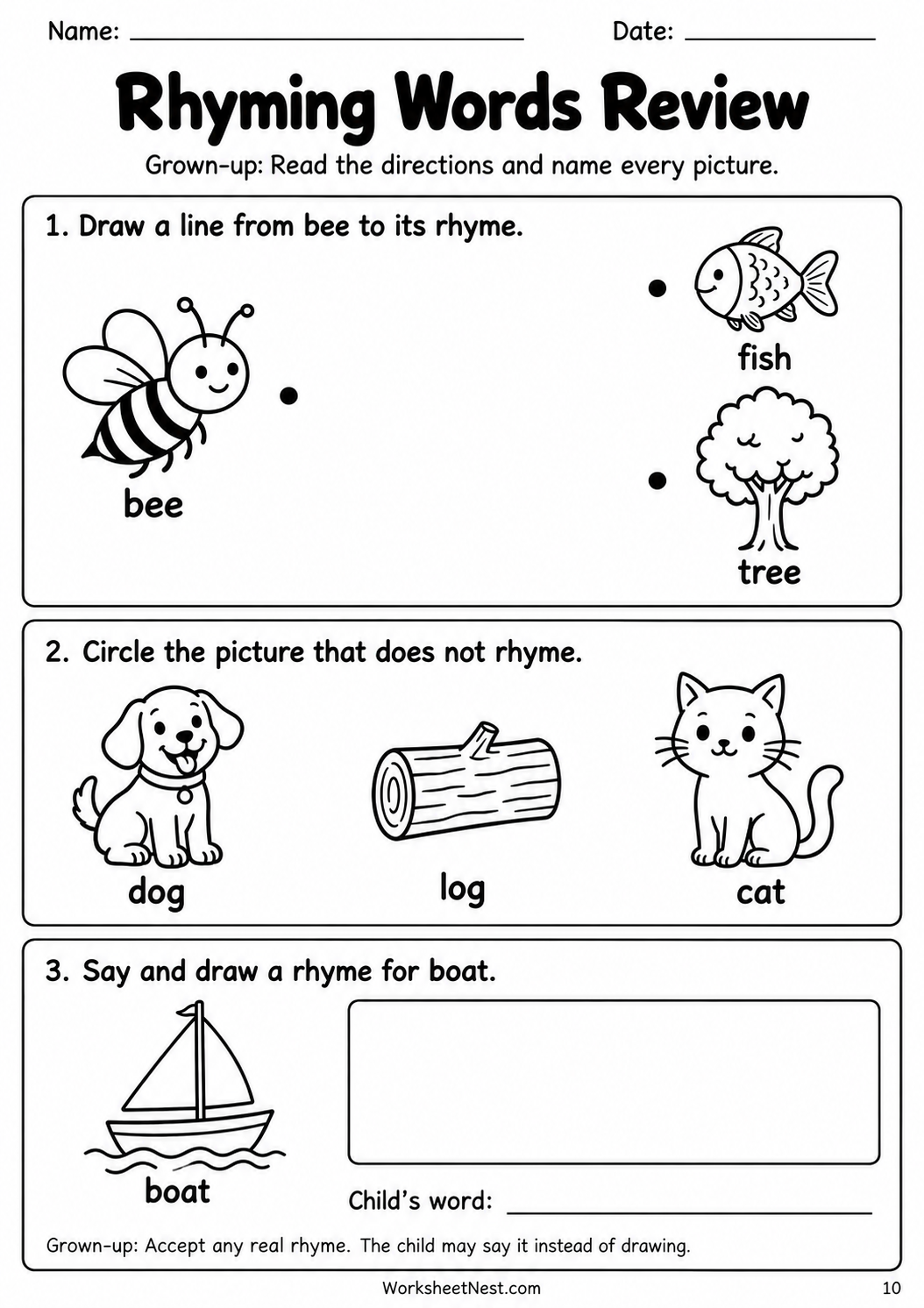
The final page combines matching, finding a nonrhyming picture and producing a rhyme. Children connect bee to its rhyme, select the odd picture from dog, log and cat, then say and draw a rhyme for boat. An oral response is allowed. Use their choices to decide which earlier activity would be helpful to revisit.Download Rhyming Words Review PDF
Full Rhyming Words Worksheets Bundle
The supplied collection contains 11 pages: one colorful cover and ten black-and-white activities. The bundle follows the same order as the pages above, moving between recognizing rhymes and producing a rhyme of your own. Use individual pages for a short listening session or keep the set together for later practice.Download the Full Rhyming Words Bundle
Teaching Ideas
Name the pictures before asking for an answer. A child who calls a log a stick may hear a different word from the one the page intends. Use the printed labels as an adult naming guide, then say the relevant words together. Let your child repeat them if helpful, without requiring a particular spoken sentence.Keep rhyme practice separate from spelling demands.
Bee and tree rhyme even though their written words differ in length. Praise careful listening and allow another try when a child chooses by meaning or appearance. For the drawing pages, accept a valid spoken rhyme before discussing how to illustrate it. Adult support is also useful for the cut-and-paste page.
For more ideas on building this listening skill at home, the University of Oklahoma’s guide to practicing rhyming and speech sounds suggests saying two words, such as cat and hat, and asking whether they rhyme.
Printing
The supplied PDFs are A4 portrait. Preview a page before printing and preserve the full page when adjusting paper settings. Check any automatic conversion to US Letter. The ten activity pages are black and white; the colorful cover can be printed separately. Make a test print to check that labels, picture outlines and cutting guides remain clear.
Common Core Connections
These activities give partial practice toward a kindergarten Reading: Foundational Skills standard. This is partial practice only, not full coverage of the standard.
RF.K.2.a – Recognize and produce rhyming words (Common Core State Standards, Kindergarten): Worksheets 01, 02, 03, 04, 05, 06, 07, 08, and 10 practice recognizing rhymes by matching pairs, circling a rhyming word, finding pairs, spotting the word that does not rhyme, sorting by rhyme, finishing a rhyme, and choosing a rhyme;
Worksheets 09 and 10 practice producing a rhyme, with Worksheet 09 asking children to say and draw a rhyme of their own and Worksheet 10 reviewing both recognizing and producing rhymes.
This connection is a teaching guide only. It does not mean these worksheets are officially approved or certified.
Explore More Learning Activities
Reading Worksheets English Worksheets